



Master Work Order Planning & Scheduling: Proven Strategies of Top Maintenance Teams
Explore the complete Work Order Academy series – toolkits, backlog elimination, data‑driven insights, and more
Consequences of Mismanaged Work Order Plans
The maintenance crew at Century Aluminum struggled from day one.
“The philosophy has been, ‘It’s what goes out the door that counts,’” says millwright Linda Sibley in an interview with Reliable Plant, “not how well the machinery is running.”
Prioritizing output over equipment health proved unsustainable, fostering a reactive mindset that led to frequent breakdowns, data gaps, low morale, and more.
“When you’re in that reactive mode, planning becomes almost impossible – it’s all about putting out fires,” notes maintenance planner Todd Harrison.
Despite concerted effort, the preventive maintenance program stalled. The root cause? Ineffective planning and scheduling.
“Probably a third of the PMs are ineffective,” observes maintenance manager Jim Doeffinger. “We waste time on irrelevant PMs.”
To break this cycle, this article delves into proven practices and practical frameworks for robust maintenance planning and work‑order scheduling.
Building Expertise in Maintenance Planning
Success hinges on two fundamentals:
- Clear, organization‑aligned maintenance goals
- A prioritization system that reflects those goals
Every SOP, schedule, training program, and process should spring from these pillars.
“You need to revisit the organization’s core objectives to determine what maintenance should support,” says Charles Rogers, Senior Implementation Consultant at Fiix with 33 years in the field.
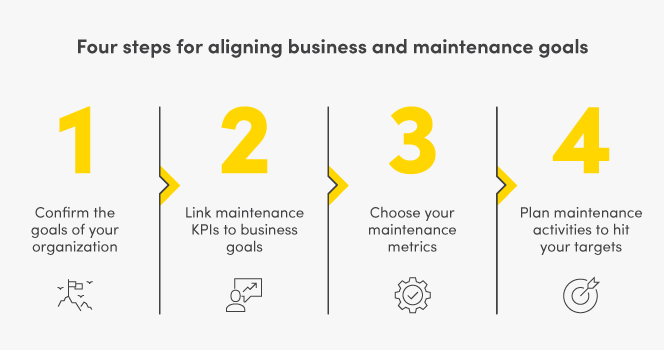
Four Steps to Aligning Maintenance Goals with Business Objectives
- Confirm the organization’s goals. These might be concrete targets, like reducing cost per unit, or broader aims such as market expansion.
- Link maintenance KPIs to those objectives. If cost reduction is the aim, focus on minimizing downtime and maintenance spend. For market entry, standardizing processes across sites becomes key.
- Choose the right metrics. Establish benchmarks that let you monitor progress—for example, tracking faults identified and resolved during PMs on critical assets.
- Plan activities to hit the targets. Identify critical equipment, determine inspection intervals, and define work‑order content accordingly.
Create world‑class, standardized work orders
Start linking maintenance to business impact with this free goal‑setting template
Mastering Maintenance Scheduling
“Some think more scheduled maintenance is inherently better,” says Charles. “That’s a misconception. Over‑loading PMs can be costly and may even increase failure risk.”
The true success metric is the number of failures a PM uncovers. Each issue caught during a scheduled inspection averts an asset failure.
The secret to excellent scheduling is continuous refinement of PM frequencies—finding the sweet spot between too frequent and too sparse.
Optimizing Preventive Maintenance Frequencies
The PDCA cycle (Plan, Do, Check, Act) guides you toward the ideal PM cadence:
- Plan: Establish baseline frequencies using manufacturer guidance, repair history, criticality, and usage data.
- Do: Execute the plan consistently to gather reliable data.
- Check: Review failure metrics per asset to assess plan efficacy.
- Act: Adjust frequencies—raise them if failures occur between PMs, lower them if inspections find no issues.
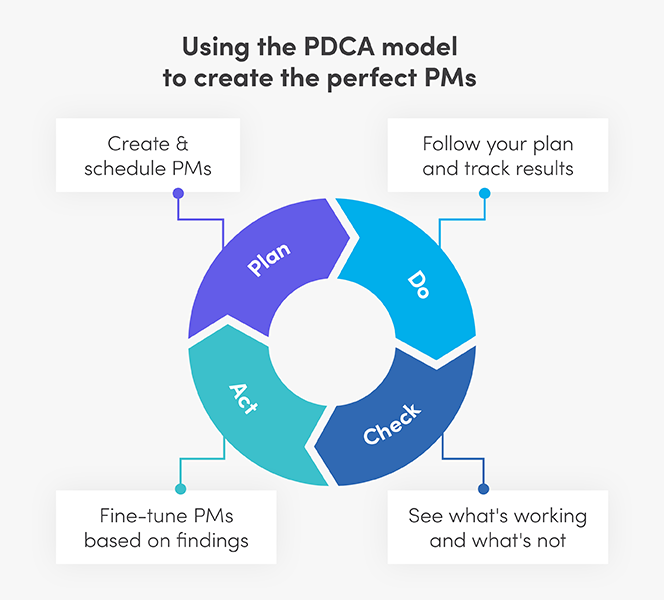
Admittedly, this cycle is iterative and time‑consuming, but the payoff includes extended MTBF, reduced labor hours, and lower spare‑part costs.
Build an effective preventive maintenance schedule with this template
Gaining Stakeholder Buy‑In for Maintenance
“We’d battle operations just to secure a maintenance window on a machine,” recalls Jason Afara, Solutions Engineer at Fiix, reflecting on his tenure as a maintenance manager.
While the friction between maintenance and operations is inevitable, a well‑documented plan and schedule can’t reach its full potential without production support.
“This is where many maintenance teams stumble—they lack data to justify their requests,” Charles points out.
“You must present evidence that postponing scheduled maintenance leads to far‑worse consequences—often sooner than anticipated.”
Building a preventive‑maintenance culture is a marathon, not a sprint. It requires ongoing dialogue with leaders and operators alike. Resources to jump‑start this shift include:
- How to measure and tell the story of your maintenance team’s success
- How maintenance and operations joined forces to lead change
- How maintenance leaders can drive change at their organization
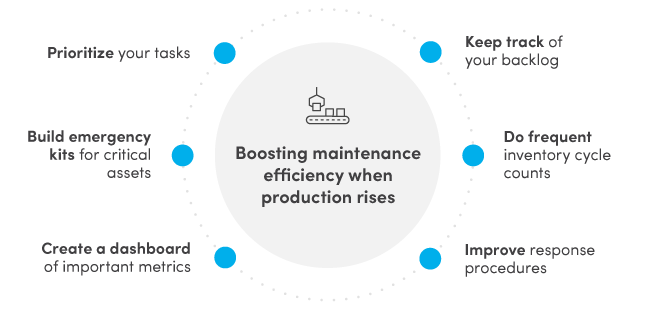
Adapting Schedules to Seasonality and Production Surges
In an ideal world, plans never change, and the maintenance calendar runs flawlessly. Reality is different—holiday spikes, economic downturns, or sudden demand shifts demand flexibility.
Instead of abandoning plans, adapt them. “This is when understanding asset criticality and priority becomes vital,” says Charles.
Knowing which assets are critical informs both scheduling and justification for maintenance windows, ensuring equipment remains reliable.
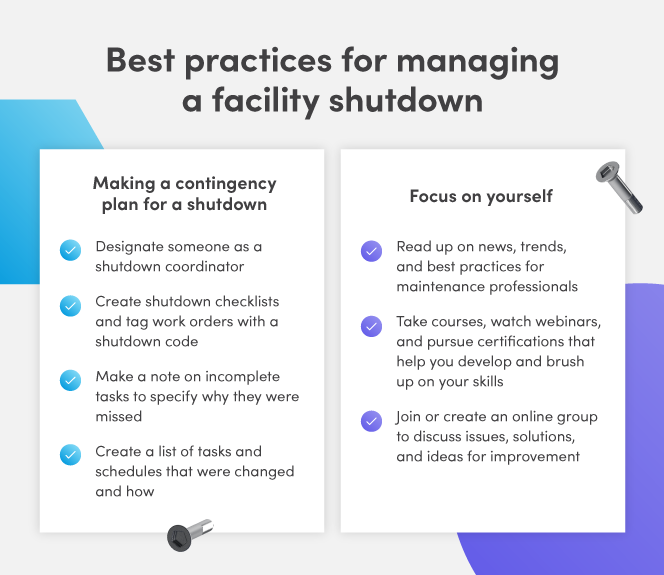
“Equally important is grasping how assets should be shut down and restarted so operations can continue smoothly,” Charles explains.
Craft work orders that cover each equipment’s nuances and embed these details in SOPs to avoid delays when start‑ups or shutdowns are needed.
Key Takeaways in Three Sentences
- Crystal‑clear work‑order goals guide every planning and scheduling decision.
- Never lock maintenance schedules in stone—continually refine frequencies for optimal performance.
- Proof of effectiveness persuades stakeholders and secures the necessary support to execute the plan.
See Part IV: A toolkit for improving health and safety with work orders
Equipment Maintenance and Repair
- Digital CMMS Outperforms Pen & Paper in Cutting Facility Downtime
- Mastering Preventive Maintenance: Building and Optimizing Fixed & Floating Schedules
- When Is It Acceptable to Deviate From a Maintenance Schedule?
- Leveraging Work Order Data: A Proven Path to Maintenance Excellence
- How COVID‑19 Is Reshaping Maintenance Operations: Challenges, Adaptations, and Resilience
- Mastering Maintenance Work Orders: A Complete Guide
- How to Build an Efficient Maintenance Work Request System
- Streamline & Automate Maintenance: Proven Strategies for Reliable Operations
- Mastering Preventive Maintenance: A Step-by-Step Guide to Scheduling Work Orders
- Avoiding Reactive Maintenance Pitfalls: Keep Equipment Running Smoothly