



How COVID‑19 Is Reshaping Maintenance Operations: Challenges, Adaptations, and Resilience
Like the rest of the industry, the maintenance sector has been profoundly altered by the COVID‑19 pandemic. We interviewed several experts to uncover the obstacles they face, the strategies they employ, and the remarkable resilience they demonstrate while delivering essential services.
For additional guidance, visit our Resource Hub, featuring articles and webinars tailored to today’s uncertainties.
From the perspective of operations manager Juan Ruiz, the daily rhythm of the facility looks familiar: a technician consults with an operator, a critical asset is inspected during a brief pause, and a production line is tuned to meet a vital order. Yet the reality on the floor has changed dramatically.
The conversation now takes place in a dedicated quiet zone so the technician and operator can maintain a six‑foot distance. The critical asset is a temperature sensor that scans staff upon entry, and the crucial order involves millions of boxes that will house life‑saving N95 masks.
Juan and his team have had to rethink every aspect of their workflow.
“We’re operating at the edge of failure, and that mindset is shifting,” says Juan. “We’re surviving; we’re not improving.”
Juan’s experience mirrors that of maintenance departments worldwide.
“Maintenance teams are feeling nervous right now,” notes Terrence O’Hanlon, CEO of ReliabilityWeb. “Even before COVID, very few departments could claim they were fully staffed, fully budgeted, and fully resourced…normalcy was already a challenge, and the pandemic has only amplified that.”
Priority #1: Implement Processes That Support People
For Tom Dufton, a maintenance and continuous improvement manager, the hurdles extend beyond business metrics to personal concerns.
“One of our team members has a wife who is a nurse and two young children. We need to ask, ‘How can we help you?’ The last thing we want is to add strain to anyone on our team,” Tom explains.
We’ve reached out to competitors for the critical parts we need for our corrugator, and they’ve reciprocated by sending us consumables. We’re all essential businesses that must keep operating.
James Afara, COO of a cannabis producer, highlights the delicate balance between staff health and critical maintenance.
“The biggest challenge is ensuring plant health and collecting process metrics for remote decision‑making,” he says. “We send key personnel in during off‑hours to gather data, but we’re careful not to expose anyone to risk.”
Juan’s plant has also struggled to keep supplies flowing; 90% of suppliers have halted deliveries. He’s turned to an unlikely ally—competitors—to secure essential parts.
“We’ve reached out to our competitors for the parts we need, and they’ve sent us consumables in return,” Juan reiterates. “We understand that we’re essential businesses that must keep running.”
Adapting to Remote Work, Enhancing Safety, and Leveraging CMMS
While completing jobs is important, safeguarding staff health has become the paramount concern. New protocols have been instituted across the board.
Tom and his team have embraced automation, enabling remote oversight of operations.
“I’m always in tune with the facility, even from afar,” Tom notes. “This approach has reduced after‑hours call‑ins by 42% over the past year, cutting risky on‑site visits.”
In addition, the team has reduced shift staffing, instituted temperature checks, sanitized all incoming parts, and slowed production to allow frequent deep cleans.
James emphasizes that maintenance is a frontline defense against the virus.
“If a breakdown forces staff to linger in the lunchroom, social distancing breaks down. Maintaining operations is critical,” he says.
However, these changes come at a cost. James reports a 15% workforce reduction due to illness, and Juan notes increased downtime as technicians move between machines and separate discussion areas.
Despite the strain, all agree that people come first.
“Your employees’ health must always precede profit,” James asserts.
Practical Tips for Remote Maintenance Management
Read more
Even When Production Drops, Maintenance Cannot Be Overlooked
Some plants have halted lines due to the pandemic and economic uncertainty, creating a precarious future for maintenance teams. Yet there are opportunities amid the challenges.
Rob Kalwarowsky, host of the Rob’s Reliability Project podcast, advises, “If you’re reducing production, it’s still the right time to tackle backlogs and perform rebuilds.”
Your employees’ health always comes first. Value people over profit.
While some professionals adapt to remote work or lean resources, others face harsher realities. Brandon De Melo, a CMMS coordinator at a major auto‑parts manufacturer, was laid off a week after closing the plant for the weekend.
Undeterred, Brandon is preparing a critical maintenance checklist for a successful cold start and re‑energizing dormant projects like inventory organization. He’s also repurposed his home into a one‑man manufacturing hub, producing protective masks for healthcare workers using a 3D printer.

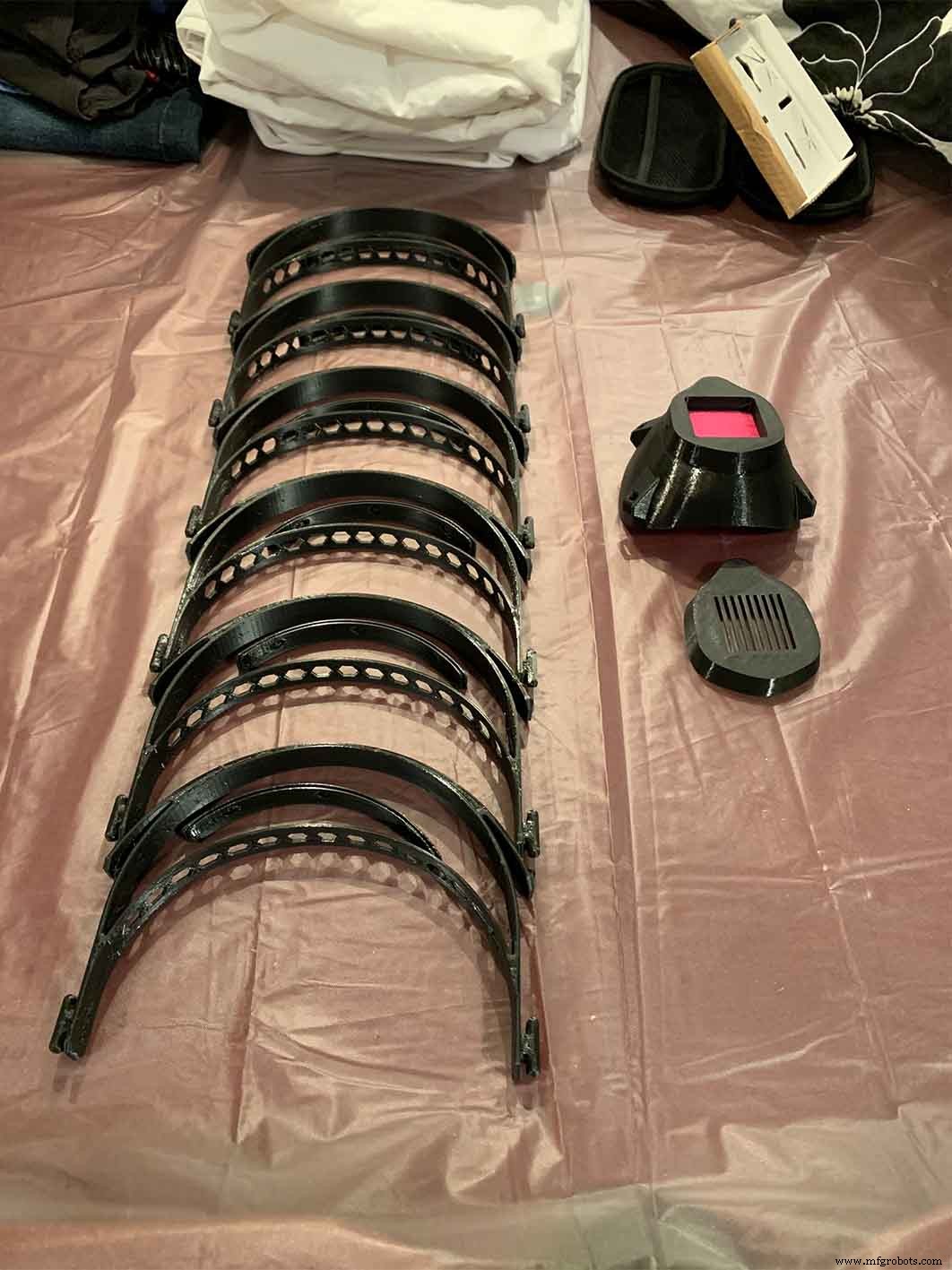
Left: Brandon De Melo standing beside his 3D printer, producing masks for healthcare workers.
Right: Components of the protective masks created by Brandon’s 3D printer.
Resilience and Hope: The Hallmarks of Today’s Maintenance Teams
Brandon’s story exemplifies the broader theme of perseverance. Across the industry, hope remains the prevailing sentiment.
“Don’t give up hope,” says Terrence. “This will be a long battle, but I have immense faith in the industry's ability to innovate and thrive.”
Juan echoes this optimism.
“The key to navigating these times is staying calm and focusing on what’s essential,” he says. “Safety first; everything else follows.”
Equipment Maintenance and Repair
- Mastering Maintenance Planning: From Reactive Fixes to Proactive Success
- Determining the Optimal Size of Your Maintenance Team
- Bridging the Gap: How Maintenance and Production Can Collaborate for Factory Success
- When Is It Acceptable to Deviate From a Maintenance Schedule?
- Reevaluating Maintenance Supervisors: From Desk to Floor
- Master Work Order Planning & Scheduling: Proven Strategies of Top Maintenance Teams
- Maximizing Maintenance Productivity During Manufacturing Slowdowns
- Preventing OSHA Violations: A Maintenance Team’s Guide to Compliance and Safety
- Creating Effective Maintenance Work Orders: A Complete Guide
- The Evolving Role of Maintenance Managers in the Digital Age