



Beyond Trial and Error: A Proven Guide to Effective Maintenance Troubleshooting
A comprehensive resource for maintenance teams that transforms troubleshooting from haphazard fixes into a systematic, data‑driven process that reduces downtime and enhances reliability.
Table of contents
- What is troubleshooting?
- Strategies to sharpen your troubleshooting skills
- Leveraging maintenance software for faster resolution
- Key takeaways
In the world of maintenance, troubleshooting can feel like an art—spontaneous, intuitive, and often unpredictable. When approached with a structured methodology, it becomes a precise science that accelerates problem resolution, minimizes lost production, and supports compliance.
What is troubleshooting?
Equipment failures are inevitable, whether it’s a conveyor belt, an industrial drill, or any critical asset. Troubleshooting is the disciplined practice of diagnosing a problem that isn’t immediately obvious. The most effective process follows a four‑step cycle: identify the issue, plan a response, test the solution, and confirm resolution. These steps are repeated until the root cause is eliminated.

Identify the problem

Plan a response

Test the solution

Repeat until resolved
For example, when a conveyor belt stops unexpectedly, a technician first pinpoints the faulting component, then plans a repair—perhaps realigning bearings or adding lubrication—and tests the fix. If the problem persists, they replace the part, ultimately restoring functionality.
How is troubleshooting typically performed in maintenance?
Often, a broken asset is examined by operators, manual references, and historical notes, leading to a series of trial fixes before the technician is diverted to another emergency. This fragmented approach—especially when records are kept on paper or in unstructured spreadsheets—creates delays and increases the risk of misdiagnosis.
Why does troubleshooting matter in maintenance?
Unexpected failures are the very reason maintenance exists. While preventive and condition‑based strategies reduce risk, they cannot eliminate unplanned downtime. Robust troubleshooting procedures enable teams to diagnose, correct, and prevent recurring issues swiftly, safeguarding productivity, safety, and regulatory compliance.

Human expertise remains essential, but technology can streamline data collection, analysis, and knowledge sharing. A refined troubleshooting workflow transforms downtime into an opportunity for continuous improvement rather than a cost‑draining nightmare.
Strategies to sharpen your troubleshooting skills
Here are practical steps that elevate your team’s troubleshooting capabilities.
Quantify asset performance and interpret the data
Deep familiarity with an asset’s normal operation is foundational, but true mastery comes from analyzing performance metrics—such as mean time between failures (MTBF) and overall equipment effectiveness (OEE). By correlating sensor data with KPIs, technicians can detect subtle deviations that signal impending failures.
Get best practices for tracking and using asset data
Reliance solely on anecdotal experience can skew decisions toward the most recent fix, overlooking deeper causes. Cross‑referencing current symptoms with historical data mitigates recency bias and ensures that solutions target root causes rather than surface symptoms.
Create comprehensive asset histories
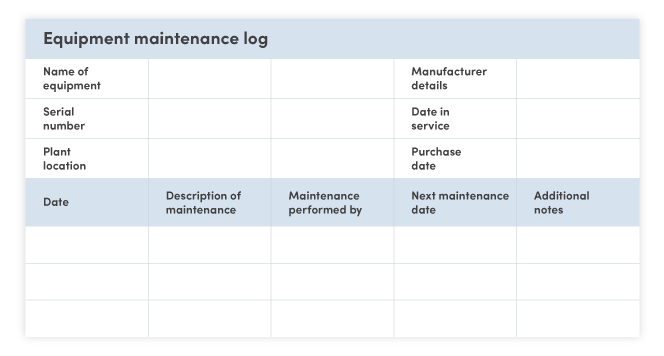
A well‑documented history is the backbone of efficient troubleshooting. Record every interaction: breakdowns, preventive maintenance (PM) visits, inspections, part replacements, production schedules, and any abnormal observations such as smoke or unusual noises. Highlight the successful resolution, including parts, labor, and safety equipment used.
Use a structured maintenance log to capture these details. Download our template.
Employ root cause analysis (RCA) and failure codes
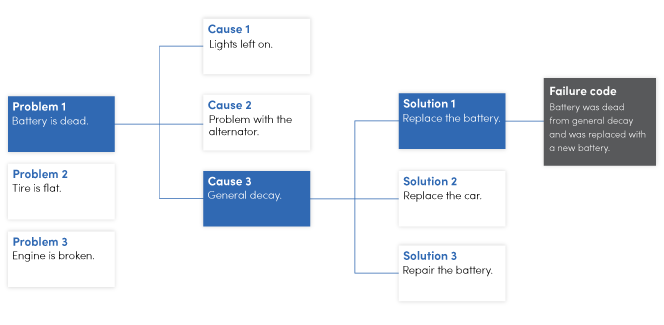
RCA involves iteratively asking “why” until the underlying issue is uncovered. For instance:
- Equipment failed because a bearing wore out.
- Bearing wore out due to misaligned coupling.
- Coupling misaligned because it wasn’t serviced.
- Maintenance not scheduled due to unclear intervals.
- Intervals unclear because of insufficient data.
Failure codes standardize the description of incidents. They capture problem type, root cause, and recommended remedy, enabling rapid cross‑asset analysis and preventive action.
Develop detailed task lists
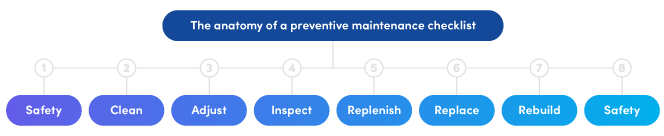
Clear, step‑by‑step task lists guide technicians through inspections, repairs, and PMs, reducing the chance of omission. Include all necessary supplies, resources, and personal protective equipment (PPE). Task lists also serve as audit trails, offering insight into recent work when diagnosing failures.
Ensure information is readily accessible
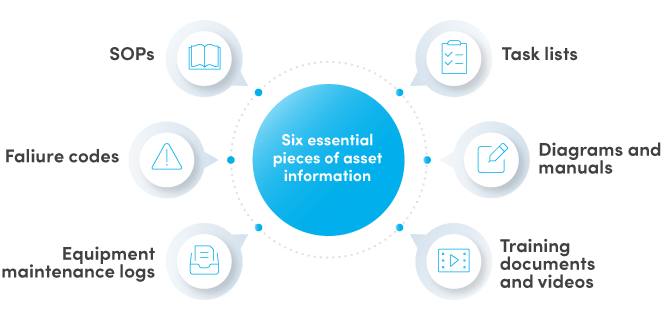
Data, SOPs, diagrams, training videos, and manuals should be organized by asset and hosted on a digital knowledge hub. Mobile‑friendly platforms allow technicians to retrieve critical information on the shop floor, eliminating the need to search physical files or rely on a single individual’s memory.
Everything you need to know about maintenance metrics
Leveraging maintenance software for faster resolution
Digital platforms such as Computer‑Aided Maintenance Management Systems (CMMS) centralize data, automate workflows, and provide real‑time insights. They streamline asset history creation, failure code management, and task list execution, freeing technicians to focus on analysis rather than data entry.
For example, a CMMS can prompt technicians with a structured questionnaire during a fault, capture notes instantly, and link the entry to the asset’s history. When a similar issue arises elsewhere, the system surfaces relevant past incidents and recommended solutions.
Key takeaways
Troubleshooting will always be part of maintenance. By adopting systematic approaches—root cause analysis, failure codes, detailed task lists, and digital knowledge hubs—you can reduce the reliance on trial and error, shorten repair times, and improve overall equipment reliability.
Equipment Maintenance and Repair
- Mobile Maintenance: The Cloud‑Driven Revolution in CMMS
- Beyond Tickets: How Fiix’s Work Request Portal Drives Total Productive Maintenance
- Condition‑Based Maintenance: Sensors & Systems for Predictive Asset Management
- Transforming Operations & Maintenance: A Practical Guide to Effective Planning
- Maximizing Maintenance Productivity Through Multi‑Skill Training
- 5 Proven Rules to Strengthen Operations & Maintenance Partnerships
- Maximize Productivity: How Maintenance Software Cuts Costs and Saves Time
- 3 Essential Tips for Successful Industrial Equipment Rental & Maintenance
- Expert Guide: Servo Motor Repair & Troubleshooting Tips
- Balancing Benefits and Risks: AI in Predictive Maintenance