



Condition‑Based Maintenance: Sensors & Systems for Predictive Asset Management
Condition‑Based Maintenance (CBM) leverages real‑time performance data to forecast when machinery requires service, reducing unnecessary downtime and maintenance costs while safeguarding reliability and safety.
Core Benefits of CBM
- Higher equipment uptime and plant availability
- Lower maintenance hours—preventive and corrective alike
- Early detection of failures that could otherwise cause secondary damage
- Extended asset life through proactive intervention
Foundational Sensors in CBM
Accurate, real‑time data starts with robust sensing technology. Common sensors include:
- Vibration (accelerometers) – detect misalignments, bearing wear, or failing mounts.
- Current & Flux coils – identify electrical anomalies that may signal mechanical wear.
- Temperature transducers (thermistors, RTDs, thermocouples) – monitor motor surface and ambient heat, flagging overheating or bearing wear.
- Thermal imagers – non‑contact infrared cameras that compare normal vs. abnormal thermal profiles.
- Ultrasonic transducers – locate leaks and inspect both mechanical and electrical components.
Expanding CBM Applications
Today’s lower‑cost sensors and embedded processors enable CBM across a wide spectrum of equipment, including:
- Servo drives in production machinery (e.g., louver manufacturing)
- Step‑per motors that lack torque sensing, which can be upgraded for predictive insight
- pH monitoring systems with automated cleaning, calibration, and drift compensation
Example: A servo‑driven louver machine monitors torque via drive current. By mapping the normal torque profile, the system flags any deviations that could indicate bearing wear or impending failure, allowing scheduled maintenance instead of unplanned downtime.
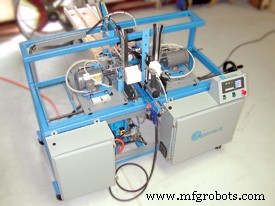
Photo 1. Louver production machine containing a servo drive system (Photo courtesy of G & L Technologies).
Open Connectivity in CBM
Modern CBM solutions adopt open standards such as OPC (OLE for Process Control) to streamline data flow between PLCs, PCs, and distributed sensors. OPC facilitates:
- Real‑time data communication across diverse hardware without custom programming
- Unified data logging and visualization for multi‑brand PLC environments
- Dynamic dashboards that use color cues for instant status assessment
- Built‑in math functions for on‑the‑fly calculations before display
Illustration: OPC-based data collection provides actionable insights for maintenance teams.
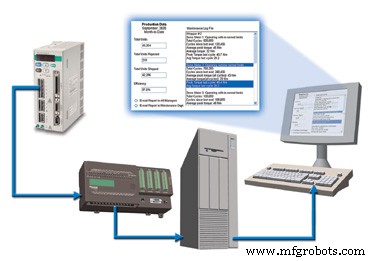
Graphic 1. OPC-based data collection from a control system provides useful data for maintenance decisions.
Implementing a Successful CBM Program
When deployed correctly, a CBM strategy delivers:
- Reduced maintenance spend
- Higher machine reliability and safety
- Improved product quality through consistent equipment performance
- Extended equipment lifecycle
For guidance on integrating CBM into your operations, contact Carl Hamilton, Technical Specialist at AutomationDirect, or visit AutomationDirect.com. Call 800‑633‑0405 for a consult. To deepen your knowledge, email Paul V. Arnold (Reliable Plant) at parnold@noria.com for our automation glossary.
Ready to Optimize Your Maintenance?
Adopt sensors, leverage open connectivity, and let data drive your maintenance decisions—achieve cost savings, uptime, and safety simultaneously.
Equipment Maintenance and Repair
- SAFe-VX: Kontron & SYSGO’s Unified Safety-Critical Railway Computing Platform
- Aligning Operations & Maintenance: A Proven Formula to Slash Downtime and Boost Profits
- Transforming Operations & Maintenance: A Practical Guide to Effective Planning
- 5 Proven Rules to Strengthen Operations & Maintenance Partnerships
- 3 Essential Tips for Successful Industrial Equipment Rental & Maintenance
- Embedded Systems & System Integration: Modern Architecture & Connectivity
- Balancing Benefits and Risks: AI in Predictive Maintenance
- Proactive Hydraulic System Maintenance: Reduce Contamination & Downtime
- Hydraulic & Pneumatic Solutions for the Food & Beverage Industry
- Hydraulic Systems: Why Regular Maintenance Is Essential