



Boost HVAC Efficiency: Replace V‑Belts with Synchronous Belts for Lower Energy Use
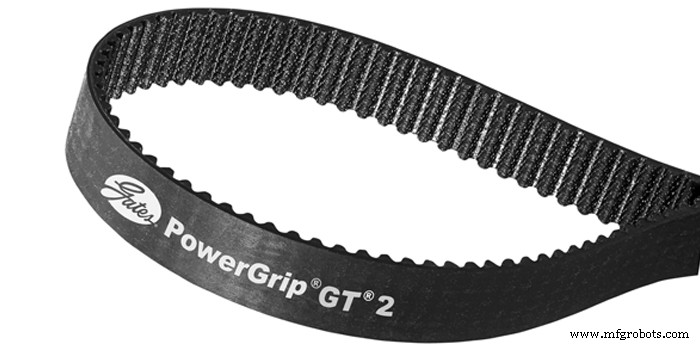
Replacing V‑belts with synchronous belts in air‑handling systems is now a proven best practice for cutting energy demand in industrial and commercial facilities, according to a recent U.S. Department of Energy study.
Why are synchronous belts considered “green”? A V‑belt drive starts out at 95‑98 % efficiency, but that figure can drop to about 93 % over its life if it’s properly maintained. Most efficiency loss occurs in the first 24 hours, requiring a re‑tension. Without scheduled re‑tensioning, V‑belt drives can fall to as low as 80 % efficiency, which means slower fan speeds, more air‑handling time, and higher electricity bills.
In air‑handling equipment, efficiency measures how effectively the motor’s power is transferred to the fan. Lower efficiency translates into slower fan speed, reduced airflow, and longer run times—all of which drive up electrical consumption.
Once tensioned correctly, synchronous belts maintain a 98 % efficiency level throughout their service life without the need for costly maintenance. That steady performance can deliver significant electrical savings in many HVAC setups.
What’s the real‑world impact? The DOE report uses a 100‑hp supply‑air fan running at 75 % load for 24 hours a day, drawing 527,000 kWh per year. At 93 % efficiency, that’s the baseline. Switching to a 98 % synchronous belt yields:
- Energy Savings = 527,000 kWh × (1 – 93/98) = 26,888 kWh per year
- Cost Savings = 26,888 kWh × $0.05/kWh = $1,345 annually
Not all synchronous belts are identical. Jason Industrial’s Platinum line, for example, features Dual‑Core Cord technology that preserves dimensional stability under tension, enabling narrow belts that fit existing applications. Its RPC tooth profile delivers 98 % efficiency even with less tension than a V‑belt.
While synchronous belts boost efficiency in most drive configurations, they may not always reduce consumption. In smaller drives with short centre distances, V‑belt slippage is sometimes used to increase fan speed; replacing these with synchronous belts could inadvertently raise energy use.
Additional benefits include up to 15 % reduction in bearing and shaft loads—extending equipment life—and lower operating temperatures that keep bearings cooler. Jason’s Platinum belts also use HNBR rubber to cut noise, support temperatures from –30 °F to +240 °F, and feature a fabric‑covered tooth surface for enhanced torque and shear resistance.
Jason offers a comprehensive drive‑design manual and a dedicated engineering team to guide conversion from V‑belts to synchronous belts.
Craig Roozen, Director of Diversified Products, Jason Industrial.
Find the original article on the MRO website.
Equipment Maintenance and Repair
- Expert Insights on Common Mistakes in Selecting Power Transmission Belts
- ABB’s Medium‑Voltage Drives Cut Pump Energy Use by 25% at German Coal Plant
- How to Accurately Measure Machine Efficiency – A Practical Guide
- Boosting Laser‑Driven Flyer Efficiency with In‑Situ Nano‑Absorption Layers
- Maximize Plant Energy Efficiency with Advanced HMIs
- Boost Energy Savings in Pumping Systems: Proven Efficiency Strategies
- Maximizing Energy Efficiency with Variable Speed Drives – Expert Guide (Part 1)
- 5G Operators Prioritize Energy Efficiency for Sustainable Connectivity
- Boost Productivity with Advanced Motion Control Systems
- Fluid Mixing Systems: Driving Energy Efficiency in Modern Manufacturing