



How Wearable Technology Transforms Manufacturing: Boosting Efficiency, Safety, and Connectivity
By Matt Powell, Associate Editor at PLANT
In today’s hyperconnected world, the Internet of Things (IoT) is reshaping how manufacturers manage production, logistics, and workforce engagement. Wearable devices—smart glasses, bands, and watches—are emerging as a practical bridge between humans and the IoT ecosystem.
According to Cisco, IoT could generate $3.9 trillion in net profits for the global manufacturing sector over the next decade, while Canadian firms are expected to invest $21 billion in 2018—up 375 % from 2014 (IDC). General Electric estimates that internet‑connected machinery could contribute $15 trillion to global GDP by boosting US productivity growth by up to 1.5 %.
Wearables harness the massive data streams generated by IoT, enabling shop‑floor workers to access real‑time information directly on their bodies rather than on handheld screens. This not only improves situational awareness but also reduces distractions and safety risks.
Research firm Strategy Analytics projects global wearable revenues to reach $37 billion in 2020, a dramatic rise from $1 billion in 2014. Juniper Research anticipates 130 million wearable shipments by 2018.
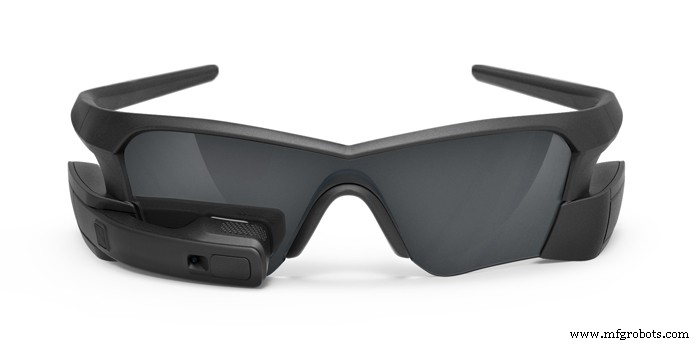
Manufacturers already benefit from field‑ready solutions. Vancouver‑based Recon Instruments offers the Recon Jet, a rugged smart‑glass that streams data, tasks, and instructions to users via voice, touch, and a barcode‑reading camera. Nashville’s XOEye Technologies supplies the XOne smartglasses, built for harsh environments and featuring barcode scanning, video/audio telepresence, and biometrics tracking to identify workflow bottlenecks.

Big Possibilities
Exact Online, a cloud‑software provider for small manufacturers, highlights several key use cases:
- Video Applications – Hands‑free first‑person video capture for real‑time monitoring and post‑hoc review.
- Employee Monitoring – Wearable‑based fatigue detection and productivity analytics to reduce injuries and optimize shift schedules.
Solstice Mobile, a Chicago‑based digital‑strategy firm, envisions wearables transforming:
- Field Service – Remote collaboration for maintenance crews working at heights or underground.
- Remote Line Monitoring – Continuous machine performance data without tethering workers to the equipment.
- Warehouse Operations – Smartwear for instant inventory location and real‑time stock updates.
- Employee Training – On‑the‑go learning modules delivered directly to workers’ wrists or glasses.
Integrating wearables also supports talent attraction. Cisco reports that 75 % of the U.S. workforce are Millennials—who increasingly view wearable devices as essential workplace tools—and are poised to replace retiring Baby Boomers and Gen‑Xers.
Wearables are no fleeting trend; they represent a pivotal shift that simplifies IoT integration, boosts operational efficiency, and elevates workforce safety.
Comments? Email mpowell@plant.ca.
Find the original article on the PLANT website.
Equipment Maintenance and Repair
- Chrysler’s Belvidere Plant Embraces Toyota-Driven Smart Manufacturing
- 6 Proven Techniques to Error‑Proof Your Plant Operations
- Is Your Plant Operating Like a Navy Carrier? Insights for Optimizing Teamwork
- Why Your New Industrial Plant Needs Professional Dumpster Services
- Why Prompt Repair of Your Test Equipment Is Essential for Business Continuity
- Why Your Business Depends on Quality Clutch Friction Material
- Why a CNC Press Brake is Essential for Modern Fabrication Shops
- How Hot Gas Bypass Improves Refrigerant Dryer Efficiency
- Ensure Peak Performance: The Crucial Role of Preventative Maintenance for Compressor Systems
- Boost Your Compressor System Efficiency with an Air Receiver