



Proactive Maintenance of High‑Voltage Motors & Generators: Predicting Stator Winding Life
Why Proactive Assessment Matters
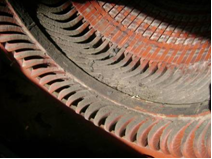
High‑voltage (HV) motors and generators are custom‑built assets that power critical industrial processes. An unplanned failure can bring production to a halt for days, driving up costs and eroding reliability. Because replacements are rarely quick or inexpensive, operators must anticipate winding problems before they manifest as catastrophic faults.
Condition Assessment – The First Line of Defense
Accurate insight into stator winding insulation hinges on a systematic battery of tests. While DC methods like insulation resistance (IR) and polarization index (PI) offer a baseline, they can miss surface contamination that threatens long‑term integrity. By contrast, more advanced techniques—Polarization Depolarization Current Analysis (PDCA), Tan δ Capacitance Analysis (TDCA), Partial Discharge (PD) measurement, and Non‑Linear Insulation Behavior Analysis (NLIBA)—provide a fuller picture of both surface and bulk insulation health.
What Drives Failures in Large Motors?
Power‑rated motors of 2 MW and above are engineered for high output but also carry a higher proportion of winding failures. According to an IEEE survey, 33 % of failures detected during normal operation stem from stator windings, whereas only 8 % of failures identified during routine maintenance or testing relate to the same cause. 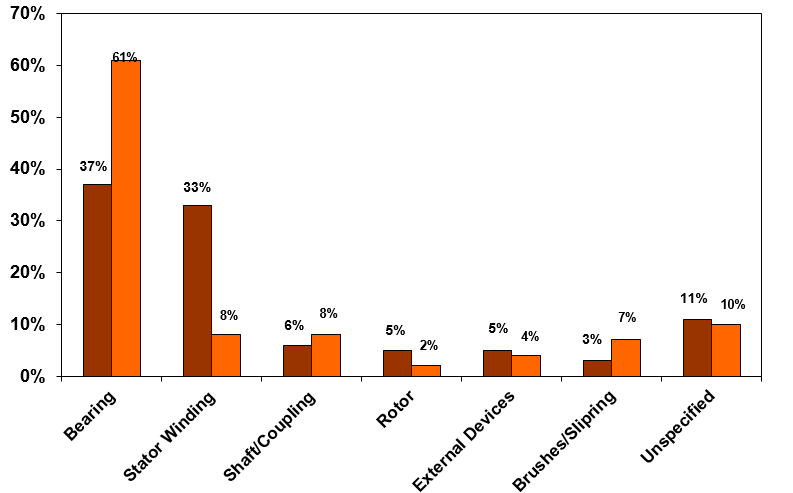

This gap underscores the inadequacy of conventional inspection methods and the need for predictive, data‑driven strategies.
TEAM Stress Factors & Life‑Cycle Modeling
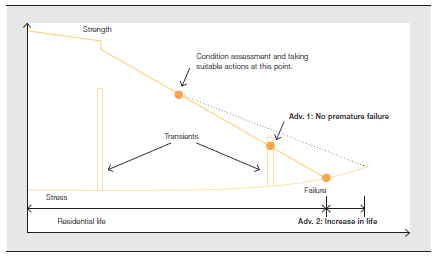
Before evaluating insulation health, you must understand the stresses that degrade it. TEAM—thermal, electrical, ambient, and mechanical—collectively influence insulation strength over time. Two curves help visualise the relationship: a stress curve that aggregates operational loads (including transients) and a strength curve that represents insulation resilience as it ages. Failure occurs when these curves intersect. 
Key Measurements for Accurate Prognosis
To forecast remaining life, you need both operational data (hours, load, starts, duty cycle, temperatures, maintenance history) and empirical measurements. Four methods stand out:
- PDCA – captures charge storage and surface contamination
- TDCA – assesses bulk insulation volume
- Partial Discharge Analysis – detects early defect formation
- NLIBA – evaluates non‑linear behavior under load
PDCA, for instance, charges the winding and then measures discharge currents, revealing contamination levels that IR/PI tests can miss. In one case, IR = 2205 MΩ and PI = 4.79 appeared normal, yet PDCA detected severe contamination: Q1 = 78.68 % (7 %), Q2 = 65.49 % (10 %), Q3 = 128.56 % (20 %). After cleaning, IR rose to 32,464 MΩ, PI to 5.63, and PDCA values dropped to ~8 % across all zones.
Data‑Driven Analysis & Residual Life Estimation
Combining field data with a robust database of thousands of historical measurements enables a holistic assessment. By integrating measured parameters, stress calculations, and strength degradation models, engineers can estimate residual life and schedule preventive maintenance before the stress and strength curves converge. 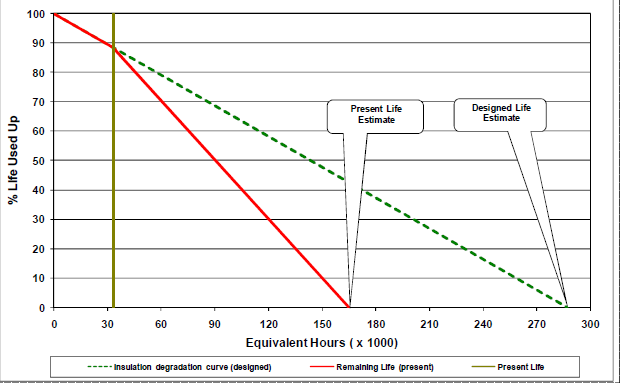
Maximising Asset Value
Adopting a comprehensive measurement protocol and accounting for all TEAM stresses turns predictive insight into real business value—higher uptime, lower repair costs, and extended equipment lifespan.
This article was written by Vijay Anand, Regional Product Specialist for Condition Monitoring & Diagnosis at Baldor Electric Company.
About J/E – We are an authorized distributor for Baldor, offering bearings, gearings, and power transmission components. For inquiries, visit our contact page or email info@je-bearing.com.
Equipment Maintenance and Repair
- Keep Maintenance Proactive: Lessons from Sisyphus on Continuous Improvement
- How to Reduce Maintenance Costs Without Sacrificing Reliability
- Top Performance in Maintenance & Reliability: Proven Strategies for Long‑Term Success
- Harley-Davidson Plant Achieves Excellence with Proactive and Predictive Maintenance
- Understanding Voltage‑Current Imbalance in Electric Motors: Causes and Troubleshooting
- Shaft Currents and Bearing Defects: Expert Solutions to Extend Electric Motor Life
- Mastering Proactive Maintenance: Elevate Reliability and Reduce Downtime
- Expert Maintenance Tips: 5 Proven Practices for Motors & Drives
- High‑Voltage PCB Design: Materials, Safety, and Best Practices
- Proactive Maintenance Explained: Benefits & How It Differs from Reactive Strategies