



Near‑Zero Downtime: Expert Guide to Maintenance Trends and Best Practices
1. Maintenance Technologies Overview:
Manufacturing firms today push equipment to its limits while simultaneously trimming overhead. In this high‑pressure environment, high‑quality maintenance is the linchpin that sustains productivity and customer satisfaction. After‑market support has become a decisive factor for profitability and reliability, elevating maintenance management to a core enterprise function.
Modern maintenance technologies aim to:
- Increase equipment reliability and reduce production downtime.
- Boost throughput.
- Extend asset life expectancy.
- Improve safety and quality standards.
Figure 1 outlines the evolutionary path toward maintenance excellence.
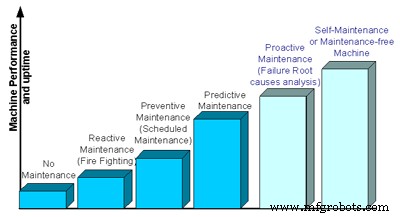
Figure 1. The development of maintenance technologies.
1.1 No Maintenance
In rare cases, maintenance is not performed because either no viable technique exists or the cost of repair outweighs the benefit. These scenarios are outside the scope of this discussion.
1.2 Reactive Maintenance
Reactive maintenance, often called “firefighting,” addresses failures only after they occur. Historically, many operations neglected preventive care, allowing machinery to run until a breakdown forced urgent repairs. While this approach may be tolerable when downtime is abundant and asset value is low, the trend—driven by competition and safety regulations—favours organized, proactive programs.
1.3 Preventive Maintenance
Preventive maintenance (PM) schedules component replacement or overhaul at fixed intervals regardless of current condition. PM splits into two categories:
Minor PM – basic tasks such as lubrication, cleaning, and routine adjustments that keep equipment running. When many machines lack a coordinated program, a minor PM schedule ensures timely service but does not anticipate future failures.
Major PM – builds on minor PM by replacing key components (bearings, shafts, sensors, gears, piping) based on run hours or statistical life‑cycle data. While this can preclude failures, it also risks unnecessary part replacement and cost overruns. Most organizations combine both approaches to balance reliability and expense.
1.4 Predictive Maintenance
Predictive maintenance (PdM) is a right‑on‑time strategy that blends data from diagnostics, operator logs, maintenance history, and design documents to forecast equipment health. By monitoring physical parameters against engineering limits, PdM enables maintenance only when conditions warrant it, thereby cutting unexpected downtime and operating costs.
Figure 2 illustrates the core elements of a PdM program.
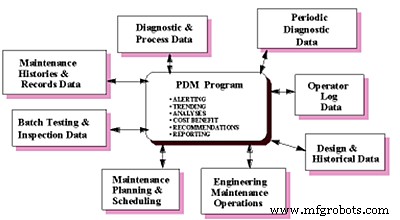
Figure 2. Elements of a PdM program.
Key PdM concepts include:
- Integrate all available information.
- Analyze degradation trends.
- Determine corrective actions.
- Apply prediction algorithms.
- Schedule interventions proactively.
- Feed insights back into maintenance history and root‑cause analysis.
- Maintain a proactive mindset.
1.5 Proactive Maintenance
Proactive maintenance focuses on eliminating root causes and feeding maintenance insights into design and operations. Two main approaches exist:
- Shift from reactive to proactive by preventing underlying conditions that lead to failure.
- Use maintenance data to improve machine design and operational practices.
While debate continues about speed and effectiveness, clear communication between maintenance, design, and operations is essential.
1.6 Self‑Maintenance
Self‑maintenance introduces embedded intelligence that allows machinery to monitor, diagnose, and request service autonomously. This functional maintenance paradigm replaces traditional physical repair with intelligent self‑healing, reducing gaps between machine, maintenance scheduling, dispatch, and inventory systems. The result is lower costs and higher customer satisfaction.
2. Where Are We Now?
Many legacy manufacturing plants still rely on firefighting maintenance. For example, a major U.S. automotive manufacturer reports that 85–90% of its 15,000–18,000 maintenance staff handle crisis work. Conversely, some companies have shifted 80% of work to scheduled maintenance. The industry benchmark for world‑class performance is a 19:1 ratio of planned to unplanned work. Achieving 90% scheduled maintenance is impressive, yet the real question is whether that level is sufficient—prompting a shift toward predictive maintenance.
2.1 Shift From Reactive and Preventive Maintenance to Predictive Maintenance
Reactive maintenance drives high costs and significant downtime. Preventive maintenance eliminates breakdowns but often performs unnecessary work, wasting up to one‑third of spending according to Forbes. Predictive maintenance uses real‑time data to schedule service precisely when needed, reducing wasted effort and ensuring critical equipment remains operational.
In automotive terms, preventive maintenance is like changing oil every 3,000 miles regardless of engine condition. Predictive maintenance samples oil periodically and adjusts the schedule based on actual wear, saving money and extending engine life.
Thus, the industry is moving from a “fail‑and‑fix” mindset to a “predict‑and‑prevent” paradigm, focusing on performance degradation as the earliest warning of impending failure.
2.2 Benefits of Predictive Maintenance
Predictive maintenance delivers tangible advantages across four dimensions:
- Improved productivity – reduces costly downtime, aligns repairs with low‑impact times, and optimizes machine performance.
- Lower overall costs – eliminates unnecessary repairs, reduces spare‑part inventory, extends asset life, cuts energy waste, and removes the need for standby equipment.
- Enhanced customer satisfaction – reduces quality issues, shortens lead times, anticipates service demand, and cuts penalties and warranty claims.
- Increased safety – mitigates injury risk, lowers safety penalties, and decreases insurance premiums.
2.3 Requirements for Predictive Maintenance
Implementing PdM demands investment in two areas:
- Condition‑based monitoring and diagnostic hardware.
- Staff training and skill development.
3. Predictive Maintenance Methodologies
3.1 Condition‑Based Monitoring and Performance Assessment
Condition‑based monitoring (CBM) is the foundation of PdM. Continuous tracking of operational parameters—such as vibration, oil quality, temperature, and acoustic emissions—provides the data needed for accurate prognostics.
Table 1 summarizes common detection methods, typical failure modes, and relevant equipment:
| Detection Method | Failure Mode | Equipment |
|---|---|---|
| Vibration Analysis | Out of Balance, Misalignment, Bearing Defect, Gear Defect, Turbulence | Rotating Machinery |
| Oil & Wear Particle Analysis | Lubrication Failure, Abnormal Wear | Mechanical Component |
| Ultrasound | Cavitation, Leak Detection, Loose Connection, Corona Discharge, Bearing Defect | Hydraulic Pump; Air/Steam/Vacuum System; Power Distribution; Electrical Switchgear; Overhead Transmission |
| Thermography | Abnormal Hot Component | Electrical, Mechanical, Structural Components |
| Acoustic Emission Analysis | Stress Crack, Containment & Transfer Equipment | — |
Vibration analysis, for instance, allows early detection of bearing wear, enabling replacements before catastrophic failure. Ultrasound is ideal for leak detection in steam and pneumatic systems, while thermography quickly identifies overheating electrical connections. Acoustic emission (AE) monitors stress crack growth, offering non‑intrusive inspection of pressure vessels and composites.
3.2 Watchdog Agent
The Watchdog Agent represents a generic, failure‑agnostic CBM approach. By extracting performance signatures from multiple sensors and comparing them to baseline behavior, it identifies degradation without requiring explicit failure data. When a signature deviates, the system predicts the remaining useful life and recommends corrective action. This model reduces reliance on expert knowledge and supports proactive, data‑driven maintenance.
Figure 3 demonstrates the Watchdog’s performance‑assessment workflow.
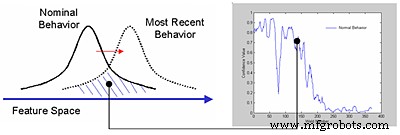
Figure 3: Performance assessment based on the overlap between signatures.
According to the Open System Architecture for Condition‑Based Maintenance (OSA‑CBM), a CBM system typically includes sensor modules, signal processing, condition monitoring, health assessment, prognostics, decision‑making support, and presentation layers. The Watchdog extends this architecture to multi‑sensor analysis, enabling comprehensive health evaluation and prognostics.
Conclusion
In today’s competitive landscape, reducing downtime to near zero is essential for sustaining throughput and profitability. While reactive and preventive maintenance have served as foundational strategies, predictive maintenance—rooted in real‑time data, advanced analytics, and proactive decision making—offers the most effective path forward. By embracing condition‑based monitoring, predictive analytics, and intelligent agents like the Watchdog, organizations can replace the traditional fail‑and‑fix cycle with a predictive‑and‑prevent paradigm that delivers measurable gains in reliability, cost, safety, and customer satisfaction.
About the authors
Hai Qiu and Jay Lee direct the NSF Industry/University Cooperative Research Center on Intelligent Maintenance Systems (IMS) at the University of Cincinnati. For more information, visit www.imscenter.net.
References
- Sandy Dunn, Condition monitoring in the 21st century
- Plant Maintenance Resource Center, 2002 Condition Monitoring Survey Results
- Robert J., Maintaining the bottom line
- Chris Davies, The use of Information Systems in Fault Diagnosis
- Don Fitchett, What is the True Downtime Cost (TDC)
- William C. Worsham, Is preventive maintenance necessary?
- Christer Idhammar, CMMS and preventive maintenance
- What is Proactive Maintenance
- James C. Fitch, Proactive Maintenance can Yield More than a 10-Fold Savings Over Conventional Predictive/Preventive Maintenance Programs
- Dibyendu De, Productivity Improvement Through Operational Reliability and Knowledge Workers
- NSF I/UCRC Center for Intelligent Maintenance Systems
- Augustine DiGiovanni, Maintenance Optimization by Integrating Technologies and Process Change
- Robert Edae, The importance of predictive maintenance
- NSF I/UCRC Center for Intelligent Maintenance Systems
- NSF I/UCRC Center for Intelligent Maintenance Systems
- NSF I/UCRC Center for Intelligent Maintenance Systems
Equipment Maintenance and Repair
- Key Industrial Maintenance Trends of 2020 – Insights & Actionable Strategies
- Preventive Maintenance: How Proactive Care Drives Reliability & Saves Costs
- Maintenance Management 101: How CMMS Drives Efficiency, Cost Control, and Asset Longevity
- Top Performance in Maintenance & Reliability: Proven Strategies for Long‑Term Success
- Why Attention to Detail Drives Maintenance & Reliability Success
- Can Manufacturers Achieve Zero Downtime? Insights & Strategies
- Robotic Welding Maintenance: Maximizing ROI and Minimizing Downtime
- How Predictive Maintenance Drives Servitization Success
- Preventative vs Predictive Maintenance: Why Switching to Predictive is Essential for Manufacturers
- The Crucial Role of Planned Maintenance in Asset Longevity and Business Success