



Do Drive Chains Truly Need Lubrication? Inside Modern Lube‑Free Technologies
By Bill Roebuck
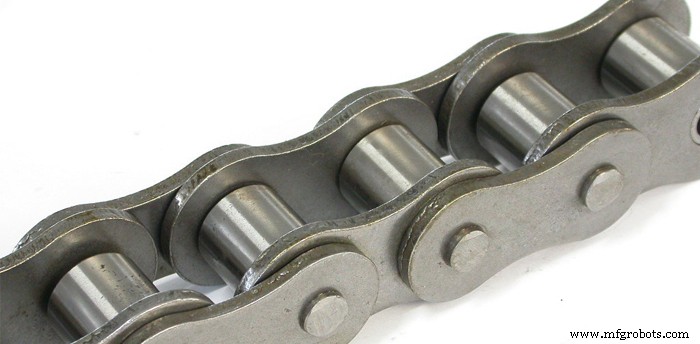
For many, the notion of a lubrication‑free drive chain seems contradictory. After all, proper lubrication is essential to protect the contact between pins, bushings, and rollers, preventing premature wear and chain elongation that can lead to gear tooth jumps, fluctuating loads, and eventual failure.
“A well‑lubricated chain remains one of the most efficient and reliable methods of power transmission,” says Dr. Chris Lodge, vice‑president of engineering at Renold Jeffrey, a leading authority in chain technology.
Yet, Dr. Lodge acknowledges that lubrication adds cost and, in certain settings—such as the food industry where contamination is a concern, or in hard‑to‑reach installations—regularly re‑lubricating a chain is impractical or undesirable.
Historically, many operators had no choice but to run chains without lubrication, which resulted in frequent replacements and costly downtime. In response, manufacturers have accelerated the development of true lube‑free chains that eliminate the need for re‑lubrication.
What does “lubrication‑free” actually mean? In most cases it refers to a chain that carries its own lubricant, cleverly sealed within the links so that, over the product’s life, no additional greasing is required and no external lubricant is visible.
Types of Lubrication‑Free Chains
- Solid‑lubricant chains: These feature surface coatings or wax‑like layers applied during manufacturing. Once the coating wears off, the chain behaves like a standard unlubricated one.
- Liquid‑lubricant chains: The most advanced examples incorporate a liquid lubricant that is retained inside the chain. A notable example is Renold’s Syno brand, which uses a sintered, oil‑impregnated bush. During operation the oil is released onto the bearing surfaces; when the chain stops, capillary action draws the oil back into the bush.
- Polymer‑bush chains: For applications that demand no metal‑to‑metal contact at all—such as extreme temperature environments, frequent washdowns, or heavy‑duty duty—Renold offers chains with engineered polymer bushings that operate without any lubrication whatsoever.

These innovations mean that, for virtually every application, an off‑the‑shelf lubrication‑free chain is now available—whether the requirement is food‑grade cleanliness, remote accessibility, or high‑temperature resilience.
Bill Roebuck is editor of Machinery & Equipment MRO. For more information on these chain products, visit Renold Canada.
Equipment Maintenance and Repair
- Choosing the Optimal Drive System: Chain, V‑Belt, or Synchronous Belt
- Maintaining Reliability in a Recession: Strategies to Keep Your Electrical Systems on Target
- How Precise Belt Alignment Boosts Performance and Longevity
- Maximizing Drive Chain Longevity: Expert Maintenance Tips
- FRP vs. Steel: The Real Strength of Fiber‑Reinforced Polymer
- Hard Drives Covertly Convert into Microphones: A New Espionage Threat
- Enhancing Supply Chain Resilience through Advanced Traceability
- Chain Drive vs Gear Drive: A Comprehensive Comparison
- Belt vs Chain Drives: Key Differences Explained
- Comprehensive Guide to Chain Drives: Mechanics, Applications, and Maintenance