



Laser Welding vs. Traditional Methods: Advantages, Applications, and Key Differences
In the welding industry, the four most common conventional techniques are resistance welding, argon arc welding, plasma arc welding, and electron beam welding (EBW). Each method has its own niche, but they all share certain limitations that laser welding can overcome.
Resistance welding excels at joining thin metal sheets, yet it deforms the workpiece and requires frequent electrode maintenance. Because the process involves direct contact, laser welding can join the same thin sections without touching the material, allowing it to reach areas that are difficult or impossible for conventional welding.
Argon arc welding delivers a slower speed and a larger heat input, increasing the risk of distortion. Plasma arc welding improves on argon arc by producing a more concentrated, deeper arc, but it still falls short of the precision and speed of laser fusion.
Electron beam welding demands a high‑vacuum environment to prevent electron scattering. The complexity of the chamber limits weld geometry, and the process introduces magnetic offset and X‑ray hazards that necessitate demagnetization and shielding. In contrast, laser welding operates at atmospheric pressure, eliminates the need for vacuum or demagnetization, and can be integrated directly into production lines, making it ideal for magnetic materials and rapid manufacturing.
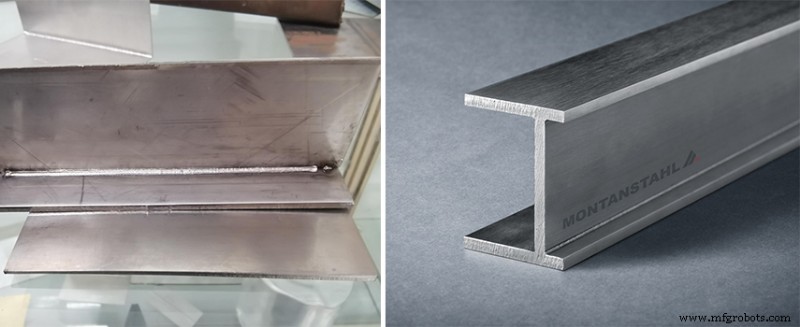
Aluminum Alloy Laser Welding
Aluminum alloys are notorious for producing pores and cracks during laser fusion because of their low ionization energy and poor welding stability. The high‑temperature environment also generates aluminum oxide and nitride, contributing to surface contamination.
Effective strategies include:
- Surface preparation – polishing the alloy surface increases laser absorption.
- Inert gas shielding – argon or nitrogen prevents pore formation.
- Parameter optimization – adjusting power, speed, and beam profile tailors the melt pool to reduce defects.
- Process variation – selecting the appropriate laser type (fiber, CO₂, Nd:YAG) and mode (continuous or pulsed) based on alloy composition.
Laser Hybrid Welding
Common Laser Welding Challenges & Solutions
Laser welding’s high efficiency, precision, and automation potential make it indispensable across many sectors. However, mastering its principles is essential to avoid defects. Below are five typical issues and proven remedies:
1. Cracking
Thermal cracks—crystallization or liquefaction—arise from rapid solidification shrinkage. Mitigation techniques include wire filling, pre‑heating the joint, and controlled cooling.
2. Porosity
Pores form when trapped gases cannot escape the deep, narrow melt pool. Thorough surface cleaning, proper gas flow direction, and lower power density reduce porosity.
3. Spatter
Spatter degrades weld appearance and can damage lenses. Lowering laser energy density and adjusting beam focus help suppress spatter.
4. Undercut
Fast welding speeds prevent molten metal redistribution, causing undercuts. Matching power and speed to the joint geometry and ensuring a proper gap eliminates this defect.
5. Collapse
Slow speeds generate a large, wide melt pool where surface tension cannot hold the metal, leading to sagging. Reducing energy density or increasing scan speed prevents collapse.
Laser Welding Kits
- Host Unit – comprises power supply, laser generator, optical path, and control system.
- Cooling System – circulates coolant; chiller capacity matches laser power.
- Motion Control – offers three modes: moving workpiece, moving head, or both simultaneously for full automation.
- Fixture – secures the workpiece, enabling repeatable loading and precise positioning, crucial for high‑volume production.
- Observation System – real‑time microscopic monitoring via CCD or microscope for accurate alignment and quality checks.
Laser Welding Machine Pricing
Pricing varies with configuration and functionality:
- 3‑D automatic laser welders – $4,000 to $8,000.
- Handheld fiber laser welders (1,000–2,000 W) – $3,000 to $5,000.
- Three‑in‑one handheld fiber laser welders – $5,000 to $10,000, offering welding, cleaning, and cutting in one machine.
What Materials Can Be Welded with a Laser?
Laser welders are versatile:
- Stainless steel, carbon steel, and aluminum – both fillet and splice welding.
- Multi‑mode 3‑in‑one units provide laser cutting and cleaning in addition to welding.
- Specialized monitoring systems allow novices to practice stitch and splice welding on a 3‑D machine.
Industries & Applications
Laser welding is adopted across a spectrum of sectors:
- Manufacturing, aerospace, shipbuilding, automotive, electronics, IT, batteries, jewelry, biomedicine, powder metallurgy, optical communication, sensors, hardware, glasses, home appliances, solar, electric heating, precision parts.
- Automotive: engine components, gaskets, seals, high‑voltage relays, filters, turbochargers, and more.
- Electronics: sealing of solid‑state relays, connectors, mobile device housings, fiber‑optic joint welding.
- Medical devices: hermetically sealed pacemakers and implants.
- Aerospace: welding of nickel and titanium alloys for structural components.
Home Welding for Beginners
Arc welding is unsuitable for domestic use due to high current and fire risk. The safest entry point is brazing or soft soldering, which uses high‑frequency heating and offers manageable strength. If budget permits, compact laser or plasma welders provide excellent quality and speed without the hazards of gas or high‑voltage arc processes.
Conclusion
Understanding how laser welding compares to traditional methods, its applications, pricing, and common challenges empowers you to choose the right technology for your needs. As laser welding becomes increasingly mainstream, staying informed will help you leverage its benefits across any production environment.
CNC Machine
- Master SINUMERIK 808D: Beginner Video Tutorial – Turning Part 1
- 2024’s Best CNC Router Machines – Top 10 Picks & Why They Excel
- Choosing the Right CNC Router Kit: A Complete Guide
- When to Choose Vacuum Casting Over Injection Molding: A Practical Guide
- CNC Pocket Milling Example: Peck Milling Tutorial
- How CNC Machinery Revolutionizes Manufacturing: Accuracy, Efficiency, and Reliability
- Haas G71 Roughing Cycle Program Example for Inside Roughing
- How CNC Precision Machining Elevates Quality and Performance: 5 Key Benefits
- Key Factors That Extend Tool Life in Carbon and Alloy Steel Machining
- 4×8 vs 5×10 CNC Router Beds: Which Size Drives Your Business Success