



Mill‑Turn Machining: The Advanced Solution for CNC‑Machined Parts
Historically, CNC milling and turning were performed on separate machines. Modern technology has merged these processes into a single, highly capable mill‑turn machine, enabling simultaneous milling and turning operations on one platform.
This guide explores the fundamentals of CNC mill‑turn machining, its working principles, common configurations, key benefits, and the industries that benefit most from this technology.
How CNC Mill‑Turn Machines Work
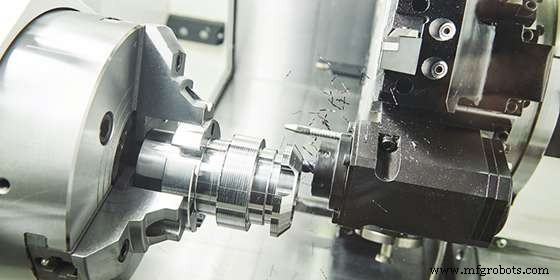
CNC mill‑turn centers act as both a lathe and a mill, performing turning and milling steps in a single setup. The typical sequence is:
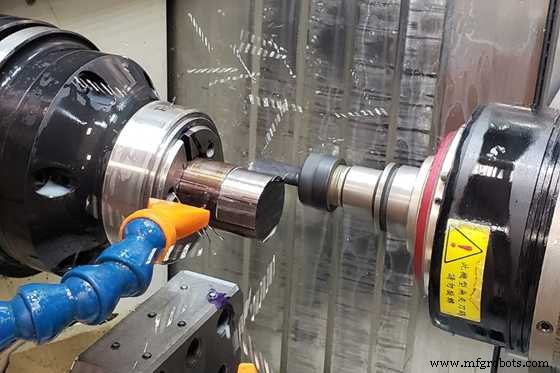
- Turning Stage: The workpiece, usually a solid block, is mounted and rotated. Cutting tools remove material to form the core cylindrical geometry.
- Milling Stage: After turning, the same workpiece passes under a rotational cutting tool that shapes flat and complex surfaces.
The integrated approach delivers high precision, speed, and flexibility across metals, plastics, and composites.
Typical Mill‑Turn Configurations
CNC mill‑turn centers are categorized by spindle orientation and workpiece mounting.
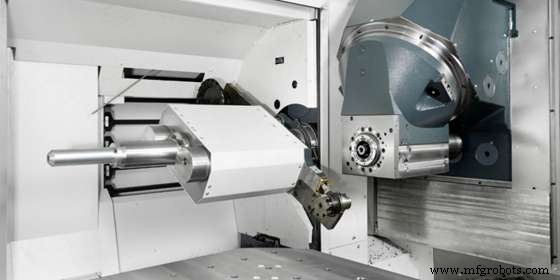
Horizontal Mill‑Turn Machines
In this arrangement, the spindle is horizontal, and workpieces sit horizontally. While common in general turning centers, horizontal configurations are less favored for heavy parts due to reduced gravitational support.
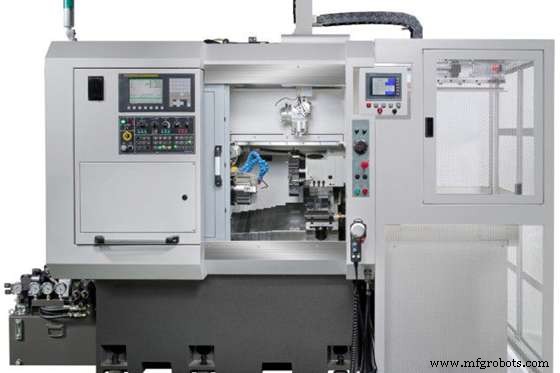
Vertical Mill‑Turn Machines
Vertical machines feature a horizontal spindle but hold workpieces vertically, leveraging gravity for better stability—ideal for large, heavy components.
Key Advantages of Mill‑Turn Machining
Complex Geometry in One Setup
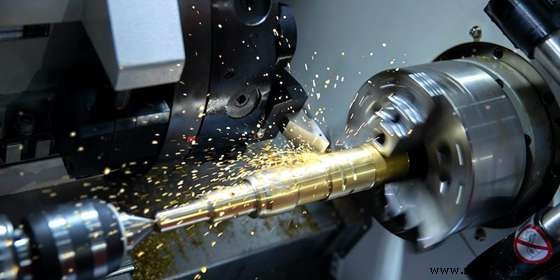
Traditional workflows require transferring parts between a lathe and a mill, increasing setup time and risk of misalignment. Mill‑turn machines eliminate transfers, ensuring consistent tolerances and improved product quality.
Increased Production Speed
By performing turning and milling simultaneously, operators avoid re‑clamping and repositioning, dramatically cutting cycle times and boosting throughput.
Enhanced Accuracy & Reproducibility
The single‑setup process reduces the potential for human error. Tight tolerances—critical in aerospace and medical applications—are achieved more reliably, even for parts with sub‑milimetre precision requirements.
Extended Capability & Automation
Beyond basic milling and turning, these machines can be programmed for grinding, drilling, and automatic part handling (loading, removal, probing), further streamlining production and freeing operators for higher‑value tasks.
Industries Leveraging Mill‑Turn Technology
Mill‑turn machining’s versatility makes it indispensable across diverse sectors:
- Aerospace: Precision components for aircraft and satellites.
- Medical: Implants, prostheses, and complex diagnostic equipment.
- Automotive: Steering gearboxes, engine parts, and high‑strength shafts.
- Electronics: Precision housings, circuit boards, and amplifier casings.
- Energy: Oil‑gas flow components and nuclear power plant parts demanding tight tolerances.
Partner with WayKen for Expert Mill‑Turn Services
WayKen’s seasoned engineers and state‑of‑the‑art equipment deliver top‑quality mill‑turn machining at competitive prices and fast turnaround. Upload your CAD files and receive design‑for‑manufacturing (DfM) feedback instantly.
Conclusion
By merging milling and turning into one machine, CNC mill‑turn technology offers unparalleled speed, accuracy, and flexibility for complex parts. Its adoption is rapidly expanding across aerospace, medical, automotive, electronics, and energy sectors—solidifying its role as the manufacturing industry’s go‑to solution for precision components.
CNC Machine
- Mastering CNC Plastic Machining: 4 Key Tips for Superior Results
- Choosing the Right Materials for CNC Machining: A Comprehensive Guide
- Calibrate CO2 Laser Cuts to Match Design Dimensions
- Hwacheon Highlights at SIMTOS 2024: CNC Software Innovations & M‑Vision Pro Live Demo
- Premium 2030 Linear ATC CNC Wood Router Delivered to Valparaíso, Chile
- Comprehensive CNC Programming Example for Selca Machines
- Key Raw Materials for Precision CNC Machining: Selection and Performance
- Elevate Your Expertise with BECKER’s Expert Vacuum Pump Training
- Top 2 Cabinet-Making Strategies to Boost Your Profit
- BDE Manufacturing Technologies Wishes You a Joyful Holiday Season & a Prosperous New Year