Industrial manufacturing
CNC Machine
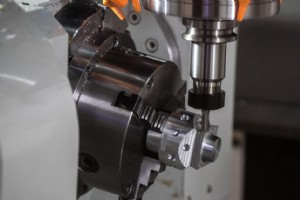
Choosing between CNC turning and CNC milling is a common decision in modern manufacturing. Getting it right can make all the difference in speed, accuracy, and cost. Turning and milling are the backbone of precision machining. One spins the part, the other spins the tool, but both shape raw material

Have you ever noticed how nature builds things? From honeycombs to bone structures, the world around us is full of smart, efficient designs. That’s exactly what lattice structures bring to 3D printing—lightweight frameworks that are strong, flexible, and built to perform. Whether you’re designing so
Different types of manufacturing are used to meet a variety of production needs. If you’re building something, whether it’s a custom product or thousands of identical units, you know that how you make it matters just as much as what you make.The manufacturing process you choose can shape everything:
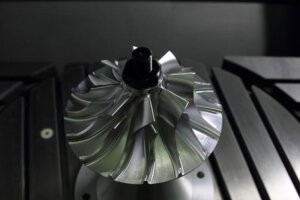
If you’re aiming to machine parts with chamfers, bevels, or sloped surfaces, mastering angle milling isn’t just helpful — it’s a must. This technique opens the door to geometries that conventional milling simply can’t achieve, especially when you need tight tolerances for critical industries like ae
When you need to machine flat surfaces, slots, and grooves with real precision, side milling is one of the most powerful tools you have. Whether you’re working with metals, plastics, or composites, this technique gives you the flexibility to tackle parts and complex geometries that face milling just
Ever tried to machine a shape that just won’t cooperate, curved edges, gear profiles, or custom grooves? We’ve all been there. When standard milling falls short, form milling steps in with a smarter approach. Instead of cutting your part piece by piece, this technique uses a cutter that already has
Waiting weeks for a replacement part can be frustrating and costly. Whether you’re managing a factory, maintaining equipment, or just trying to keep an older machine running, downtime adds up fast. Even the smallest car is a massive undertaking with tons of components, never mind massive airplanes o
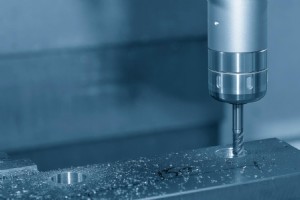
Ever wondered how manufacturers cut ultra-precise parts with clean edges and complex curves? That’s where end milling steps in. End milling is the second most-used CNC machining method after turning, and for good reason. Whether you’re shaping stainless steel, aerospace alloys, or durable plastics,
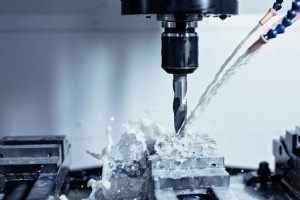
If you’re in manufacturing, you’ve probably come across soft machining, but what exactly does it mean? At its core, it’s a cost-effective, efficient process that allows you to quickly produce prototypes, design iterations, and parts made from soft materials. Whether you’re working on low- to medium-
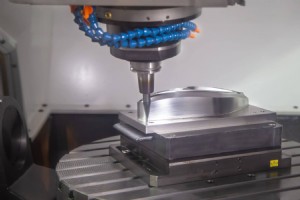
If you’ve ever had to machine a part with tricky curves, deep pockets, or tight corners, you know how challenging it can be to get it right the first time. That’s where profile milling really shines. It’s not just about cutting material, it’s about shaping parts exactly the way you need them, with p
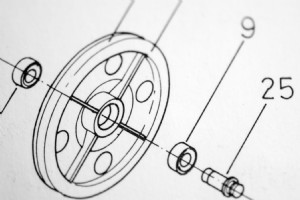
When you’re getting ready to machine a part, whether it’s from a casting, a forged blank, or straight off a CNC machine, one of the first things you need to think about is machining allowance. That’s the extra material you leave on purpose, just so you can remove it later to hit the right size and s
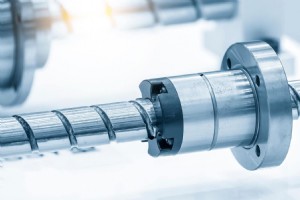
If you’ve ever dealt with broken taps, poor thread quality, or struggled to machine threads in hard metals, you know how frustrating threading can get. That’s where thread milling comes in, and once you understand how it works, you might never go back to tapping. With this method, the cutting tool i
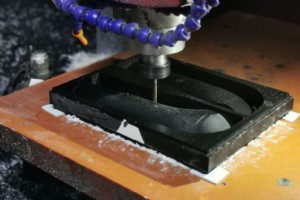
Before a single chip flies or a spindle turns, there’s one decision that sets the tone for everything else in CNC machining; how you hold the part. This step comes before plotting the tool path, and plays an important role in the process.We don’t often talk about workholding, but if you’ve ever deal
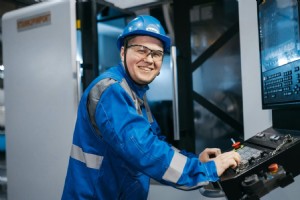
Mills, lathes and all sorts of CNC machines are marvelous machines, but they all require diligent care to keep them working under optimal conditions.Maintenance can be a hassle but it is necessary for any machine shop or even hobbyist to regularly undertake to avoid breakdown or operational ineffici
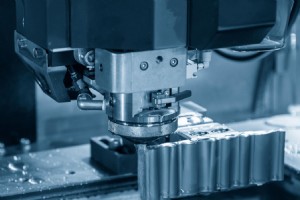
Overmolding and Insert Molding aren’t just manufacturing techniques; they’re the backstage magicians that bring together different materials to create complex, integrated parts with enhanced functionality. From the smooth grip on your power tools to the robust casings of medical devices, these proce
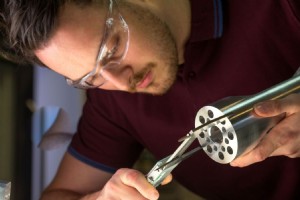
You might not think about it, but the world around you runs on parts you can’t even see, tiny components built to exact specs, often thinner than a human hair. That’s what precision manufacturing is all about: making things that work perfectly, even when the margin for error is less than a fraction
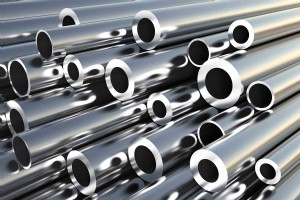
What is the difference between ferrous and non-ferrous metal? The answer comes down to iron, a material that makes up a good chunk of the Earth’s crust. Ferrous metals contain iron as a major component, whereas non-ferrous metals have little to no iron content.In terms of mass, iron is the most comm
ABS is one of the most common thermoplastics used in manufacturing, offering a good balance of toughness, impact resistance, and affordability. Though ABS can be processed in several ways, including extrusion-style 3D printing, plastic injection molding of ABS is a go-to manufacturing process due to

Polycarbonate (PC) is a material prized for its impact resistance and transparency. It might look like glass, but in terms of strength, it’s about as un-glasslike as you could imagine: you can find it in bulletproof windows, riot shields, and other ultra-tough parts designed to be almost unbreakable
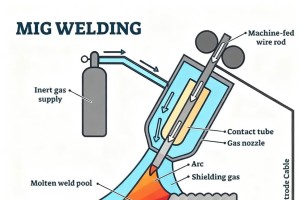
MIG and TIG welding are two popular types of welding, each with distinctive advantages that vary due to the different electrodes used in each process. But although the processes differ in this important regard, they also share many characteristics, which sometimes makes it difficult to choose betwee
CNC Machine