Industrial manufacturing
CNC Machine
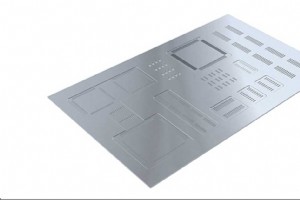
There is no question that electronics are getting smaller and smaller. As a result, electro-mechanical parts like Printed Circuit Boards (PCB), must be produced in smaller sizes. Therefore, the demand for step stencils (for stencil printing) is increasing, as well as the requirement for preci
I don’t get to write Blogs too often because I’m a Purchasing Agent. But, within the CNC machine tool business, I do have some experience with regard to purchasing capital equipment and cutting tools that may help you out and save you some time. In this case, I’d like to convey a method for p
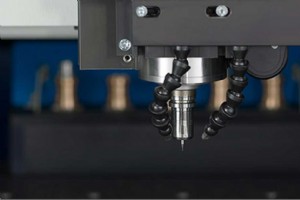
There are few things that a machinist likes more than when they get a print and see this: +/- 0.005”. Holding five thousandths of an inch is child’s play for any good machinist – they might as well mill the part with their eyes closed. But, then there are those jobs that are a bit more demanding.
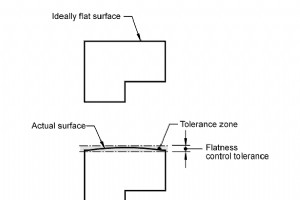
4 Ways to Ensure Consistent Depth of Cut (even on surfaces that are anything but flat): As far as your CNC is concerned, the world is all sunshine and roses: your cutting tool never deflects or wears, your fixture is rigid and free of vibration, and the surface of your workpiece is perfe
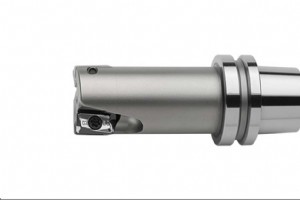
If you ask any DATRON application technician what their favorite cutting tool is, there’s a high probability that you’ll get this answer: The Monoblock Cutting Tool (aka. the Monoblock). Play In our world of high RPM spindles, the Monoblock cutting tool is King. Co-Developed with indus
This may seem like a strange topic for a blog post. Burrs, really? Snorefest, am I right? I understand, trust me. Let me ask you one question before you move on to the next post, what do you do to your parts after they come off the machine? Depending on your cool
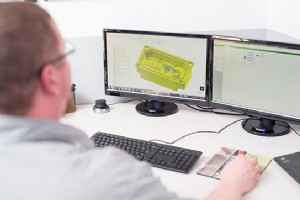
Dynamic toolpaths are not a new concept by any means. There is a very good reason many machinists have long used light depth (axial) cuts with heavy side (radial) cuts to achieve their machining goals. Any machinist who has been in the industry more than 25 years remembers a day when CNC was
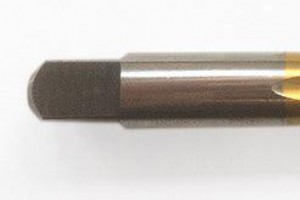
Hey folks, today we are going to talk about threading in multiple forms. For the most part I am going to discuss my experiences with the different types of thread cutting/forming, so if you are looking for tons of technical information I apologize, but there are so many variables when it come
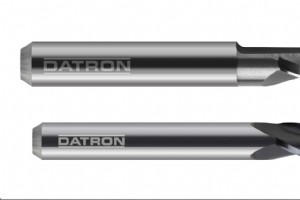
Have you ever wondered why after milling a hole or pocket that it measures larger at the top of the cut than at the bottom? Or why your gauge pin fits nice and snug in the beginning of the hole but won’t quite make it all the way through? The simple answer is tool deflection.
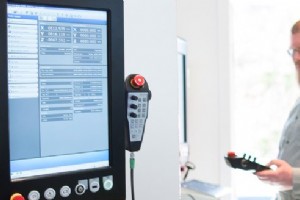
Control the Variables The point is, no matter how sophisticated your CNC machine, software, tooling, or ego is you will always have to make adjustments. Sometimes minor, sometimes major. It all depends on what you are doing and how you are doing it. There are an endless n
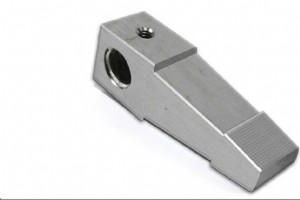
With additive manufacturing and 3D printers being such a hot topic these days, it’s important to remember why subtractive processes like milling are still incredibly important to rapid prototyping. But first, let’s examine some of the benefits and limitations of additive rapid prototypin
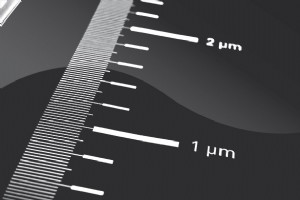
In the world of computer-controlled milling equipment, there’s always been something of an understanding when it comes to work envelope and precision: as the ability of a machine to achieve ever smaller numbers when it comes to positional accuracy and repeatability goes up, the size of the work e

But not everything they do at Ellis & Ellis is so big. Take for example the Braille required for way-finding signs and architectural signage. This is intricate work often done on smaller signs that must be ADA compliant for elements like position and tactile height. Braille can be produce
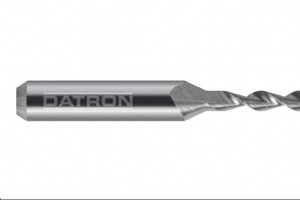
Question: “Should I use a drill or end mill?” Answer: It depends on what you’re trying to achieve. Play When to Use a Drill vs. End Mill Drill vs. End Mill? If you need to make a lot of holes a drill is probably the way to go. If you’re making a very small
So micro drilling has never been my forte. I have done a lot of drilling but never anything much smaller than 1/64th or so. Well friends, if you were a part of that club too then there is a whole other world of drilling that you have never experienced, and there are some pretty amazing thin
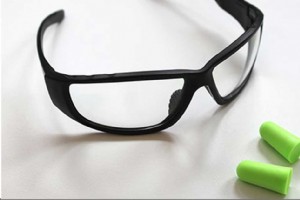
Shop Safety? Go ahead. Roll your eyes. Get it out of the way now. We have all seen the cheesy safety movies with terrible acting and fake blood. Don’t worry though, this isn’t like that – I’m a terrific actor. Seriously though, I took classes. Why don’t we start with my favorite basic rule
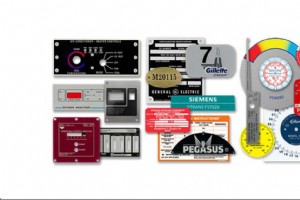
Willington Nameplate in Stafford Springs, CT manufactures metal engraved nameplates and Identification tags for a wide range of customers from aerospace and defense to Gillette Stadium – they actually produced all of the seat tags for “Casa de Brady”. Their metal nameplates and ID tags are ma
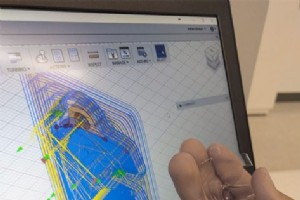
Appropriately named the AUTODESK Fusion 360 CAM Challenge, participants were asked to produce a Fusion logo made into a key chain. Autodesk supplied all participants with the same file in their software. There were only 3 requirements to the Autodesk Fusion 360 CAM Challenge: Use Autodesk
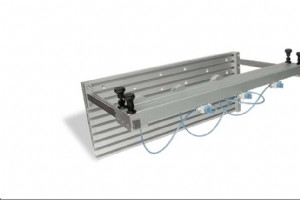
It is always a challenge when faced with a long part that requires machining on the end or ends. Equally challenging is when you have to machine the side of a large part. Unless your facility is equipped with a machine tool that is large enough to mount such a part within the working volume a
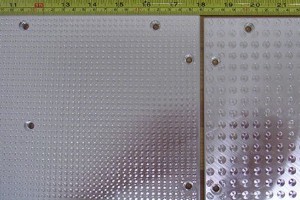
So, if you’ve been reading this blog, or cruising through our website, then I’m fairly sure you’re aware that we make an extremely capable CNC vacuum table. It’s the must have fixture for many industries – rapid prototyping, signage, front panels, etc. Where the vacuum table can tru
CNC Machine