



Heat Exchangers Explained: Comprehensive Answers to Your Top Questions
Heat exchangers are one of the most popular types of industrial equipment used today. This equipment is used for cooling or heating fluids in various industrial applications. Owing to their importance, these exchangers are differentiated on the basis of their construction and different factors. Aside from industrial applications, these heat exchangers are also used in engines of automobiles as well as several appliances. Would you be interested to know about heat exchangers? If yes, this post discusses them in detail.
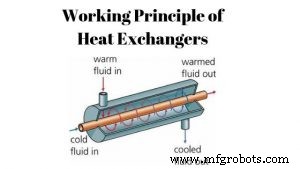
How Do Heat Exchangers Work?
As their name indicates, this equipment is designed to exchange heat between two fluids, which may or may not come in contact with each other. In this process, the fluids are not transferred rather only heat is exchanged between them. This process is mostly accomplished through a set of tubes which are generally housed in a casing. In some processes, the efficiency of heat exchange is improved using condensers, coolants, heat exchanger fans, and several other equipment.
Why are Heat Exchangers Required at Any Industrial and Commercial Facility?
Heat exchangers are an integral part of cooling systems such as air conditioning equipment as well as heating systems. They are used in applications that require heat to perform. However, the degree of heat is controlled to achieve the desired results. In industrial facilities, heat exchangers are widely used to maintain the temperature of machines, fluids, chemicals, and other materials in safe limits. This equipment is also used to transfer heat or steam, which are released during a process. This heat or steam is transferred through tubes, and utilized in a better way. Thus, this equipment helps improve the operational efficiency of machines, and also save money.
How Are Heat Exchangers Differentiated?
These devices are mainly classified or differentiated on the basis of the following:
-
- Design of the heat exchanger: These devices are differentiated on the basis of their design as regenerative vs. recuperative, dynamic vs. static, direct vs. indirect, or on the basis of materials used in their construction.
-
- Nature of the heat exchange process: There are two types of heat exchange processes – direct contact and indirect contact. In the direct contact type, the cold and hot fluids used in the exchanger mix with each other inside the tube. In the indirect contact type, the hot and cold fluids are separated from each other.
-
- Flow arrangement of heat exchanger: Inside the heat exchanger, the fluid’s flow is arranged as cross flow, parallel flow, hybrid flow, and countercurrent flow.
-
- The physical state of fluids used in heat exchanger: They can be liquid-gas, gas-solid, liquid-liquid, and liquid-solid.
An Outlook on Different Types of Heat Exchangers
As discussed above, heat exchanging devices are distinguished on the basis of several factors. The following are a few important types of heat exchangers on the basis of their design:
-
- Shell and Tube Heat Exchangers: These heat exchangers feature several small tubes housed within a cylindrical casing. The tubes are included within the casing as tube stack. The tube stack may have permanent or floating tube plates, which contribute to the functioning of tube stack. Shell and tube heat exchangers are widely used in industrial applications such as steam generation, oil refining, boiler blowdown heat recovery, vapor recovery, and industrial paint systems.
-
- Plate Type Heat Exchangers: In these heat exchangers, stacked plates are used in place of tubes for heat exchange. These plate type heat exchangers are usually gasketed or brazed to meet particular application requirements. Plate heat exchangers are made of stainless steel, which makes them ideal for use in food and beverage processing, cryogenic, chemical processing, and furnaces.
-
- Air Coolers: These heat exchangers are used for heat removal from small or large areas. Air coolers are widely used at refineries and chemical plants, power plants, or engines. They are also used in applications which have limited use of water.
-
- Electric Heaters: Designed for the conversion of electrical energy into heat, these devices are used in residences as well as industrial applications for generating the required amount of heat. Boilers, evaporators, and condensers are the types of electric heaters, where the fluid undergoes phase change during the process. This phase change may be either from gas to liquid or vice-versa.
Owing to their increasing demand across various industries, it is easy to find these heat exchangers in new and used conditions. Good quality used heat exchangers can offer you the best value for investment, only if you source them from a reliable supplier. JM Industrial is one of the leading providers of used heat exchangers. The company provides good quality heat exchangers from leading brands such as Aerofin, Bry-Air Systems, Chemineer, Chromolox, etc., at affordable prices.
Industrial equipment
- Titanium Heat Exchangers: Superior Performance for Energy and Marine Applications
- Launching Predictive Maintenance: Key Questions and Practical Steps
- Essential CMMS Setup: Choosing Assets & Structuring Your Asset Tree
- Expert Answers: Your Metal 3D Printing Questions Explained
- Expert Answers to Your Top 3D Printing Questions
- Conveyor Systems 101: Answers to the 10 Most Asked Questions by Business Owners
- Invest Smart: Volvo Certified Used Equipment – Quality, Reliability, and Savings
- Frequently Asked Questions About Buying Used Belt Conveyors – Expert Insights
- Explore JM Industrial’s Heat Exchanger Portfolio: Types, Features & Applications
- Hydraulic vs Mechanical Disc Brakes: Which One Is Best?