



Expert Answers: Your Metal 3D Printing Questions Explained
Every trade show brings new questions about our Metal X printers and materials. To help you get clear, reliable answers, we’ve compiled the most frequently asked questions about metal 3D printing, from supports and orientation to part size limits and strength.
Do I need supports, and should I print, wash, and sinter in the same orientation?
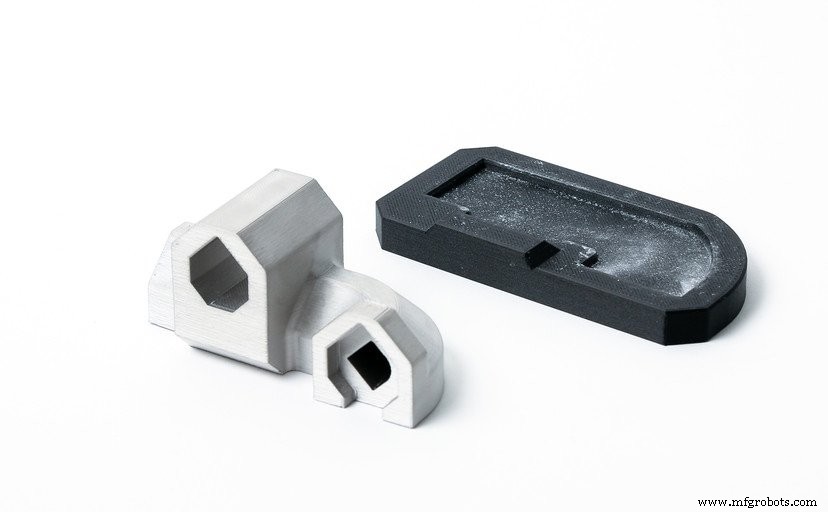
Markforged’s Eiger software automatically calculates required supports. Any surface that runs parallel to the build plate and is unsupported will need support material to prevent sagging during printing and sintering. Supports are printed with a ceramic release layer, making them easy to remove after sintering. While simple supports can be hand‑removed, more complex geometries may need a tap or light mallet to detach.
Because supports are essential during the binder‑removal phase, it’s best to keep the part in the same orientation for printing, washing, and sintering. Printing on a raft gives a stable base that mitigates warping and ensures predictable shrinkage. Washing may be performed upside down for bowl‑shaped parts to speed solvent penetration, but sintering should always occur in the original orientation.
What are the maximum part dimensions?
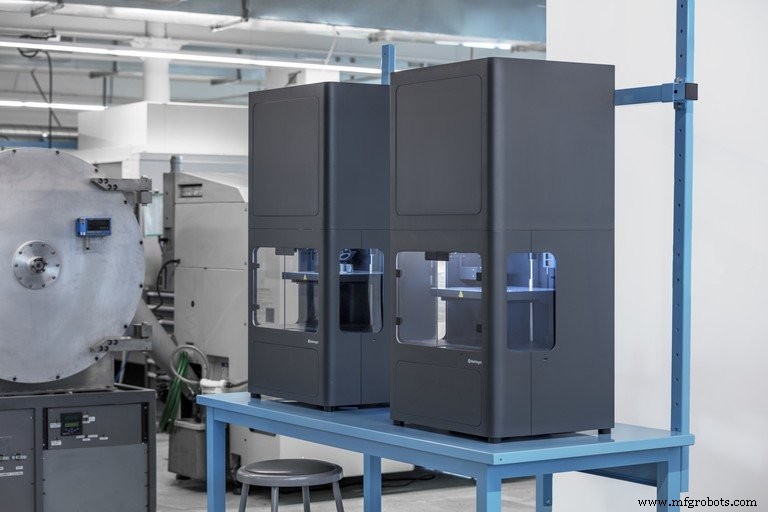
The Metal X build envelope is 250 × 220 × 200 mm (9.8 × 8.6 × 7.9 in). Parts shrink during sintering, so the printed part will be slightly larger than the final part; Eiger automatically applies the correct scaling. The Sinter‑1 chamber can accommodate up to roughly 235 mm × 68.3 mm × 69.3 mm (9.25 × 2.69 × 2.73 in). Larger parts can be sintered in an external furnace.
Read the Stanley Black & Decker case study
Does Eiger estimate wash time?
Yes—Eiger calculates the exact wash and sinter times needed for your part, ensuring optimal results without guesswork.
Can I load multiple parts into the furnace?
Multiple parts can share the same sintering cycle, provided they are of the same material and not stacked or nested. This avoids unintended fusion between parts.
Free metal 3D‑printed sample part
What strength can I expect from Metal X parts?
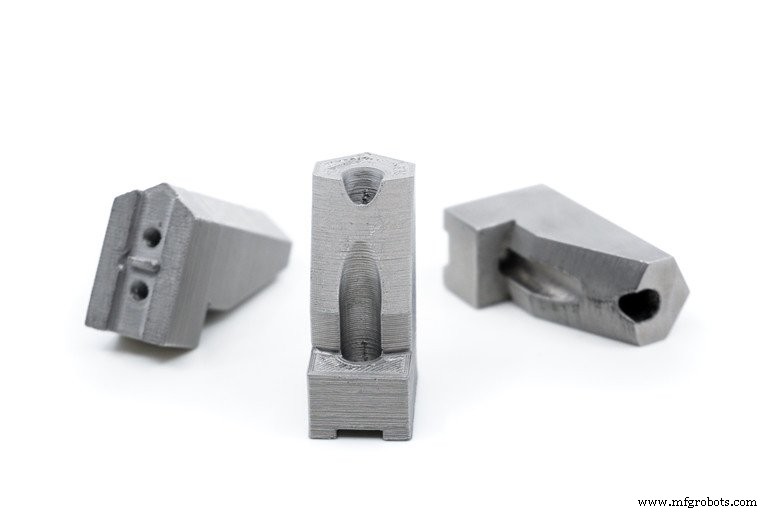
Strength varies by material. Refer to our 17‑4 PH Stainless Steel and H13 Tool Steel datasheets for detailed mechanical properties. These parts consistently meet industry standards for durability and precision.
Have more questions? Drop a comment on our Facebook post or visit our Metal X page to explore the printer, its applications, and compatible materials.
3D printing
- Mastering Metal Binder Jetting: Innovation, Applications, and Industry Opportunities
- Top 6 FAQs About 3D Printing: Expert Answers from CADimensions
- Expert Answers to Your Top 3D Printing Questions
- Invest Smart: Volvo Certified Used Equipment – Quality, Reliability, and Savings
- Mastering Metal 3D Printing: A Comprehensive Guide
- Heat Exchangers Explained: Comprehensive Answers to Your Top Questions
- Chatbots Demystified: Build, Deploy, and Avoid Common Pitfalls
- Water Transfer Printing (Hydrographics): Techniques, Benefits, and Applications
- Mastering Metal Finishes: Enhancing Performance, Durability, and Compliance
- Laser Metal Printing: Key Facts for Precision Parts Manufacturing