



Essential Trenching Safety: 6 Proven Tips for a Secure Job Site
The fatality rate for excavating is 112% higher than general construction. Trenching is a dangerous job, but you can protect yourself and your team from injury with the right precautions. This trenching safety checklist will guide you through common hazards and the trench and shoring safety tips you need to avoid them.
Common Trenching Hazards
If you're taking on a trenching project at your next work site, be aware of these common hazards:
- Cave-ins: One cubic yard of dirt can weigh as much as a vehicle, making cave-ins and trench collapse the biggest risk to excavation workers and the most common trenching mishap reported.
- Struck-by injuries: Struck-by injuries, caused by workers struck by moving objects such as equipment or falling debris, are a leading cause of nonfatal excavation injuries.
- Falls: Fall-related injuries occur when workers outside the trench are too close to the trench's edge, which may injure both the fallen worker and the trench workers below.
- The elements: The elements including heat, moisture, and atmospheric conditions inside the trench are significant hazards. They are challenging to avoid entirely but prove just as dangerous as other threats. More than one-third of occupational deaths in the United States are related to heat stress alone.
Top 6 Trenching Safety Tips
Anticipate the risks before they become hazards and be proactive with these trench safety tips:
1. Understand Proper Trenching Practices
The site manager should implement the following trenching techniques based on the type of soil you're working in, the trench's dimensions and other site-specific factors:
- Sloping: Sloping is angling the trench walls away from the excavation site or trench to give workers enough safe space to move and finish the job.
- Shielding: Shielding is using trench boxes and other tools to shield workers against possible cave-ins.
- Shaving: Shaving is installing trench supports to keep loose soil from moving and triggering a cave-in.
- Benching: Benching, or cutting, is forming stair-like grades into the soil as needed.
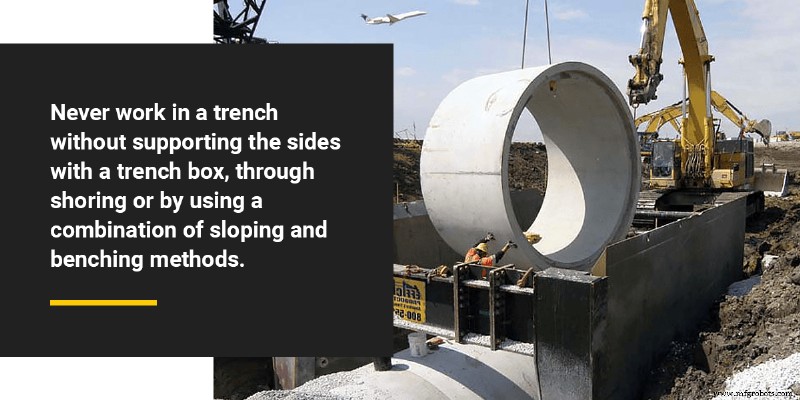
Never work in a trench without supporting the sides with a trench box, through shoring, or by using a combination of sloping and benching methods.
2. Follow Site-Specific Trenching Safety Guidelines
Every work site is different — account for environmental and atmospheric conditions, soil type, trench dimensions, and the type of work you're doing as you create site-specific safety guidelines for your team. The following rules should be safety standards across all trench settings:
- Never enter a trench with standing water or accumulating water without taking proper precautions to drain and prevent more flow.
- Workers should not work underneath suspended loads handled by heavy machinery.
- All trenches require safe and separate entry and exit points.
- Minimize the chance of falling debris and struck-by injuries by keeping materials and equipment at least 2 feet away from the trench edge and using retaining devices as needed.
- Always stay aware of your surroundings and implement visual and audible warning systems like signs and alarms to know when equipment is in use or nearby.
3. Test and Inspect Trenches Regularly
Trenches must be inspected before work begins each day to check for hazardous fumes, oxygen levels, water accumulation, and environmental changes. The inspector should be a "competent person" which the Occupational Safety and Health Administration (OSHA) defines as an individual with the correct training and experience to identify existing and predictable hazards and authorized by the employer to eliminate them. They are also responsible for classifying the soil, inspecting all trench barrier systems, designing structural ramps, and other site-specific responsibilities.
The inspector should reinspect trenches after environmental changes and natural events, like nearby blasting work or heavy rain.
4. Know the Soil and Environment
Soil type and quality are some of the most significant factors to consider when designing a trench. Four types of soil you might encounter include:
- Type A soil: Type A soil is cohesive with an unconfined compressive strength of 1.5 tons per square foot (tsf) or higher, such as clay and some clay variations.
- Type B soil: Type B soil is also cohesive but has an unconfined compressive strength between 0.5 tsf and 1.5 tsf. This type also includes some granular cohesionless soils, like silt and crushed rock.
- Type C soil: Type C soil is cohesive with a compressive strength of 0.5 tsf or smaller. It includes granular soils, like sand and gravel, as well as moist or submerged soil and rock and sloped material with layers.
- Stable rock: Stable rock is a naturally occurring solid mineral. Though this type isn't as common in trenching as types A, B, and C soil, excavation requires vertical sides with intact exposure.
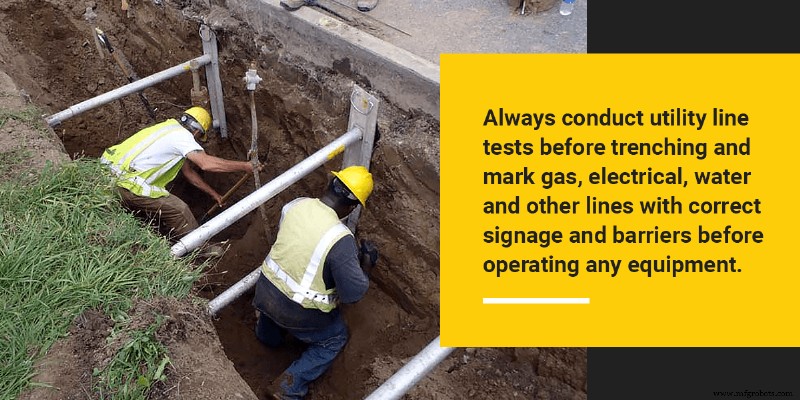
Always conduct utility line tests before trenching. Be sure to mark gas, electrical, water, and other lines with correct signage and barriers before operating any equipment. Failure to do so could result in injury and costly damage or fees. A competent person should conduct atmospheric testing in all trenches 4 feet or deeper to ensure proper oxygen levels. Sites should have emergency rescue equipment available at all times.
5. Use a Trench Box — But Don't Rely on It
One of the most critical trench box safety tips to remember is that these barriers are in place to protect workers in the event of a cave-in and cannot always prevent the cave-in itself. Proper barrier placement should include shoring and worker barriers with enough force to be greater than the force coming from the trench walls. Avoid using trench boxes for greater depths than the manufacturer has rated them for and never work inside a damaged barrier.
6. Use Reliable Equipment
Reliable equipment will help your team get the job done quickly and safely. Operating and maintaining reliable excavation equipment includes:
- Buying or renting from a reputable manufacturer with ongoing support available.
- Scheduling regular and as-needed inspections with a professional.
- Maintaining the equipment with replacement parts, cleaning, and tune-ups.
- Ensuring all those who operate the machine have been properly trained.
What Is the Difference Between Excavating and Trenching?
Excavation sites are any handmade cuts or depressions into the earth's surface accomplished by removing and reshaping the dirt. Trenching is a specific type of narrow excavation work that takes place beneath ground level. Trench depths should always be greater than their width, with the width measuring no more than 15 feet at the trench's bottom.
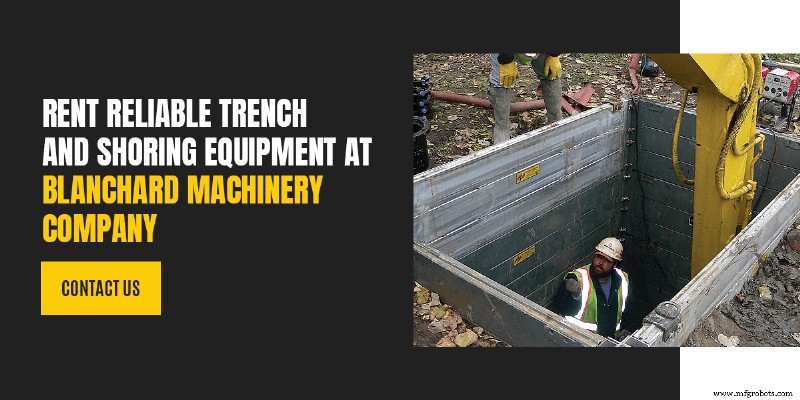
Rent Reliable Trench and Shoring Equipment at Blanchard Machinery Company
Blanchard Machinery Company is your one-stop destination to rent state-of-the-art machines and reliable trench and shoring equipment with statewide service coverage and comprehensive customer service agreements to fit your needs. Find a location near you or request a free rental quote online to learn more for your upcoming project. Feel free to give us a call at 844-252-6242 with any questions or for help picking the right equipment for your team.
Industrial equipment
- Top 10 Workplace Safety Practices to Reduce Injuries
- Top 6 Essential Warehouse Safety Practices
- Essential Heavy Equipment Safety Tips for a Safer Workplace
- Essential Dockboard Safety Tips: Protect Your Team & Assets
- Top 5 Forklift Maintenance Tips for Peak Performance and Longevity
- Essential Guide to Overhead Crane Safety: Protect Workers & Reduce Accidents
- 4 Proven Loading Dock Safety Practices to Protect Your Workforce
- Essential Summer Trench Safety & Shoring Guide: OSHA‑Approved Best Practices
- Comprehensive Trenching & Excavation Safety Guide: Protect Workers & Prevent Accidents
- Essential Machine Shop Safety: A Practical Guide for Operators