



What Is a Y-Valve in Hydraulics?
Hydraulics is the science and technology of using fluid power to operate machines. In this article, we will explore what Y-valves are and how they work, as well as discuss some other hydraulics terms and concepts you may find useful.
A Y-valve is a valve that can be opened and closed in two directions, or phases. This type of valve is often used on hydraulic systems to control the flow of fluids. When the valve is in the closed position, fluid cannot flow through the valve, and when the valve is in the open position, fluid can flow through the valve.
hydraulics Terms
A few hydraulics terms you may find useful include:
Pipe – A tube of metal or plastic used to transfer fluid from one point to another.
Valve – A device that allows or denies the passage of fluid through it.
What is Y-sectioning?
If you are familiar with hydraulic valves, you may have heard the term Y-sectioning. Y-sectioning is a type of valve design that uses two intersecting planes to create different flow patterns. This can be useful when you want to control the direction or rate of flow in a hydraulic system.
One example of how Y-sectioning can be used is in a water filtration system. When you turn on the faucet, you want the water to flow from the source (a reservoir) through the filter and out the drain. If the faucet is placed in the middle of the filter, water will flow evenly through it and there will be no pressure difference on either side of the filter. However, if you place the faucet in one of the Y-sections, more water will flow through the section closest to the source. This will create pressure differences on either side of the filter and help cleanse your water.
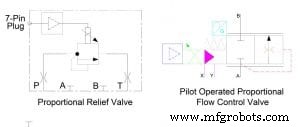
What does Y mean in hydraulics
What is the meaning of Y in hydraulics?
The letter Y in hydraulics stands for the fluidynamic pressure head, which is the pressure exerted by the fluid on the walls of a pipe. It is measured in units of inches of water column (in/hg).
The pressure head is important because it affects the flow of fluids through a pipe. High pressure heads cause fluids to flow more slowly, while low pressure heads cause them to flow faster.
What are the components of a hydraulic system?
A hydraulic system is composed of two main parts: the cylinder and the pump. The cylinder is a container that contains the hydraulic fluid and the pump is the device that converts energy from a motor into pressure, which then moves the fluid through the system.
There are usually other components involved in a hydraulic system, such as valves and couplings, but these are not essential for its function.
How Y-sectioning is Used in Hydraulics
Hydraulic fracturing, or fracking, is a process used to extract natural gas and oil from shale rock. In order to fracture the shale safely and efficiently, oil and gas companies use Y-sectioning. Y-sectioning is a type of wellbore drilling that ensures the integrity of the well by dividing it into equal-sized segments. This allows for more accurate placement of the drill bit and reduces the risk of blowouts.
The Y-sectioning process begins by drilling a hole down through the shale rock and into the natural gas or oil reserves below. Once the hole is drilled, the wellbore is divided into equal-sized segments using a Y-shaped bit. This creates dozens of small fractures in the shale that allow gas and oil to flow more easily to the surface.
Common misconceptions about hydraulic systems 6
Hydraulic systems are used in many different industries, including manufacturing, construction, and transportation. However, many people have misconceptions about how these systems work. In this blog post, we will be discussing the meaning of the Y symbol in hydraulics.
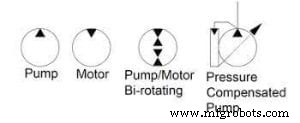
The Y symbol in hydraulics stands for yawing or turning. This symbol is used to indicate the direction that a piston or cylinder is moving. When you see the Y symbol, it means that the piston or cylinder is moving towards the right (or south) and away from the center of the machine.
Looking at hydraulic systems from another perspective, the Y symbol can also be used to indicate how much pressure is being applied to a fluid. The more letters in the Y symbol, the greater the pressure being applied.
What does Y mean in hydraulics
Why is Proportional Y System important?
If you have ever worked with hydraulics, you have most likely used the proportional y system. The proportional y system is a way to control the motion of a fluid through an opening by using the difference in pressures on either side of the opening. This system is important because it can be used to regulate fluid flow in a variety of situations.
For example, the proportional y system can be used to control the flow of water through a faucet. The system works by regulating the pressure on either side of the faucet opening. This pressure difference causes the water to flow through the faucet at a controlled rate.
Similarly, the proportional y system can be used to regulate the flow of air through an engine. The system works by controlling the pressure on either side of the engine exhaust. This pressure difference causes the air to flow out of the engine at a controlled rate.
The proportional y system is also important for fluid mechanics purposes. For example, the system can be used to calculate the volume and pressure of a fluid flowing through an opening.
Advantages of Y-Sectional Hydraulic Structures
Hydraulic structures are often designed with the Y-section in mind, as it offers a number of advantages over other shapes. The most common of these is that Y-sections are more stable than other forms, meaning they can withstand greater forces without failure. This is important when it comes to vessels such as pipelines, which are subjected to a great deal of pressure and stress. Additionally, Y-sections are easier to construct than other forms, meaning they can be completed more quickly and with less hassle.
Another advantage of Y-sections is that they can be adapted to a range of different purposes. For example, a Y-section pipeline can be used to transport water or oil, while a Y-section bridge can be used to span a large distance. This versatility makes Y-sections ideal for a wide variety of applications, and means they can be used in a variety of settings.
Disadvantages of Y-Sectional Hydraulic Structures
In hydraulics, the letter “Y” is used to represent a section or channel in an hydraulic system. This type of structure is typically used when the pressure and flow requirements are very different in different parts of the system. An example of this would be using a Y-section to transfer water from one reservoir to another. The disadvantage of using a Y-section is that it can complicate the design and increase the complexity of the system.
Another disadvantage is that Y-sections are not as efficient as other types of structures when transferring water. This is because the water has to flow through a longer section which can result in reduced pressure and flow.
Conclusion
In hydraulics, the symbol Y stands for lift. When you see this symbol, it means that a certain amount of pressure or weight is being lifted.
What does Y mean in hydraulics, please clickhttps://topkitparts.com/ to learn more
Industrial equipment
- Understanding 3D Printing Resolution: How Precision Shapes Print Quality
- Millwrights: Key Roles, Responsibilities, and Their Value in Canada
- The Role of a Rigger: Key Responsibilities & Skills
- Understanding Electromagnetism: Key Concepts and Definitions
- Understanding Flow Restrictors: How They Reduce Water Usage & Save Costs
- The Canary’s Role: A Lifeline in Early Coal Mines
- Understanding 5‑Axis CNC Machining: Advanced Precision for Complex Parts
- Understanding Milky Hydraulic Fluid: Causes and Significance
- Understanding the Role of G-Force in Hydraulic Systems
- Understanding the CC Acronym in Hydraulics: A Guide for Engineers