



Understanding the Role of G-Force in Hydraulic Systems
Hydraulic systems are essential in a variety of industries, from transportation to agriculture. In this article, we will learn about the G-force and what it means for hydraulics.
G-force is the measure of how much force is applied to an object. It is measured in newtons and is usually represented with a symbol like G. In hydraulics, G-force is used to describe the amount of force that is exerted on a fluid flow by a hydraulic device, such as a pump or valve.
The higher the G-force, the more forceful the flow. For example, aG-force of 2 million newtons means that the pressure applied to the fluid flow is twice as great as what would be exerted by gravity.
What is hydraulics?
Hydraulics is the science and technology of moving fluids by using hydraulic pressure. Hydraulic pressure is created when the fluid is forced through a pipe or valve.
Hydraulic systems are used in a variety of applications, including water supply, drainage, mining, construction, and agricultural.
What is G and why is it important in hydraulics?
G stands for gravitational force and is a fundamental parameter in hydraulics. The gravitational force between two masses represents the force that is necessary to keep them in equilibrium, or in other words, to keep them moving together. In hydraulics, gravitational forces are used to move fluid masses around.
Gravity is the force that attracts objects towards the center of the Earth. It is responsible for the motion of everything on Earth, from planets to everyday objects. The more mass an object has, the stronger its gravitational force.
What does G mean in hydraulics
The types of G and how they are used in hydraulics
There are three types of G: gravitational, inertial, and fluid. Gravitational G is the force that attracts objects with mass towards one another. Inertial G is the force that resists acceleration or deceleration. Fluid G is the force that causes a fluid to move.
Gravitational G is used to calculate the force of gravity between two objects. Inertial G is used to calculate the speed and direction of an object in motion. Fluid G is used to calculate the velocity, pressure, and flow rate of a fluid.
Hydraulic equations
G stands for the gravitational force between two objects. It is measured in Newtons and is responsible for holding objects together.
F represents the force of friction between two surfaces. It is measured in newtons per metre and is responsible for slowing down the movement of objects.
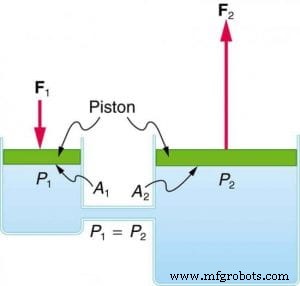
P represents the pressure exerted on an object by fluid (water, air, oil, etc). It is measured in kilopascals and is responsible for maintaining a certain level of fluid pressure around an object.
How does G affect hydraulics?
G is a unit of measurement used in hydraulics to indicate the amount of water that is displaced by a Hydraulic Pump. The higher the G number, the more water is moved.
G is also used to measure the pressure that a Hydraulic Pump can generate. The higher the G number, the greater the pressure.
The meaning of G in hydraulics
G stands for the gravitational constant. This is the constant that governs how much force is exerted by gravity on an object. It is measured in newtons per square meter (N/m2).
Gravity affects all matter, including liquids and gases. It is responsible for the downward motion of objects, and it is also responsible for the flow of water.
What does G mean in hydraulics
Working with hydraulics
Hydraulic fluid is a critical component of many industrial and civil applications, from construction to agriculture. In this blog, we’ll take a look at what G means in hydraulics and how it affects the performance of systems.
What is G?
G stands for gravitational force and is a key parameter in the performance of hydraulics systems. It affects the pressure and flow rates of fluids, and is also an important factor in system stability.
How is G affected by hydraulic pressures?
When hydraulic pressures are increased, G also increases. This causes the fluid to flow more rapidly through the system, which in turn can increase system pressures. Conversely, decreasing hydraulic pressures causes G to decrease, which can lead to decreased flow rates and system pressures.
How is G affected by hydraulic volumes?
When hydraulic volumes are increased, G also increases. This causes the fluid to flow more rapidly through the system, which in turn can increase system capacities. Conversely, decreasing hydraulic volumes causes G to decrease, which can lead to decreased flow rates and system capacities.
Understanding hydraulics equations
Hydraulic fluid flow is governed by the Bernoulli equation. In everyday life, we see this equation in action when a person breathes in and out. Air pressure inside the lungs causes the chest to expand and push the air out of the lungs. This same pressure is also at work when a pump supplies hydraulic fluid to a machinery component. The hydraulic fluid flows through the component due to the pressure difference between the inside (high pressure) and outside (low pressure) of the component.
The Bernoulli equation states that the pressure difference creates a flow of fluid. The higher pressure on the inside of the component flows the fluid out, and the lower pressure on the outside of the component causes the fluid to flow in. The Bernoulli equation is a mathematical model that describes how fluids move through porous materials.
Ways to Reduce G-forces When Driving or Riding in Vehicles
When you are behind the wheel or on a motorcycle, you may feel a feeling called G-force. This is the force that pushes against your body when you are travelling in a vehicle.
There are many things you can do to reduce the G-forces you feel while driving or riding. One way is to use proper restraints for your vehicle. You should also avoid speeding and driving recklessly. If you do experience G-forces, try to stay as still as possible and take deep breaths.
Conclusion
In hydraulics, the letter G usually stands for guage. When a valve opens and closes, it creates a change in pressure that can be measured with a guage. If you’ve ever been to a car or appliance store, you’ve probably seen the letters G and H on one or more of the valves. They are used to indicate when the valve should open and close at different pressures so that everything works properly.
What does G mean in hydraulics, please clickhttps://topkitparts.com/ to learn more
Industrial equipment
- Understanding 3D Printing Resolution: How Precision Shapes Print Quality
- Millwrights: Key Roles, Responsibilities, and Their Value in Canada
- The Role of a Rigger: Key Responsibilities & Skills
- Understanding Electromagnetism: Key Concepts and Definitions
- The Canary’s Role: A Lifeline in Early Coal Mines
- Understanding 5‑Axis CNC Machining: Advanced Precision for Complex Parts
- What Is a Y-Valve in Hydraulics?
- Understanding Milky Hydraulic Fluid: Causes and Significance
- How Variable Frequency Drives (VFDs) Enhance Pump Performance
- Understanding the CC Acronym in Hydraulics: A Guide for Engineers