



Linde BPV Hydraulic Pump: Design, Performance, and Industrial Applications
The Linde BPV Hydraulic Pump is a kind of gear pump that is used to transport liquid under pressure. The Linde BPV Hydraulic Pump is designed to work in harsh industrial environments and can withstand high temperatures and pressures. This pump is commonly used on machines like washing machines, trucks and tractors.
The Linde BPV Hydraulic Pump works by using two gears which are placed on both sides of the pump. These gears are connected to each other with a shaft, which is what moves the fluid through the pump. The design of this type of pump allows for very little resistance when moving fluids through it.
The main advantage of using a Linde BPV Hydraulic Pump over other types of pumps is its ability to handle high pressures and temperatures without any damage being done to it or loss in performance over time.
The Linde BPV series of hydraulic pumps are built for medium to large scale industrial machines.
The BPV series is designed to deliver a wide range of flow rates and pressure ratings in either open or closed loop configurations. The pumps are built with a heavy duty aluminum-alloy housing that offers high corrosion resistance, long life, and quiet operation. They can be used with liquids such as water, mineral oil, vegetable oil, diesel fuel and many others.
The Linde BPV series of hydraulic pumps offer a wide range of flow rates and pressure ratings in either open or closed loop configurations. They are built with a heavy duty aluminum-alloy housing that offers high corrosion resistance, long life and quiet operation. They can be used with liquids such as water, mineral oil, vegetable oil and diesel fuel among others.
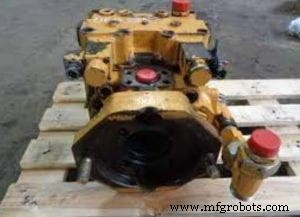
Understanding the Linde BPV Hydraulic Pump
This Linde BPV Hydraulic Pump’s design has been used by a variety of manufacturers, including Toyota and Komatsu.
The pump is constructed with a cylinder and piston assembly that moves up and down inside a casing. The motor turns the cylinder, which causes it to move up and down inside its casing. This movement creates pressure in the water that flows through the pump, which then pushes water out from the pump’s outlet.
The piston is attached to a rod that moves up and down inside an aluminum tube called a guide bar. The guide bar then moves up and down inside another aluminum tube called a stator rod. This stator rod is stationary within the casing, so it doesn’t need a motor or any other mechanism to move it up and down. Instead, it simply relies on gravity to allow water to flow through it when there isn’t any pressure being created by moving parts such as pistons or impellers.
The Linde BPV pump has two output ports, one leading to the upper chamber and the other leading to the lower chamber.
The Linde BPV pump has two output ports, one leading to the upper chamber and the other leading to the lower chamber. The two chambers are separated by an elastic diaphragm that allows the higher pressure in the upper chamber to push on a piston. The piston then pushes against a spring that is attached to a lever. This lever is connected to another piston in the lower chamber with a flexible membrane between them. The membrane allows gas molecules to pass through freely but not liquid particles or solid objects such as dust particles.
When gas molecules pass through the flexible membrane they exert pressure on both pistons until they come into equilibrium with each other. The flow rate of this process is determined by how much force is exerted by each piston on its respective spring and how much force it takes for them to come into equilibrium with each other.
The gears in this pump are designed so that the swash plate is able to rotate a full ninety degrees.
The gear pump has several advantages over other types of pumps. It can be designed to be very small and efficient, making it ideal for use in small spaces or places where space is limited. It also requires little maintenance because it does not have any moving parts within the pump itself. The only moving part is the swash plate, which moves back and forth rather than rotating like other pumps. This means that there are no valves or seals involved with this type of pump and no lubrication required either.
Gear pumps are most commonly used in applications where high pressure or high volume needs to be moved without having to deal with high amounts of heat transfer or hydraulic fluid contamination issues. They are also often used in situations where there may be debris present in the fluid being transferred because there are no valves or seals within the system itself.
The mechanism used to create this rotation is called wobble plate technology.
The key innovation behind wobble plate technology is the use of a group of small plates that are able to rotate around a central axis. The plates are able to pivot at each end and then rotate around their central axis. This allows them to move back and forth very quickly, which creates a wave-like motion that can be used to drive fluid through the system.
In order to generate power, water is pushed through the plates by a turbine (which is attached at one end). This causes the plates to move back and forth, creating a wave-like motion that is transferred through the fluid inside the chamber.
This wave-like motion can then be used as an energy source or converted into electricity via an engine or generator.
In order to work properly, it is important that the connecting rods maintain a constant distance from each other.
In order to work properly, it is important that the connecting rods maintain a constant distance from each other. When they are too close, they will either damage each other or cause excessive wear on the pistons and cylinder walls. If they are too far apart, they will not be able to transfer torque effectively and will not be able to convert energy in an efficient manner.
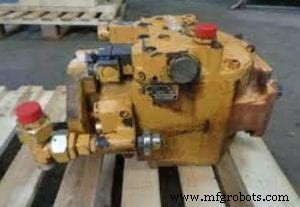
Understanding the Linde BPV Hydraulic Pump
An engine has to be specially designed to work with Linde BPV Pump.
An engine has to be specially designed to work with a variable displacement pump. This is because a variable displacement pump can change its capacity. The amount of fuel that is burned in an engine is directly related to the capacity of the pump. If you have a small pump, then it will take less time for you to fill up your tank, but you will also use less fuel.
As variable displacement pumps become more popular, it’s important to understand how they work in order to better troubleshoot them.
Variable displacement pumps are becoming more popular because of their ability to deliver a wide range of flow rates. Variable displacement pumps have a fixed displacement, meaning they don’t change their pumping capacity based on the pressure or head. This means that they can produce a wide range of flow rates over a wide range of pressures and heads.
This concludes our guide on the Linde BPV hydraulic pump. Hopefully you found this article helpful in understanding how this pump works, and how to determine the best options for your application. Should you have any questions, be sure to get in touch with us, and we’ll be happy to help shed some light.
Industrial equipment
- Hydraulic Pumps Explained: Key Principles & Applications
- Locating and Replacing the Hydraulic Pump on Your Tractor
- Why We Chose the Linde HPV Hydraulic Pump: 7 Key Benefits
- Linde HPV Hydraulic Pumps – Premium Performance for Harsh Environments
- Linde BPR Hydraulic Pump Series – High-Pressure, Oil-Free Performance
- Linde HPV-02 Hydraulic Pump: Performance, Versatility, and Ease of Maintenance
- Linde HPR‑02 Hydraulic Pump – Cost‑Effective High‑Pressure, High‑Flow Power
- Linde HPR-01 Hydraulic Pump: A Comprehensive Performance Review
- Linde BPV Hydraulic Pumps: 5 Key Insights for Vehicle Brake Systems
- Discover the Linde MPR Hydraulic Pump: High-Pressure, Low-Flow Performance for Food & Beverage Applications