



Locating and Replacing the Hydraulic Pump on Your Tractor
If you’re looking to repair or replace a hydraulic pump on a tractor, you’ll need to identify the part number and find the right tractor model for instruction. In this article, we’ll provide a guide to locating the hydraulic pump on different models of tractors and explain how to replace it.
Hydraulic System of a Tractor
A tractor’s hydraulic system is crucial to its operation. The system consists of a pump and valves that allow the operator to transfer fluid power from the tractor’s engine to various implements, such as the plow or disc harrow.
The hydraulic system is located in the tractor’s engine compartment. The pump turns on and off with the engine, providing pressure to drive the valves. Fluid enters the pump through an intake manifold and passes through a series of screens and strainer before exiting the pump outlet.
The system can be divided into two sections: the prime mover (the engine) and the driven units (the implements). The prime mover is responsible for generating pressure, while the driven units are responsible for receiving that pressure and using it to do work.
The tractor’s hydraulic system includes a variety of components, including:Pump: The pump is responsible for transferring fluid power from the engine to the implements. It includes an intake manifold, a series of screens and strainer, and an outlet.
Valves: The valves allow the operator to transfer fluid power from the engine to the various implements. They include a cam lobe that opens and closes the valve, a stem that sits inside the cam lobe, and a handle that the operator uses to move the stem.
In order for the tractor’s hydraulic system to function properly, it needs to be calibrated regularly. Calibration consists of adjusting the valves so that they open and close at exactly the right moment. This ensures that the system is working properly and is delivering the correct amount of pressure to the driven units.
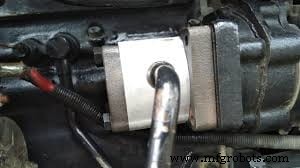
hydraulic pump on a tractor
What is the Difference Between a PTO and ISV?
A hydraulic pump is typically found on tractors with power take-off (PTO) systems, as these tractors use the engine to rotate the accessories, such as a harrow. An ISV ( Integrated System Vehicle ) uses an electric motor to power the tractor and its accessories.
A PTO allows farmers to use the engine’s power to rotate implements, such as a harrow, which saves on fuel and wear on the engine. An ISV eliminates the need for an engine, making the tractor easier to operate and reducing environmental impact.
What is the Difference Between a Power Take Off and a Gear Drive?
A power take off (PTO) is a type of transmission found on tractors that uses a gearbox to drive a shaft that connects to the engine. A gear drive uses a planetary gearset to send power from the engine to the tractor’s wheels.
PTOs are more common on larger tractors, while gear drives are more common on smaller tractors. PTOs are often faster to engage and disengage than gear drives, making them better for high-powered applications. Gear drives are also more efficient, allowing them to operate at lower speeds.
How Does a Tractor Work with Hydraulic Pumps Inside or Outside?
A hydraulic pump is a device that uses the pressure of liquid or gas to move objects. Tractor motors use hydraulic pumps to move the tractor’s driveshafts and rotors. Hydraulic pumps are also used to power other mechanisms on tractors, such as those for plowing and tillage.
Hydraulic pumps are usually found inside tractors, but they can also be found outside tractors in certain applications. For example, an agricultural tractor may have a hydraulic pump that powers the seed drill.
How Does an Agricultural Tractor Produce Power?
A hydraulic pump is a key component of an agricultural tractor. This machine uses hydraulics to move objects, and the hydraulic pump helps to generate power. In essence, the hydraulic pump Provides mechanical energy to the tractor’s engine.
The engine works by turning a shaft that connected to the tractor’s gears. These gears then turn the tractor’s wheels, which in turn move the object being pulled. The hydraulic pump provides energy to these moving parts, helping to power the tractor and its payload.
Why do we Need a Hydraulic Pump on a Tractor?
A hydraulic pump is a mechanical device used to move fluids. It works by using the pressure of the fluid being pumped to create a rotating motion. This motion is then used to power other mechanical devices, like a tractor.
The main use for a hydraulic pump on a tractor is to move liquid or gas. This is especially useful in agriculture, where large amounts of water or gas are needed frequently. Hydraulic pumps also come in handy when working with heavy equipment, like trucks and bulldozers.
How Does the System Work on a Tractor with Hydraulics?
A hydraulic system on a tractor works by using a pump to move fluid between two reservoirs. The pump’s impeller provides the force necessary to move the fluid, and the system is usually located in one of the tractor’s engine compartments.
When the tractor is started, the pump’s impeller begins to move fluid from the reservoir at the front of the engine to the reservoir at the back. This motion provides power to the tractor’s engine, and it continues until you stop pedaling or pull back on the throttle.
The system is also used to move oil and other fluids between different parts of the tractor. When you press a button on the handlebars, hydraulic fluid is sent from a storage tank in the rear of the tractor to a container on the front.
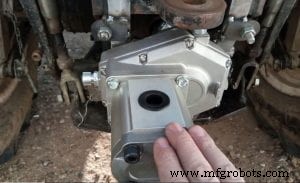
hydraulic pump on a tractor
Conclusion
Thank you for reading our article on where is the hydraulic pump on a tractor. In case you were wondering, the hydraulic pump is located on the front of the tractor near the engine. It uses pressurized fluid to power various operations, including turning gears and moving heavy objects. If you ever need to replace or repair your hydraulic pump, be sure to consult a qualified technician. Thanks for reading!
where is the hydraulic pump on a tractor, please clickhttps://topkitparts.com/ to learn more
Industrial equipment
- Step-by-Step Guide to Priming a Ford Tractor Hydraulic Pump
- Boosting Hydraulic Pump Pressure: Proven Techniques & Tips
- Choosing the Most Efficient Hydraulic Pump: Expert Guide
- Calculating Hydraulic Pump Compressor Capacity (CC): A Step‑by‑Step Guide
- Rexroth A4V Hydraulic Pump: High-Pressure, Variable-Displacement Performance
- Linde BPV Hydraulic Pump: Design, Performance, and Industrial Applications
- Preventing Pump Failures: The Impact of Contamination on Hydraulic Systems
- Discover the Powerful Rexorth A4VG Hydraulic Pump for Heavy-Duty Applications
- Discover the Linde MPR Hydraulic Pump: High-Pressure, Low-Flow Performance for Food & Beverage Applications
- Understanding the Cost of Hydraulic Pumps: Key Factors & Price Breakdown