



Mate Rivets Explained: The Ultimate Vibration‑Resistant Fastener for Aerospace and Industry
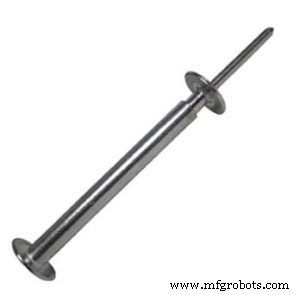
When you need a fastener that delivers long‑term reliability under extreme conditions, mate rivets are the preferred choice. Renowned for their resilience against vibration and their capacity to secure materials of varying thicknesses, they are a staple in aerospace, automotive, and heavy‑industry assemblies.
What Are Mate Rivets?
Mate rivets are solid‑body fasteners engineered to form permanent, high‑strength joints. Unlike threaded fasteners, they feature a smooth exterior and are installed using a two‑part system: a tubular sleeve and a rivet body with an internal mandrel. The result is a seamless, low‑profile connection that retains its integrity even under dynamic loads.
Components of a Mate Rivet
The system is divided into two primary components:
- Tubular sleeve – Inserted from one side of the assembly.
- Rivet body with mandrel – Inserted from the opposite side.
Once aligned, a standard blind rivet tool expands the rivet inside the sleeve, simultaneously clamping the two parts together. Though the tool is a blind tool, access to both sides of the assembly is required for proper installation.
Key Advantages of Mate Rivets
- Extended grip range – Ideal for thin to thick materials; traditional blind rivets often struggle with larger thickness variations.
- Superior vibration resistance – The interlocking design resists loosening caused by engine vibration, turbulence, or mechanical shocks, ensuring joint integrity over time.
- Material preservation – By distributing loads evenly, mate rivets minimize the risk of cracking or damage in delicate substrates such as plastics, fiberglass, and composites.
These benefits make mate rivets a trusted solution for critical applications where reliability and durability are non‑negotiable.
Industrial equipment
- Precision Laser Cutting Machines for Industrial & Workshop Applications
- Essential Lathe Cutting Tool Types for Precision Machining
- Custom Etching Explained: Tailored Precision for Your Projects
- Choosing Flexible Low‑Friction Materials: Green Gripper Woven & Alternatives
- Choosing the Best Industrial Design Books: A Guide to Find the Right Resources
- When to Use a Plasma Cutting Table: Key Advantages and Applications
- How to Boost Hydraulic Flow Rate for Optimal Performance
- What Is an Assembly Machine? Understanding Automated Manufacturing
- Turn‑X 16‑Speed Lathe – Precision Two‑Axis DRO for Superior Machining
- 5 Essential Safety Practices for Rotating Equipment: Boost Reliability & Prevent Accidents