



Predictive Maintenance in Robotic Factories: Unlocking Efficiency, Longevity, and Cost Savings
In today’s industrial landscape, where every minute of uptime translates to tangible profit, predictive maintenance is rapidly becoming the cornerstone of high‑performance robotic factories. By leveraging AI, machine learning, and big‑data analytics, manufacturers can forecast equipment failures before they materialize, turning reactive fixes into planned, cost‑effective interventions.
What Exactly Is Predictive Maintenance?
Predictive maintenance is a data‑driven strategy that continuously monitors machinery through embedded sensors—capturing temperature, vibration, acoustic signals, and more. Advanced analytics and ML algorithms sift through this data in real time, detecting subtle deviations that herald impending breakdowns. This foresight empowers operators to schedule maintenance during low‑production windows, eliminating surprise downtimes.
Beyond preventing failure, the approach refines maintenance scheduling, ensuring that every intervention is timely, necessary, and resource‑efficient. The result is a leaner operation that conserves labor, parts, and downtime.
Key Advantages for Robotic Factories
1. Reduced Downtime – Predictive insights allow maintenance to be performed during planned outages, cutting unplanned stoppages by up to 70% in many case studies.
2. Extended Equipment Life – Early detection of wear and tear prevents catastrophic damage, often extending machine life by 15–25% and deferring capital replacement.
3. Optimized Resources – Accurate scheduling means fewer emergency calls, lower labor costs, and better inventory control for spare parts.
4. Increased Productivity – Consistent operation flow boosts throughput and improves overall equipment effectiveness (OEE).
Predictive vs. Reactive Maintenance

Reactive maintenance addresses problems only after they cause a halt, often incurring significant downtime and accelerated wear. Predictive maintenance, in contrast, anticipates issues, schedules work proactively, and preserves machine integrity—leading to measurable cost savings and reliability gains.
Implementing Predictive Maintenance: Core Elements
• Sensor Deployment – Install high‑precision sensors on critical components.
• Data Integration – Consolidate sensor streams into a central analytics platform.
• Analytics & ML Models – Deploy algorithms tailored to each machine’s operating profile.
• Training & Culture – Equip staff with the skills to interpret data and adopt a proactive mindset.
Start small—pilot on a few machines, validate models, then scale systematically.
Common Challenges and Mitigation Strategies
• High Initial Cost – Justify ROI through projected downtime savings and extended asset life.
• Data Quality – Implement rigorous data governance to ensure accuracy.
• Change Management – Secure executive sponsorship and communicate clear benefits to frontline teams.
• Skill Gap – Offer targeted training and collaborate with analytics partners.
Emerging Trends Shaping the Future
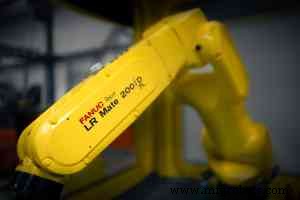
AI and deep‑learning are sharpening predictive accuracy, while edge computing reduces latency, enabling real‑time decision making. As the technology matures, predictive maintenance is set to become an industry standard, integral to the Industry 4.0 vision.
In summary, predictive maintenance transforms robotic factories from reactive pain points into proactive profit drivers. The journey requires investment, but the dividends—lower downtime, extended machine life, and higher productivity—are compelling. Now is the optimal moment to adopt this transformative strategy and secure a competitive edge for your operations.
Industrial equipment
- Understanding Mechanical Patents: Definition, Eligibility, and Benefits
- How Compressed Air Brings Easter Candy Favorites to Life
- Hydraulic Strand Jack Lifting System: Powerful, Reliable Heavy‑Lifting Solution
- Rexroth A22VG Hydraulic Pump – Premium Heavy‑Duty Performance for Mining & Construction
- Why Non‑Ferrous Metals Matter: Key Advantages for Industry
- Understanding Projection Welding: Process, Applications & Advantages
- The Compressed Air & Gas A-Z Vlog: Mastering Compressor Measurements – Episode 10
- Hydraulic Assist Brakes: How They Work, Their History, and Where They're Used
- Kawasaki K7VG Hydraulic Pump Review: Performance & Reliability
- Houston’s Workforce Revitalization: Training the Next Generation of Skilled Manufacturing Technicians