



Deploying Your First Industrial Robot: A Step‑by‑Step Guide for Manufacturers
Manufacturing sectors increasingly adopt industrial robots to streamline production, cut costs, and address labor shortages. Robots are now more flexible and affordable, freeing skilled workers to focus on higher‑value tasks. For small and medium‑sized manufacturers (SMMs), the prospect of robot integration can feel intimidating, but by following a proven roadmap and partnering with experienced integrators, you can realize tangible ROI and boost competitiveness.
Step 1: Building company‑wide support
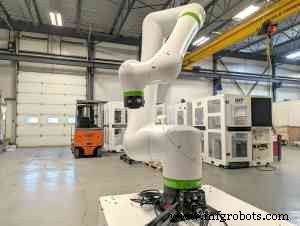 Before embarking on the robot integration journey, secure buy‑in across the organization. Engage senior leaders, plant managers, engineers, maintenance staff, IT, safety, shop‑floor workers and HR to communicate the potential benefits. Highlight the short payback period—typically around two years—address concerns about job displacement, and frame robotics as a tool that lets employees focus on quality control and higher‑value activities.
Step 2: Defining success criteria
Success isn’t just about cost savings. Define clear, measurable goals: an average payback of two years, increased production volume, reduced cost per part, and improved worker safety. Robots deliver consistent, rapid throughput while eliminating repetitive, hazardous tasks—this translates into lower labor costs and fewer injury claims.
Step 3: Assessing your robotic needs
Identify the processes that would benefit most from automation. Look for tasks that are repetitive, dangerous, or demand high precision. Decompose each candidate task into discrete steps—for example, a screw‑tightening cycle can be broken into screw removal, jig placement, screw insertion, tightening, picking the finished part, and boxing. Understanding these micro‑steps lets you design a robot‑friendly workflow.
Step 4: Creating a robot‑conducive environment
Plan the physical layout before you buy a robot. Allocate space for the robot, tooling, and any ancillary equipment. Design a realistic process flow that integrates pre‑ and post‑automation stages, ensuring smooth movement of people, parts, and products. A well‑planned environment maximizes efficiency and minimizes downtime.
Step 5: Partnering with experts—robot system integrators
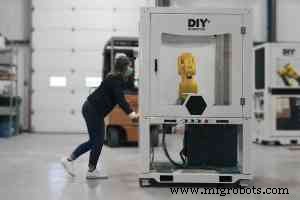 The complexity of robot deployment is why many manufacturers turn to specialists. Companies such as DIY Robotics offer end‑to‑end services: from feasibility studies and design to installation and commissioning. They act as a liaison between you and the robot manufacturer, ensuring a seamless, cost‑effective rollout. Share your budget, cycle‑time goals, workspace constraints, and other requirements so they can recommend the optimal robot and system architecture.
Use our payload calculator, available here, to determine the robot’s lifting capacity accurately. The calculator predicts the moments and inertia your end‑of‑arm tooling will impose, helping you choose the right payload and avoid over‑specification.
Book an appointment with our team to receive personalized support for your robotic integration needs. DIY Robotics is committed to delivering expertise and solutions that make your robotic journey a success.
Step 6: Implementing the robot system
Once the design is finalized, conduct a comprehensive risk assessment to verify safety and process compatibility. Proceed with manufacturing, programming, testing, delivery, and installation. Even after deployment, ongoing support—regular inspections, firmware updates, and troubleshooting—ensures sustained performance. Build a long‑term partnership with your integrator and the robot vendor.
Step 7: Calculating costs and ROI
Develop a detailed cost model that includes capital outlay for the robot, tooling, and ancillary equipment, plus operating expenses such as maintenance, energy, and spare parts. Subtract the expected savings from reduced labor, fewer defects, lower insurance premiums, and higher throughput. A clear ROI estimate—ideally a two‑year payback—helps secure executive buy‑in.
Step 8: Gathering information for integration
Provide the integrator with comprehensive technical data: 3‑D CAD models, 2‑D drawings with tolerances, material specs, fixture details, and machine manuals. Supplement these with photographs and videos of the current workflow, and non‑technical metrics such as takt time, cycle time, and annual volume. The richer the data, the more precise the integration plan.
Step 9: Empowering your team
Involve your existing experts—process engineers, machine operators, and maintenance staff—throughout the project. Their deep knowledge of the plant will surface hidden bottlenecks and help refine the automation solution. Training and empowerment also smooth the transition and build internal confidence in the new system.
Step 10: Identifying a robotics champion
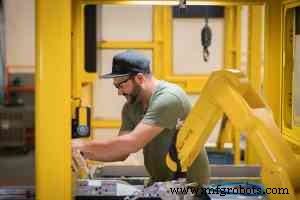 Appoint a cross‑functional champion who can navigate between engineering, production, and management. This individual will own the robot program, drive rapid ROI, and champion continuous improvement. A dedicated champion accelerates decision‑making and keeps the project on track.
Step 11: Start simple and evolve
Begin with a single, well‑defined automation cell—such as a manual assembly line—before scaling. Pilot projects let you validate performance, collect data, and adjust processes with minimal disruption. Use the lessons learned to expand automation across the plant incrementally.
Step 12: Continuous improvement and future projects
Automation is a journey, not a one‑off event. Regularly review performance metrics, identify new automation opportunities, and stay abreast of advances in robotics technology. Maintain close collaboration with your integrator and manufacturer to leverage their expertise for subsequent projects, ensuring you remain competitive in a rapidly evolving industry.
In conclusion, deploying your first industrial robot is an exciting milestone that unlocks significant operational gains. By following this roadmap—building support, defining success, assessing needs, creating the right environment, partnering with experts, managing implementation, and fostering continuous improvement—you can achieve rapid ROI and position your business for future growth.
Industrial equipment
- Atlas Copco Leads Showcase of Energy‑Efficient Solutions at 2018 Best Practices EXPO & Conference
- Concept Laser X LINE 2000R – High‑Performance Metal 3D Printer for Aerospace, Automotive, and Mining
- Understanding Injection‑Molded Plastic Parts: Design, Production, and Key Features
- Expert Guide to Seamless Machinery Relocation: What to Expect
- Selecting the Ideal Conveyor Brake System for Your Industrial Facility
- Understanding Transfer Molding: Process & Benefits
- Bridgeport XR1000 VMC: Flexible, Advanced Vertical Milling Center
- Mastering CNC Machining Materials: Metals, Plastics & Best Selections
- Alloy vs Stainless Steel: The Definitive Guide for Machining & Fabrication
- Prevent Overhead Crane Incidents: 7 Common Issues & How to Resolve Them