



10 Proven Strategies to Boost Manufacturing Efficiency
Manufacturing excellence hinges on continuous efficiency gains. By adopting proven, data‑driven tactics, companies can slash costs, boost productivity, shrink environmental footprints, and elevate customer satisfaction. Below is a detailed playbook of ten actionable strategies, each backed by industry research and real‑world results.
1. Conduct a Comprehensive Process Analysis
Before implementing any change, map your entire production flow to identify bottlenecks, waste, and variation. A thorough analysis establishes a benchmark and directs focused interventions.
Identifying Bottlenecks
- Map the sequence of operations and highlight steps with prolonged idle or queue times.
- Spot areas where work frequently backs up or stalls.
- Monitor machines or stations operating at or near full capacity—these are prime bottleneck candidates.
Once identified, design targeted solutions—whether re‑sequencing tasks, adding parallel resources, or simplifying operations—to smooth the flow.
2. Optimize Material Usage
Minimizing waste not only cuts costs but also strengthens sustainability credentials. Use the following techniques:
Design for Manufacturability
Incorporate value‑engineering principles early in product design to reduce material usage, improve yields, and simplify downstream processes.
Recycling & Reuse
Establish a closed‑loop scrap recovery program. Repurpose or sell scrap to third parties—turning waste into revenue streams.
Efficient Shipping
Optimize packaging layouts, use lightweight cushioning, and evaluate alternative carriers to lower freight spend and improve throughput.
3. Streamline Workspaces
An organized shop floor eliminates search time and reduces errors.
Organizational Systems
Implement 5S or a similar framework to assign fixed locations for tools and materials, ensuring they’re always in the right place.
Visual Management
Use color‑coded labels, floor markings, and real‑time status boards to convey critical information instantly.
4. Standardize Processes
Consistency drives quality and efficiency. Adopt the following:
Checklists & Standard Operating Procedures (SOPs)
Document step‑by‑step procedures for each workstation. Review and update them regularly to capture incremental improvements.
Training & Cross‑Training
Equip staff with the skills to perform multiple roles, enhancing flexibility and reducing downtime when absences occur.
5. Embrace Preventive Maintenance
Scheduled upkeep prevents costly outages. Key actions include:
Regular Inspections
Conduct daily or shift‑based checks to catch wear or misalignment early.
Scheduled Maintenance
Follow manufacturer guidelines and historic performance data to set proactive maintenance windows. Studies show that systematic preventive maintenance can cut unplanned downtime by up to 15% (International Journal of Production Economics, 2023).

6. Leverage Automation
Automation frees human talent for higher‑value tasks and improves repeatability.
Robotic Process Automation (RPA)
Deploy RPA for back‑office tasks such as order entry, inventory updates, and data reconciliation.
CNC & Robotic Arms
Use CNC machines for precise, repeatable machining and integrate SCARA or Delta robots for rapid pick‑and‑place or assembly operations.
Industrial Robotics Integration
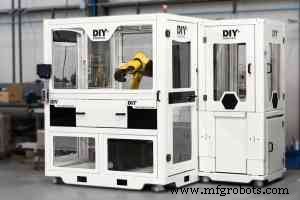
Robots can perform welding, inspection, and shipping with unmatched speed and consistency. At DIY Robotics, we provide turnkey robot cells—ideal for startups and SMEs seeking high‑quality automation without the heavy upfront cost. Visit our products page for details on our Classic industrial robot cell.
Global Market Growth
The industrial robotics market is expanding rapidly, with forecasts predicting a CAGR of 12% through 2030 (Gartner, 2024). Early adoption positions manufacturers ahead of the curve.
7. Upgrade Equipment
Legacy machinery can throttle productivity. Follow these steps:
Assess Equipment Performance
Measure throughput, energy usage, and maintenance frequency to identify underperforming assets.
Cost‑Benefit Analysis
Calculate ROI by factoring in higher output, lower energy bills, and reduced repair costs. Modern equipment often pays for itself within 2–3 years.
8. Foster Employee Engagement
Employees who feel heard and valued drive continuous improvement.
Employee Feedback
Implement suggestion boxes, regular pulse surveys, and town‑hall meetings to surface frontline insights.
Training & Education
Offer ongoing skill development—both technical and soft skills—to keep teams adaptable and motivated.
9. Continuous Improvement
Efficiency is a journey, not a destination. Adopt these practices:
Key Performance Indicators (KPIs)
Track metrics such as cycle time, scrap rate, and equipment uptime. Use dashboards to surface trends and trigger corrective actions.
Lean Manufacturing Principles
Implement Kaizen, 5S, and value‑stream mapping to systematically eliminate waste and embed a culture of incremental improvement.
10. Embrace Technology
Modern software solutions give you real‑time visibility and predictive insights.
Manufacturing Execution Systems (MES)
Integrate MES to orchestrate scheduling, track shop‑floor progress, and align production with demand.
Simulation Software
Model production lines virtually before physical changes, reducing trial‑and‑error and cutting implementation risk.
Data Analytics
Apply analytics to sensor data, quality reports, and maintenance logs to uncover hidden patterns and forecast failures.
By executing these ten strategies—rooted in data, human insight, and advanced technology—you can elevate your manufacturing operation to new levels of cost efficiency, quality, and sustainability. Tailor each recommendation to your unique context, and commit to continuous improvement to stay competitive in an evolving industry.
Industrial equipment
- US Manufacturing Outlook 2017: Five Key Trends Shaping the Industry
- Employee of the Month: Sandra Seeber – Celebrating 18 Years of Excellence at Monroe
- Hurco Machine Tools: 40+ Years of CNC Innovation & Patented Precision
- Protect Your Production: The Critical Role of Backup Air Compressors
- 5 Insightful Facts About the Die Casting Process
- Compressed Air Testing & ISO Standards: Expert Guide for Quality Assurance
- Understanding Ball Plungers: Design, Function, and Applications
- Boost Construction Bidding Accuracy with OEM Support: Win Big Projects Safely
- Waterjet Cutting Explained: Precision, Versatility, and Business Advantages
- Heidenhain Enhances CNC Pilot 640 Lathe Control with Turn+ Feature and Safety Upgrades