



Understanding Cobots: Collaboration Levels and Industrial Applications – A Practical Guide
Collaborative robots, or cobots, have reshaped modern manufacturing by combining human dexterity with robotic precision. Unlike legacy industrial robots that operate in isolation, cobots are engineered to work safely beside people, delivering flexibility, safety, and increased productivity across a spectrum of tasks.
Collaboration Levels Explained
Why Collaboration Levels Matter
Choosing the right cobot hinges on understanding its safety and interaction capabilities. Industry standards such as ISO/IEC 10218‑2 define seven collaboration tiers, each balancing human involvement with robotic performance. Below is a concise overview of each level.
- Level 1 – Safety‑Monitored Stop: Robot halts when a human enters the workspace.
- Level 2 – Hand‑Guiding: Operators can physically guide the robot’s movements.
- Level 3 – Speed & Separation Monitoring: Robot continuously monitors human speed and distance, slowing or stopping as needed.
- Level 4 – Power & Force Limiting: Movement force is capped to prevent injury during close contact.
- Level 5 – Safety‑Rated Monitored Stop: Combines Level 1 safety stops with certified safety protocols.
- Level 6 – Hand‑Guiding + Speed/Separation Monitoring: Enables manual guidance while enforcing proximity limits.
- Level 7 – Power/Force Limiting + Speed/Separation Monitoring: Highest safety tier for direct, forceful human‑robot collaboration.
Level 1 – Safety‑Monitored Stop
At this entry level, cobots feature proximity sensors that detect a human presence and immediately halt all motion. It’s ideal for environments where robots perform isolated tasks and human interaction is rare.
Level 2 – Hand‑Guiding
Robots equipped with tactile sensors allow operators to steer them manually, making this level suitable for delicate assembly or tool positioning tasks.
Level 3 – Speed & Separation Monitoring
By continuously tracking the velocity and distance of nearby workers, the robot automatically adjusts its speed or stops to maintain a safe separation. This tier is commonly used on assembly lines where humans and robots work side‑by‑side.
Level 4 – Power & Force Limiting
Advanced force‑limiting mechanisms prevent the robot from exerting harmful torque, enabling safe physical interaction even during heavy lifting or machine tending.
Level 5 – Safety‑Rated Monitored Stop
Beyond Level 1, this tier incorporates certified safety components that guarantee a safe shutdown sequence, adding confidence in high‑risk settings.
Level 6 – Hand‑Guiding + Speed/Separation Monitoring
This hybrid tier merges manual guidance with real‑time proximity monitoring, offering precision and safety for complex assembly or re‑tooling operations.
Level 7 – Power/Force Limiting + Speed/Separation Monitoring
Combining all safety features, Level 7 is suited for the most demanding collaborative tasks, such as simultaneous welding and assembly.
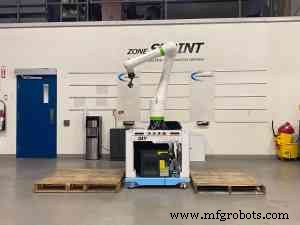
Industrial Scenarios Leveraging Cobots
Assembly Line Automation
Cobots accelerate production by handling repetitive motions—pick‑and‑place, screw tightening, or quality checks—while freeing human workers for oversight and decision‑making.
Material Handling & Logistics
Robots can lift, sort, and transport pallets, reducing manual labor injuries and streamlining warehouse throughput.
Quality Control & Inspection
With laser sensors and vision systems, cobots conduct dimensional checks, defect detection, and visual inspections with precision and repeatability that surpass human capabilities.
Welding & Fabrication
Robotic welding offers consistent heat input and joint quality. Safety features allow cobots to work alongside skilled welders, enhancing both speed and safety.
Packaging & Palletizing
Robots adapt to varied product shapes and packaging requirements, automating stacking, labeling, and pallet loading while maintaining high throughput.
Machine Tending
Robots load/unload parts, change tools, and monitor process parameters, reducing downtime and improving tool life.
Choosing the Right Cobots for Your Business
Successful integration starts with a clear assessment of your production goals, safety requirements, and workforce skill set. Match the collaboration level to the task complexity, and select a cobot platform that offers scalability, intuitive programming, and robust support. By aligning technology with business objectives, companies can achieve faster deployment, lower operating costs, and higher employee satisfaction.
Ready to explore how cobots can transform your manufacturing floor? Contact us today for a personalized consultation.
Industrial equipment
- Sustainable Manufacturing Explained: Eco‑Friendly, Safe, and Profitable
- Common Causes of Pressure Loss in Hydraulic Pumps and Quick Fixes
- Cushion Clamps Explained: Function, Benefits, and Installation Tips
- Ontario’s Premier Trucking Diners: Where Quality Meets Convenience
- Desiccant Dryers Explained: Key Benefits & How They Deliver Ultra‑Dry Air
- Understanding Melting Furnaces: How They Work and Their Applications
- Understanding Plastic Resin: Composition, Production, and Applications
- Turbochargers Explained: How They Boost Engine Performance
- Choosing the Best Clutch Material for Maximum Friction and Longevity
- Essential Duties of a Machine Operator: Roles, Responsibilities, and Skills