



Living Hinges Explained: Single‑Piece Elastic Joints that Outperform Traditional Hinges
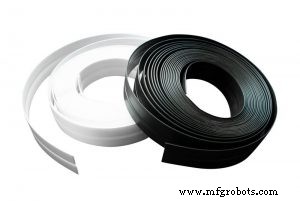
In mechanical design, a “living hinge” refers to a flexible joint made from a single continuous piece of elastic material. Though the term can be misleading, these hinges function like traditional pivots while offering unique advantages in flexibility, durability, and cost‑effectiveness.
Overview of Living Hinges
Living hinges are engineered from a single stretchable material—commonly silicone rubber, polypropylene (PP), or low‑density polyethylene (LDPE). Because the entire joint is one piece, it can flex repeatedly without fatigue, fracture, or the need for additional fasteners.
Key Differences from Conventional Hinges
Traditional hinges are composed of multiple parts—two leafs and a pin that holds them together. They rely on metal or rigid plastic, which limits their ability to bend. A living hinge, in contrast, eliminates the pin and leaf separation; its seamless, elastic surface absorbs motion, reducing stress concentrations and preventing breakage under repeated use.
Because they have no discrete pin, living hinges can tolerate higher strain rates and more cycles, making them ideal for applications such as snap‑together packaging, electronic enclosures, and biomedical devices.
Manufacturing Process
Most living hinges are produced by injection molding. The process begins by heating the chosen elastomer until it liquefies, then injecting it into a precision mold that shapes the hinge’s curvature and thickness. Once the material cools and solidifies, the hinge is ejected as a single, fully functional component.
Injection molding offers tight tolerances, consistent mechanical performance, and scalability for mass production, which explains why living hinges are a staple in modern consumer and industrial products.
Industrial equipment
- What Are Bi‑Fold Hinges? Features, Benefits, and Applications
- What Are Detent Position Hinges? A Practical Guide
- Living Hinges: The Rust‑Proof, Silent, and Customizable Advantage Over Metal
- 6 Expert Insights into Hinges: Design, Function, and Innovations
- Understanding Hinge Mechanics: Leaves, Knuckles, and Pins
- Weld‑On Hinges: Installation, Benefits, and Material Choices
- Loose Joint Hinges: Design, Function, and Advantages
- Understanding Gate Hinges: Types, Functions, and How to Choose the Right One
- Living Hinge Design: Boosting Functionality & Ease in Product Manufacturing
- Designing Robust 3D‑Printed Living Hinges: A Practical Guide