



DIY Robotics: Empowering Companies to Lead with Industrial Robot 4.0
In today’s fast‑moving industrial landscape, adopting industrial robots is no longer optional—it’s a strategic imperative. These sophisticated machines automate repetitive tasks with pinpoint precision, freeing human talent for higher‑value, creative work. The result? Firms that embrace robotics enjoy measurable gains in throughput, quality, and competitive edge.
The Evolution of Industrial Robots – From 1.0 to 4.0
Industrial Robot 1.0, introduced in the 1970s, handled simple pick‑and‑place jobs and offered limited articulation. Over subsequent decades, incremental advances added speed, dexterity, and basic sensing. Today’s Industrial Robot 4.0 incorporates AI, machine learning, and IoT connectivity, enabling adaptive, autonomous operation that integrates seamlessly with smart factories.
Benefits of Industrial Robot 4.0
• **Higher Productivity** – Automating routine work shortens cycle times and boosts output. • **Enhanced Safety** – Advanced sensors and collision‑avoidance logic protect workers and equipment. • **Superior Precision** – Near‑perfect repeatability reduces defects, waste, and rework, driving better product quality and customer satisfaction.
DIY Robotics: Empowering Companies to Build Their Own 4.0 Solutions
DIY robotics delivers a modular, mobile, and standardized robotic cell that lets organizations design, assemble, and tweak automation to fit unique processes. With plug‑and‑play hardware and open‑source software, companies can prototype, test, and deploy solutions without the lead times and vendor lock‑in that traditional robotics projects demand.
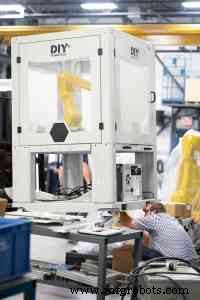
Transforming the Industrial Robotics Landscape
Historically, firms relied on costly vendor ecosystems to build robots—a slow, inflexible path. DIY robotics flips that model: by leveraging off‑the‑shelf components and community‑driven code, companies slash development costs, accelerate delivery, and cultivate internal expertise. The open‑source spirit also sparks cross‑industry collaboration, fueling continuous improvement.
Core Capabilities of DIY Robotics
• **Modular Design** – Swap or upgrade arms, grippers, or sensors with minimal downtime. • **Plug‑and‑Play Integration** – Add new devices via standardized interfaces in minutes. • **Intuitive Programming** – Visual block editors and low‑code environments let non‑experts script complex motions.
Challenges & Practical Tips
Implementing DIY robotics still demands technical know‑how. Successful projects often begin with targeted training or partnership with specialists. That’s why our DIY++ services cover 3D printing, electrical engineering, machining, programming, and mechanical design—ensuring you have the right expertise to turn concept into production.
Looking ahead, robotics will be a cornerstone of operational excellence. By harnessing DIY robotics’ flexibility, businesses can achieve reduced costs, improved safety, higher quality, and accelerated innovation. Explore our DIY++ Services page and start building your own automation solution today.
Industrial equipment
- Premium Vertical CNC Lathe with Seamless Factory Automation Integration
- Slip Hook vs Shackle: Key Differences for Safe Lifting
- The Role of a Rigger: Key Responsibilities & Skills
- Selecting Safe Heavy Construction Equipment Online
- CNC Turning Centers: Minimal Training, Maximum Accuracy & Reliability
- Selecting Certified Tools to Prevent Explosions in Hazardous Work Environments
- Top 5 Causes of Hydraulic Pump Failures and Prevention Tips
- Why Leveling Feet Are Essential for Machine Stability and Workplace Safety
- Hurco Machine Tools: 40+ Years of CNC Innovation & Patented Precision
- Minimize Pressure Losses: Expert Guide to Selecting Hoses, Tubing, Fittings & Quick-Disconnect Couplings