



Understanding Glory Holes: Definition, Types, and Mining Applications
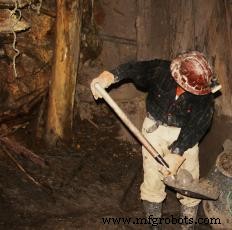
A "glory hole" is a term used in the mining industry to describe several different types of excavations that commonly occur during the process of creating an open pit, drilling a mine shaft, or using the block caving method of creating and managing a mine. Most methods of underground mining are likely to produce some sort of glory hole, although this type of open excavation can also be part of a surface mining project. The term is also sometimes used to describe the result of excavation as part of the work on a construction project.

One of the main characteristics of a glory hole is that the resulting excavated area is normally large and visually impressive. This type of excavation may be used in deep mining to create a mine shaft that opens a large and relatively open work space underground, allowing for relatively easy transport of collected ore, coal, or other materials to the surface. This is in contrast to a mine shaft that is somewhat narrow and does not allow for the use of heavy equipment to transport the mined materials to the surface.

A glory hole can occur in the form of what is known as an open-pit mine. This approach involves the creation of a wide pit through excavation that covers a considerable amount of area. Pit mining is common in many operations, making it possible to dig deeper in order to locate and remove the required materials. Technically, this type of mining may begin by digging a pit from the surface, or by digging in an underground chamber that was reached by drilling a shaft directly into the chamber.
Another example of the glory hole has to do with the block caving method. In this scenario, minerals or ore found in the ceiling of a mine shaft collapses directly into the shaft. As the material is removed, the ground surface over the shaft may become somewhat weak, eventually leading to a collapse that results in a large hole which exposes the shaft. The end result is a large open pit that can then be excavated from the surface for any remaining ore.
Along with mining operations, a glory hole can also be created as part of a construction effort. For example, excavating a tract of land in preparation for constructing a building may call for digging out an area that will ultimately contain a basement. When this is the case, the excavated area may be referred to as a glory hole.
Industrial equipment
- Diamond Turning: Precision Machining for Advanced Optics and Beyond
- Understanding Shaft Seals: Design, Function, and Applications
- Understanding the Oxygen (O2) Sensor: Role, Placement, and Failure Signs
- Understanding Couplings: 13 Types Explained for Efficient Power Transmission
- The Complete Guide to EDM Hole Drilling: Techniques, Machines, and Tips
- Understanding Gear Shafts: Role, Function, and Importance in Gear Systems
- Understanding Shaft Bearings: Types, Functions, and Industrial Applications
- Understanding Pilot Drills: Purpose, Benefits, and Usage
- Understanding Glory Holes: Definition, Types, and Mining Applications
- Decoding 'N' in Pump Calculations: Its Role and Significance