



Elevate Your Production Line with Advanced Grinding Automation Systems
In modern manufacturing, grinding is a pivotal process that removes material to achieve precise shapes and superior surface finishes. Traditional manual grinding, while effective, often hampers productivity due to its labor‑intensive nature. Introducing grinding automation systems transforms this critical step, enabling continuous, high‑volume operations that deliver consistent quality and significant cost savings.
Key Benefits of Grinding Automation
Automated grinding delivers measurable advantages that align with the core goals of any competitive production line:
- Uninterrupted Productivity – Machines run 24/7 without the need for breaks, increasing output and shortening lead times.
- Superior Precision – Computer‑controlled tooling guarantees tighter tolerances, reducing rework and improving product reliability.
- Reduced Labor Burden – Fewer operators are required, which lowers labor costs and frees skilled staff for higher‑value tasks.
- Cost Efficiency – Continuous operation and precise material removal cut material waste and operating expenses.
Automated Material Removal Tools
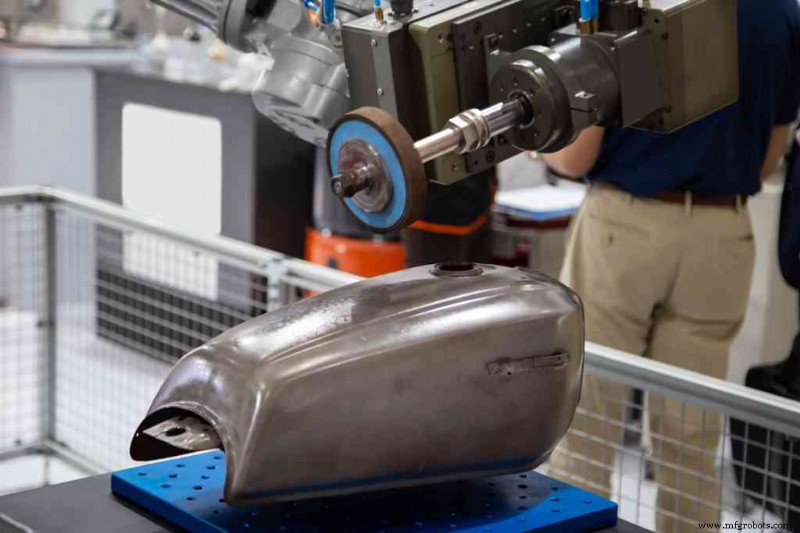
Automation spans a spectrum of tooling options. Automated grinding units focus on aggressive material removal using abrasive wheels or belts, while automated sanding and polishing stations refine surfaces with lighter media and specialized pads. Both are programmable to follow exact machining paths, ensuring repeatable results across diverse materials.
Grinding Tools
These high‑performance units employ abrasive surfaces that can be tailored—via wheel composition, grit size, and shape—to suit any workpiece geometry. With robotic integration, grinding can be executed at high speeds while maintaining exact dimensional control.
Sanding and Polishing Tools
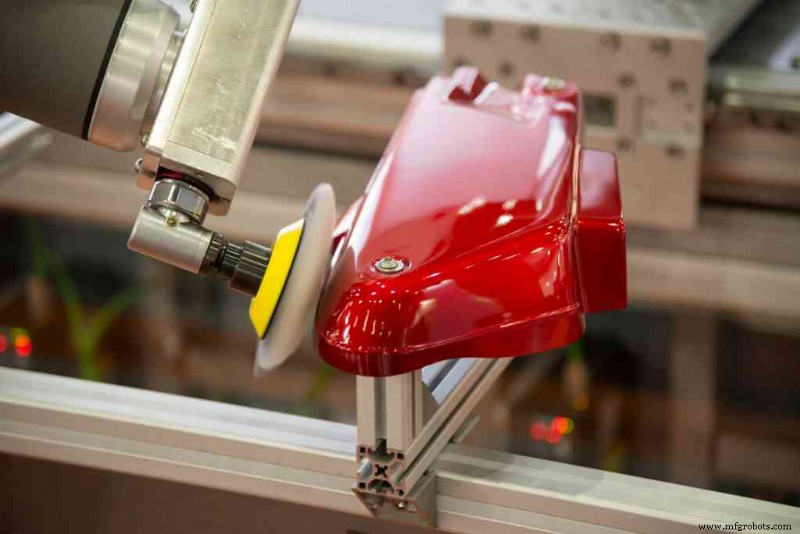
Automated sanding and polishing systems use fine abrasives to deliver smooth, defect‑free finishes. By eliminating human variability, these systems guarantee uniformity across batches, a critical factor for high‑precision industries. At DIY Robotics, we equip our sanding cells with ATI Industrial Automation tools to maximize performance.
Selecting the Right System for Your Line
Choosing the optimal grinding automation solution involves evaluating:
- Workpiece Characteristics – Material type, geometry, and size dictate tooling and feed strategies.
- Finish Requirements – Surface roughness targets influence the selection between grinding, sanding, or polishing modules.
- Automation Level – From semi‑automatic workstations to fully integrated robotic cells, match the system’s capability to your production goals.
- Cost & Integration – Assess initial capital, ongoing maintenance, and compatibility with existing equipment.
Our experts can guide you through a detailed assessment and propose a solution that maximizes ROI. Book a free consultation today.
Maintenance & Reliability
Longevity of grinding automation hinges on disciplined upkeep. Routine cleaning removes abrasive residues from both visible and hidden components, while lubrication prevents wear. Scheduled inspections and timely part replacements mitigate downtime and extend machine life.
Conclusion
Integrating grinding automation yields higher throughput, sharper accuracy, and lower labor costs. With a broad range of systems—from simple grinding heads to sophisticated polishing cells—you can tailor automation to your specific manufacturing challenges, driving efficiency and product excellence.
Industrial equipment
- ISO 27002 Explained: Your Blueprint for Robust Information Security Controls
- Grizzly G0745 Micro Lathe: Compact Precision for Jewelry & Hobbyists
- Top 10 Industrial Manufacturers of 2020: Leading Companies for Quality Equipment
- 6 Key Benefits of Bobcat Excavators That Deliver Superior Performance
- 5 Key Factors to Evaluate Before Buying Wing Knobs
- Step‑by‑Step Guide: Safely Disconnecting a Tractor Hydraulic Hose
- Single‑Mode vs. Multi‑Mode Fiber Optic Cable: Key Differences Explained
- The Aerospace Product Design Lifecycle: Precision, Collaboration, and Manufacturing Excellence
- Hydraulic Systems Explained: Fundamentals and Real-World Applications
- Types of Quality Control Tools: A Comprehensive Guide