



Industrial Robots Explained: How Automation Drives Efficiency and Safety
Industrial robots have transformed manufacturing worldwide, automating tasks that once required manual labor. The result? Higher efficiency, superior precision, and enhanced workplace safety. In this post, we’ll break down what industrial robots are, their core benefits, and the sectors that rely on them.
These machines are engineered and programmed to execute defined tasks within production lines. Equipped with sensors, motors, and sophisticated control systems, they perform repetitive operations with remarkable accuracy and speed—capabilities that are especially valuable in harsh or hazardous environments where human workers would be at risk.
Key components that enable their performance include:
- Mechanical Structure: Typically comprising 4‑6 articulated joints made from lightweight yet durable materials such as aluminum or steel, providing the range of motion needed for complex tasks.
- Sensors: Cameras, laser scanners, force/torque sensors, and more allow the robot to perceive its surroundings and adapt in real time.
- Control System: The robot’s brain—often a PLC or integrated software package—that processes sensor data and drives precise movements.
- End‑Effector: The tool attached to the robot’s “hand,” which can be a gripper, welding torch, spray nozzle, or any specialty instrument tailored to the job.
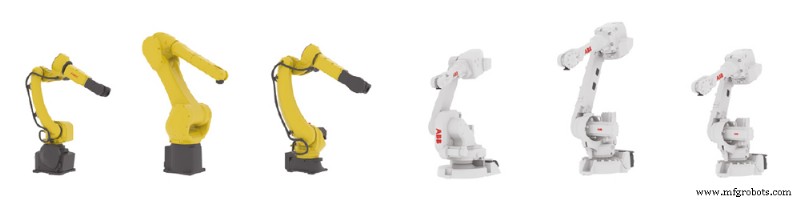
Industrial robots serve a broad range of industries, including but not limited to:
- Automotive: Welding, painting, assembly, and inspection of vehicle components.
- Electronics: Soldering, component placement, and quality testing of circuit boards.
- Food & Beverage: Packaging, sorting, and palletizing processes that demand hygiene and speed.
- Pharmaceuticals: Filling, labeling, and handling of sterile products with minimal contamination risk.
- Aerospace: Drilling, riveting, and assembly of aircraft parts where precision is critical.
Advantages of Industrial Robots
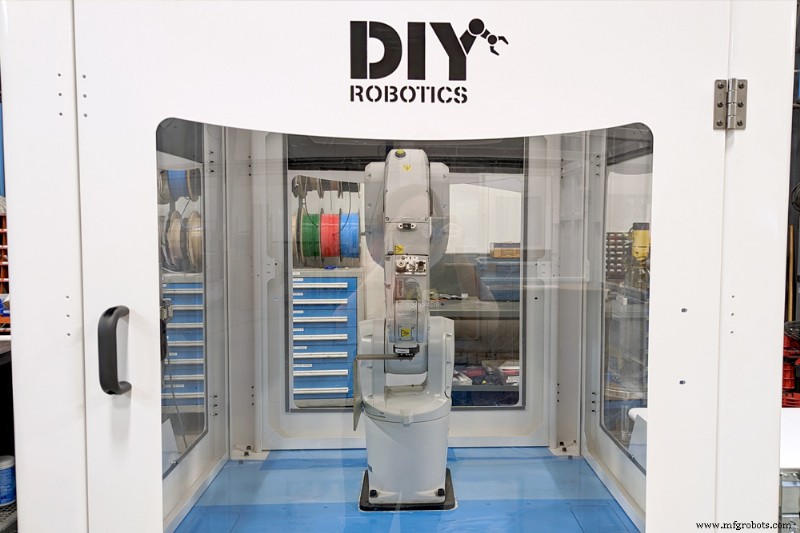
- Increased Productivity: Robots execute tasks faster and with consistent precision, allowing continuous operation without fatigue.
- Improved Quality: High repeatability reduces defects, ensuring a higher standard of finished goods.
- Reduced Labor Costs: Automation replaces repetitive, hazardous work, lowering wage expenses and enhancing employee safety.
- Flexibility: Programmable for a wide array of operations, making them adaptable to shifting production demands.
- Consistency: Uniform performance across batches eliminates quality variation.
- Multi‑Pose Capability: Inverse kinematics enables robots to reach the same point from multiple orientations, circumventing obstacles and optimizing workflow.
Conclusion
Industrial robots are not merely tools—they’re strategic assets that elevate manufacturing standards. By integrating advanced robotics, companies can achieve faster output, impeccable quality, and safer work environments, securing a competitive edge in today’s dynamic markets.
Industrial equipment
- HDS Expands Team to Deliver Advanced Equipment Repair and Service Solutions
- How Slow Quoting Undermines U.S. Machine Shops’ Competitive Edge
- Choosing Between Air-Cooled and Water-Cooled Chillers: A Professional Guide
- Professional Crane Conductor Bars & Systems for Reliable Power Delivery
- LRP VSD+: Premium Liquid Ring Vacuum Pump for Rugged Industrial Applications
- Monroe Engineering CEO Garrett Morelock Named EY Entrepreneur of the Year 2020 Finalist
- Maximizing Efficiency in CNC Multitasking Machines: The Advantages of Y-Axis Parting
- Discover the Advantages of Large Character Inkjet Printers for Industrial Printing
- Inside the Hydraulic Hose Tube: Why Internal Quality Matters
- Understanding Multicore Cables: Definition, Uses, and Benefits