



How 3D Printing Revolutionizes Robotics: Efficiency, Cost Savings, and Design Freedom
“With 3D printing, complexity is free. The printer doesn’t care if it makes the most rudimentary shape or the most complex shape, and that is completely turning designing and manufacturing on its head as we know it.”
— Avi Reichental, CEO of 3D Systems
What Is 3D Printing?
Additive manufacturing—commonly called 3D printing—transforms digital designs into tangible objects by layering material one slice at a time. Each layer represents a thin cross‑section of the final piece. Unlike subtractive methods that cut away material, 3D printing gives engineers and hobbyists alike the freedom to produce intricate parts without the need for costly tooling or large inventory.
Below are the key advantages of integrating 3D printing into robotics engineering.
On a broader level, 3D printing accelerates prototyping, tooling, and fabrication while slashing both cost and time to market. For robotic engineers, this means faster design iterations, reduced waste, and the ability to create highly customized solutions at scale.

Speed
Traditional design‑to‑manufacture cycles could span months. 3D printing compresses that timeline to days, allowing rapid iteration of complex geometries without the overhead of warehouses or heavy machinery. According to EY, 39% of manufacturing and robotics companies now rely on 3D‑printed tools to enhance their products, underscoring the method’s speed advantage.
Cost Efficiency
By eliminating the need for CNC mills or injection molds, 3D printing cuts upfront capital investment and reduces the trial‑and‑error cycle inherent to traditional manufacturing. Material is added only where needed, dramatically decreasing waste and labor costs.
Ergonomic Design Freedom
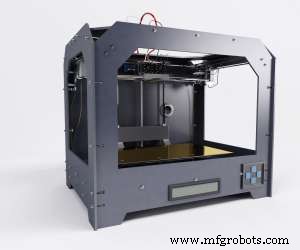
With a single printer, designers can produce parts of any size or complexity, including nested “parts‑within‑parts” and hollow cavities that would be impossible or prohibitively expensive to create with conventional methods. Even non‑experts can modify CAD models, experiment with mixed‑material builds, and tailor mechanical properties to meet specific performance criteria.
Tangible Product Quality Checks
The rapid build cycle of additive manufacturing shortens the product life cycle. A prototype can be printed, tested for defects, refined, and reprinted within 24 hours—providing instant, actionable feedback for investors and end users alike. This iterative loop accelerates design refinement and elevates overall product quality.
Consistency and Reliability
Serial production via 3D printing enables real‑time monitoring of each part, catching defects early and minimizing waste. Consistent, high‑quality outputs reduce the risk of costly rework and bolster investor confidence.
Accessibility and Sustainability
3D printing is largely automated, requiring minimal manual intervention. This makes the technology accessible to smaller teams and reduces the overall cost of production. Furthermore, additive manufacturing’s precise material deposition leads to lower energy consumption and material waste compared to subtractive processes.
In conclusion, by enabling advanced tooling, design flexibility, customization, and faster time‑to‑market, additive manufacturing empowers the robotics industry to produce high‑volume, cost‑effective solutions with greater efficiency. The broad array of applications—ranging from rapid prototyping to end‑use components—positions 3D printing as a cornerstone of the robotics industry's future innovation.
Industrial equipment
- Understanding Cut and Fill: Efficient Earthwork for Construction Projects
- Selecting the Perfect Scroll Compressor: A Practical Guide
- Expert Rotary Valve Troubleshooting & Repair Guide – Restore Optimal Performance
- Proven Best Practices for Long‑Lasting, Reliable Aeration Blower Performance
- Conveyor Belt Splicing Explained: Key Techniques & Best Practices
- Maximize Your Used Machinery Sale: Proven Strategies to Boost Value & Close Faster
- Sheet Metal Screws Explained: Types, Features, and Proper Use
- The Three Core Components of a Ball Bearing
- Essential Steps to Winter-Proof Your Air Compressor
- Master Vertical Bed Milling: A Complete Beginner’s Guide to Precision Operations