



Robotic Welding Assistant: Boosting Efficiency for Small and Medium‑Sized Manufacturers
As it is rightfully said, “You may design something in steel but to make it, you need to know how to manipulate the material. On a sheer technical end, you have to know how to weld steel.” – Brian Slocum
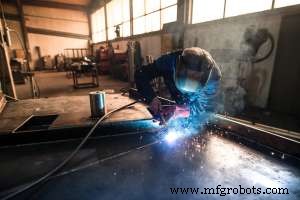
Welding is a fabrication process that joins metals or thermoplastics by melting their edges with heat. The subsequent cooling creates a permanent bond. Unlike brazing or soldering, where the base material remains solid, welding fully melts the joint material. The industry distinguishes between manual welding, performed by skilled operators, and robotic welding, executed by programmed machines.
What Is Robotic Welding?
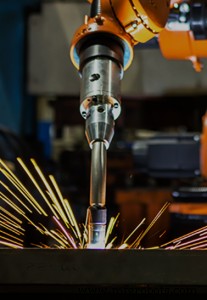
Robotic welding, also called automated welding, uses a mechanized tool that follows a pre‑programmed path to fuse two parts. The key benefits include superior weld quality, reduced material waste, high throughput, rapid lead times, and repeatable results. However, the technology carries trade‑offs: a substantial upfront investment, a steep learning curve for programming, limited flexibility for small‑batch or custom work, and the need for dedicated space and jigs. These constraints have traditionally confined large‑scale factories to robotic solutions.
An Accessible Solution for SMEs
The Robotic Welding Assistant (RWA) by DIY‑Robotics is engineered to democratize robotic welding for small and medium‑scale manufacturers. It is easy to program, cost‑effective, and delivers consistent, high‑quality welds while requiring minimal floor‑plan changes.
Symbiosis Between Human and Robot
Unlike conventional robots that replace the operator, the RWA acts as a supportive partner. It functions as a dynamic jig, holding the part in place while the welder applies the torch. This partnership allows welders to work safely in a horizontal position, reducing fatigue and injury risk.
Third Arm, Plug‑and‑Play
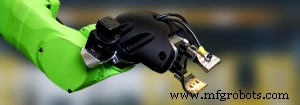
The RWA integrates seamlessly into existing workstations, effectively serving as a third arm. Powered by a Fanuc robot with full 360° reach, it optimizes the weld path and maintains a stable platform for the operator.
Budget‑Friendly Investment
Traditional robotic welding systems can exceed $100,000, plus ancillary costs for labor, energy, and infrastructure. The RWA starts at $74,000 and demands only basic programming, making it a viable upgrade for budget‑conscious facilities.
Versatility for Diverse Workloads
SMEs often handle a wide variety of products in small runs. The RWA offers:
- Joystick control for intuitive manual overrides
- Human‑centric design with a safe, horizontal welding stance
- Consistent, 100% accurate welds
- Ergonomic welding capability for complex shapes
- Compact architecture that fits standard floor plans
- Variable payload capacity to accommodate different part sizes
Why the RWA Is Ideal for SMEs
By bridging the gap between manual and fully robotic systems, the RWA delivers the precision and efficiency of automation without the heavy capital burden. It enables small‑to‑medium factories to scale their welding operations, improve quality, and reduce lead times.
References
- A. T. & Machine, “What are the Pros and Cons of Robotic vs Manual Welding?,” AAA Tool & Machine, 08 09 2019. [Online]. Available: https://aaatoolandmachine.com/what-are-the-pros-and-cons-of-robotic-vs-manual-welding/.
- C. E. Bennett Brumson, “Robots For Small Business: A Growing Trend,” automate, 31 10 2003. [Online]. Available: https://www.automate.org/industry-insights/robots-for-small-business-a-growing-trend.
- D. Robotics, “ROBOTIC WELDING ASSISTANT,” DIY Robotics, 20 05 2021. [Online]. Available: https://diy-robotics.com/robotic-welding-assistant/.
- F. F. /. T. Knell, “How does laser welding work? Costs, advantages & disadvantages,” maschinenmarkt international, 24 08 2019. [Online]. Available: https://www.maschinenmarkt.international/how-does-laser-welding-work-costs-advantages-disadvantages-a-857309/.
- O. S. Amar Chinchane, “Robotic Welding Market,” 30 11 2019. [Online]. Available: https://www.alliedmarketresearch.com/robotic-welding-market.
- Wikipedia, “Welding,” 15 05 2021. [Online]. Available: https://en.wikipedia.org/wiki/Welding.
Industrial equipment
- ProJet 7000 HD – High‑Definition SLA Printer for Precise Prototyping and Production
- Centralized VSD Vacuum Meets Demand, Cuts Costs
- Choosing Between Horizontal and Vertical CNC Milling Machines: Applications & Benefits
- Top Coding & Printing Solutions for the Food & Beverage Industry
- Understanding Extension Jambs: Purpose, Uses, and Installation Tips
- Custom Control Boosts Accuracy & Flexibility of New Machine Tool
- The Burton Process Explained: Thermal Cracking for Fuel Production
- Three Essential Classes of High-Visibility Safety Apparel – When to Wear Them
- Publish Your Manufacturing Expertise on Exapro Hub
- How Vibration Sensors Drive Predictive Maintenance and Reduce Downtime