



Reduce Waste with Strategic Metrology Placement: Inline, Near‑Line, and Offline Best Practices
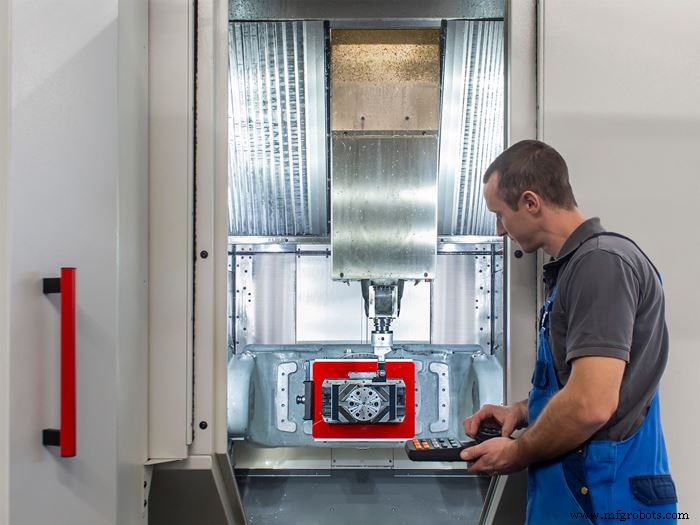
Inline measurement is performed directly within the production flow—either in‑machine, immediately after a machining operation, or automatically between stations without operator intervention.
Source: Mahr Inc.
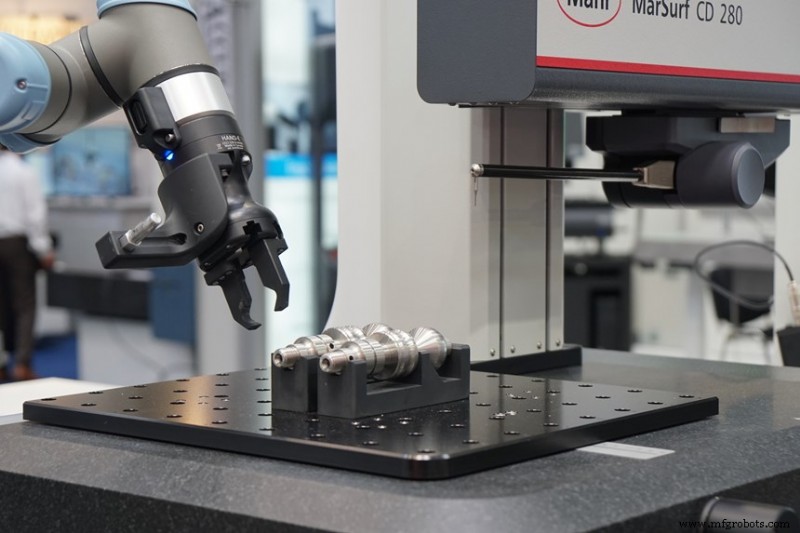
Near‑line measurement takes place close to the production line, typically at a dedicated gaging station within the manufacturing cell.
Source: Mahr Inc.
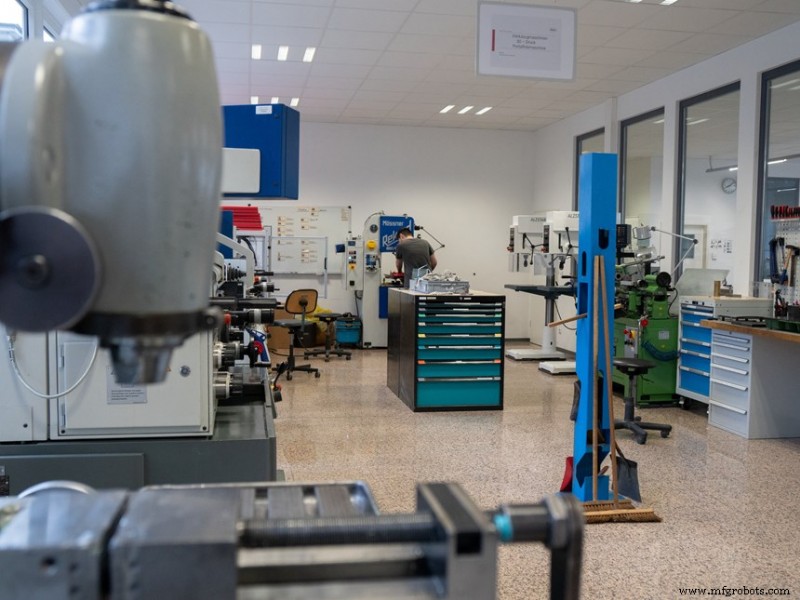
Off‑line measurement is conducted in a controlled quality laboratory or inspection area after the part has left the production line.
Source: Mahr Inc.
Manufacturers often treat measurement as a final checkpoint rather than an integral part of the process. Parts are machined, sent off for inspection, and then either accepted or rejected. As tolerances tighten and throughput rises, this approach can no longer meet the demands of modern production. The real question is not just how accurately a part is measured, but where the measurement belongs—so it eliminates defects before they occur rather than merely flagging pass/fail outcomes.
Choosing the right metrology strategy—inline, near‑line, or offline—depends on the role it plays in controlling variation and aligning with the manufacturing workflow.
Featured Content
Inline Metrology places measurements directly in the production flow. By measuring in‑machine or immediately after machining, it detects deviations caused by tool wear, thermal drift, or fixturing issues almost instantaneously. When feedback is delivered rapidly, corrections can be applied before scrap accumulates and before downstream processes are affected.
However, inline systems operate in the same environment that generates variation—vibration, temperature fluctuations, coolant, and chip buildup. Speed is the priority, so sample sizes and measurement strategies may be limited. The key question for inline measurement is whether the data is stable enough to control the process rather than just monitor it. If the answer is negative, inline measurement can introduce noise and trigger unnecessary adjustments that destabilize an otherwise capable process.
Offline Metrology takes place in a quality laboratory or controlled inspection area. While it is often viewed as a “final” or post‑process check, offline measurement remains a cornerstone of manufacturing excellence. It delivers the highest confidence in results and is best suited for first‑article inspection, capability studies, complex evaluations, and root‑cause investigations. Fast feedback is not the main goal; instead, a deeper understanding of the process is achieved.
Problems arise when offline inspection is treated as the primary quality control method. If the inspection is positioned too far downstream, defects are caught only after value has already been added, which is detection rather than prevention. Offline metrology adds the most value when it informs process improvement rather than compensates for a lack of early control.
Near‑Line Metrology occupies the middle ground between inline and offline. Measurements occur close to the production line but outside the machine—often at a dedicated gaging station within the cell. Near‑line inspection provides a more controlled environment while still maintaining short feedback loops. It is particularly effective when inline conditions compromise measurement quality, yet waiting for full offline inspection would delay corrective action.
Near‑line systems strike a balance between speed and reliability. They reduce part handling and logistics compared to a centralized lab, while allowing longer measurement cycles, better thermal stability, and more flexible inspection routines than inline solutions. For many operations, near‑line metrology delivers actionable data without the environmental concerns typical of fully inline measurement.
Automation can be applied to any metrology approach—inline, near‑line, or offline—just as manual inspection exists in all three. The real difference lies in decision ownership. Automated systems excel at repetitive checks on stable features, offering speed and consistency. Human expertise remains critical for interpreting data, troubleshooting anomalies, and making process‑improving decisions. The most effective strategies combine automation for routine validation with human oversight for strategic decision‑making.
Another challenge is data overload. Modern metrology equipment can generate far more data than most processes can use. Without a clear plan, this data may sit idle or trigger unnecessary adjustments. Measurement adds value only when it is tied directly to decision‑making, which requires clear control limits, defined responses, and an understanding of which variations truly matter.
Many manufacturers find the greatest gains by moving measurements upstream. For example, detecting critical feature issues at final inspection means drift caused by tool wear is caught too late. Introducing measurements earlier in the process provides valuable insight, and corrective actions are far less expensive. With stable inputs, finishing operations produce fewer scraps, and final inspection becomes a confirmation rather than a filter. The technology may remain unchanged; it is the placement that transforms its impact.
Choosing between inline, near‑line, and offline metrology requires a process‑first mindset. Focus on the decisions the data will support, the speed of those decisions, and whether the environment is suitable for the tool’s intended use. Most importantly, ask whether the measurement is controlling the process or merely evaluating its outcome.
Lean manufacturing teaches that inspection alone does not create quality. Quality is built through process control, and metrology’s role is to deliver the right information at the right time. The goal is not more measurement, but smarter placement—using inline, near‑line, and offline inspection together to prevent waste, stabilize processes, and produce better parts consistently.
Industrial equipment
- Expert Guide to Industrial Parts Procurement: Informed Decisions for Manufacturing Success
- Spiroflow’s Cone Table Elite Bulk Bag Filler: Accelerated Filling and Cost Savings
- Titanium: The Aerospace Champion—High Melting Point, Strength, Corrosion Resistance, Lightweight, and Fully Recyclable
- When to Replace Oil Rig Disc Brake Systems: Key Indicators & Safety Tips
- The Fishing Industry Explained: From Catch to Consumer
- Waterjet to Laser: The Company That Transformed Cutting Technology
- Comprehensive Heavy Equipment Inspection Guide: Boost Safety, Reliability, and Value
- 4 Date Coders That Align With Your Operational Requirements
- What Is a Gudgeon Pin? The Essential Wrist Pin in Engine Design
- Understanding Tire Recycling Plants: How Old Tires Are Reclaimed