



Choosing the Right Excavator for Your Project: Expert Tips & Checklist
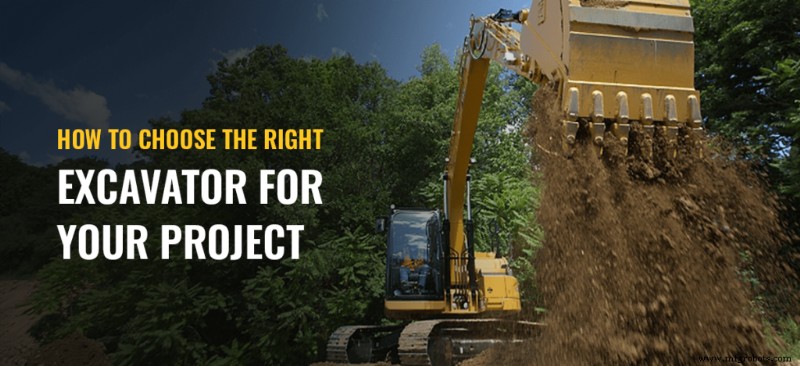
From compact mini units to powerhouse giants, the right excavator can transform any project—boosting efficiency, cutting costs, and ensuring safety. With the right knowledge, you’ll match the machine’s capabilities to your job’s exact demands.
Key Factors When Selecting an Excavator
Evaluate each project on these core criteria to avoid costly missteps.
Project Size
Small, tight‑space jobs—think urban demolition or residential landscaping—benefit from mini or midi excavators. Their narrow tracks and limited tail‑swing let them maneuver under power lines and between buildings.
Large‑scale earthmoving, deep trenching, or mining requires heavy‑duty machines with higher horsepower and greater lift capacity. In those cases, a larger unit delivers superior productivity and long‑term cost efficiency.
Jobsite Conditions
Choose tracked (crawler) excavators for uneven, rocky, or sloped terrain—great traction keeps the machine stable. Wheeled models excel on paved surfaces and move faster across spread‑out sites.
Project Type
Match the machine’s reach, bucket size, and attachments to the job’s needs:
- Digging – Deeper cuts and trenches call for high‑horsepower units with deep digging depth.
- Grading – Tracks offer better maneuverability on slopes, making them ideal for precision grading.
- Demolition – Long‑reach excavators, with booms that can reach up to 60 ft, handle high‑altitude demolition safely.
- Landscaping – Mini excavators deliver the precision and control required for tree planting, mulching, and tight residential work.
Attachments can transform a basic bucket into a specialized tool: hammers, pile drivers, rakes, thumbs, rippers, mulchers, winches, and more. Select brands that offer quick‑coupling and cross‑compatibility for future upgrades.
Transportation & Storage
Large tracked units need dedicated transport and, in many states, a commercial driver’s license. Mini machines can fit on standard trailers and are easier to move between sites. Plan for secure storage—whether on‑site or at a rented facility—when the machine isn’t in use.
Budget
New, used, or rented—each option has trade‑offs. Calculate the total cost of ownership: purchase price, maintenance, fuel, and depreciation. For projects that don’t require full‑time use, renting can provide the needed power without the upfront capital.
Excavator Sizes & What They Offer
Mini (<7 MT)
Weighing less than seven metric tons, mini excavators are the go‑to for residential and confined commercial jobs. With 13–70 hp, they can dig up to 15 ft and lift between 1,500 lb (average) and 10,000 lb (high‑end models). Their almost negligible tail‑swing allows work in narrow streets and under power lines.
Standard (7–45 MT)
Standard units—whether standard or midi—strike a balance between power and maneuverability. They offer 70–273 hp, a digging depth of up to 24 ft, and bucket capacities that meet most mid‑scale construction needs.
Large (>45 MT)
Designed for heavy‑duty tasks, large excavators exceed 45 MT, can dig up to 32 ft, and deliver over 540 hp. They’re the most economical choice when moving vast volumes of earth over extended projects.
Essential Specifications to Compare
- Wheeled vs. Tracked – Mobility vs. traction.
- Boom & Stick Length – Longer booms reach higher; shorter ones fit confined spaces.
- Lifting Capacity – Ensure it matches your material weights.
- Bucket Capacity – Larger buckets reduce cycle time on high‑volume jobs.
- Horsepower & Hydraulic Efficiency – More hp isn’t the only factor; a high‑flow hydraulic system keeps the machine productive.
- Tail Swing – Low or zero tail swing is critical for road‑side or urban work.
- Counterweight – Must support the chosen attachments and lift loads.
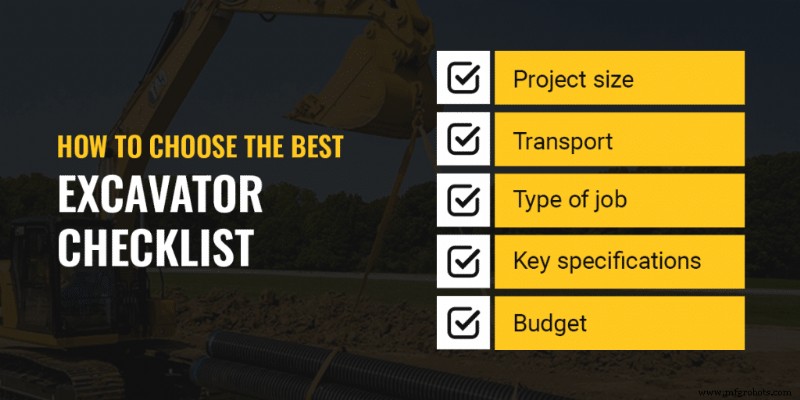
Excavator Selection Checklist
- Project Size & Site Layout – Does the machine fit?
- Transport Logistics – How will it move to and within the site?
- Attachments & Workload – Are the required tools available?
- Key Specs – Power, reach, tail swing, and lift capacity.
- Financial Fit – Purchase, lease, or rent? Which delivers the best ROI?
Blanchard Machinery Company: Your Trusted Excavator Partner
With three decades of experience serving South Carolina’s construction, defense, and mining sectors, Blanchard Machinery Company is the state’s sole certified Cat® dealer. We supply a full spectrum of excavators—from mini to heavy‑duty—and partner with top brands such as Toro, Genie, and New Holland. Our expert team will help you compare models, test equipment, and secure the best value for your project.
Browse our catalog, schedule a demo, or request a free quote today. Let us equip you with the right machine to deliver outstanding results and client satisfaction.
Industrial equipment
- Understanding Hydraulic Presses: How They Work and Why They're Essential
- CNC Prototype Milling: Precision Fabrication for Design Projects
- Directional Solidification: The Key to Defect‑Free Metal Castings
- Optimizing Clinker Grinding for Superior Cement Production
- Concrete vs. Cement: Understanding Their Distinct Roles in Construction
- Frame Gaskets: The Trusted Solution for Reliable and Versatile Sealing
- Cold Welding Explained: Bonding Metal Without Heat
- Expert Guide to Hydraulic Servo Valve Repair
- When to Replace Your Mining Conveyor Belt Drive: Key Warning Signs and Maintenance Tips
- How to Identify a Faulty Hydraulic Pump: Key Signs and Quick Fixes