Industrial manufacturing
Industrial equipment
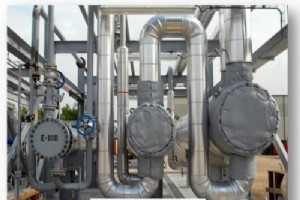
From food manufacturers to chemical plants, a typical industrial plant may have dozens to hundreds of pieces of rotating equipment. These include pumps, motors, gearboxes, turbines, fans, and more. Many of these pieces of equipment are crucial to the operation of the plant, and even non-essential as

Gearbox Evaluation Gearbox replacements can cost a lot of time and money, especially when production grinds to a halt, unexpectedly. The problem is often multiplied because of readily available replacement options. A new gearbox can take up to several months to receive from an OEM, assuming they
In the second installment of our Equipment Series, we will be focusing on compressors. In a nut shell, compressors are devices that increase gas pressure by reducing its volume. They are similar to pumps because they are designed to use increased pressure to move media. However, compressors are gene
The following part of our Equipment Series centers on rotary valves. A rotary valve is a valve that uses rotation to allow passage and regulate the flow of liquid or gas through the attached outlets. The simplest example of a rotary valve is the common stopcock. Rotary valves are used to accomplish
Continuing our Equipment Series, we turn to fans and blowers. These pieces of equipment provide air for ventilation and industrial process requirements. They often use a rotating shaft to transmit energy in order to move the air. Fans and blowers are designed to generate pressure to move air or gas
In our Equipment Series, we’ve been giving an introduction to the various types of equipment that we repair at HDS, every day. Next up: gear boxes. Simply put, a gear box mechanically transfers energy from one device to another while changing torque and speed. Gear boxes are often used with transmis
The next installment of our Equipment Series focuses on centrifuges. Centrifuges are equipment that separate suspended solids from liquids using centrifugal (or circular) forces generated by a spinning internal mechanism. They use the principle of sedimentation to cause denser substances to move out
The next installment of our Equipment Series focuses on steam turbines. A steam turbine is a type of generator that extracts energy from pressurized steam and applies it for mechanical work with the use of a rotating output shaft. It is often used as the drive in electrical generators. In fact, most
In the next installment of our Equipment Series, we will focus on wind turbines. A wind turbine uses the natural movement of air to spin the turbine and create energy. They are manufactured in a wide range of vertical and horizontal axis turbines. The smallest wind turbines can be used to charge ba
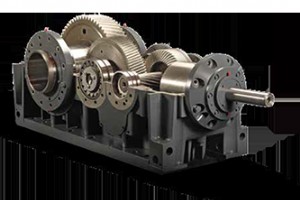
When faced with the choice of repairing or replacing critical equipment containing Rexnord components, many plant maintenance professionals ask the question: do I need an authorized Rexnord service center? Rexnord is a manufacturer of engineered mechanical components including gears, drives, gear bo
As part of our series on the top 6 pump vibration problems, we would like to focus on bent pump shafts. A bent pump shaft can occur as the result of damage during operation, rigging, improper configuration, or even shipping. There are straightening methods that can be properly applied to salvage dam
If your plant is being stretched to its financial limit, you may be looking for ways to simplify some of your processes and procedures. Replacement of underperforming equipment and other costly solutions aren’t always the answer, and sometimes going back to basics can be all you need. For instance,
A simple definition of a pump is that it is a form of turbomachinery or a piece of equipment with a mechanism that transfers fluid or another form of media without any human effort. One of the most common types of pumps is the centrifugal pump, which transfers media using an engine, electric motor,
We have previously discussed the basics of pumps including power, classification, and more. In continuing with the series, we are going to focus on one of the most commonly used types of pumps, the displacement pump. As they are the most popular, the focus will be on positive displacement pumps. The
In continuing with our series, Pumps 101, we are going to focus this entry on reciprocating piston pumps. Many pumps fall into the positive displacement arena, and they can generally be divided into two categories: reciprocating and rotary. Reciprocating pumps operate with the use of plungers, diaph
Continuing with our series on the main types of pumps, next in line is the second type of positive displacement pumps, which are rotary pumps. Both types of positive displacement pumps, reciprocating pumps and rotary, can be further divided into categories of commercial applications, and it is impor
In the upcoming posts in our Equipment Series, we will be sharing information about the various types of machinery we work on at HDS, other than pumps. For a primer on the various pump types, visit our Blog. After pumps, one of the most common types of equipment brought in to HDS for repair are turb
As with all machinery and equipment, the mantra is “Maintenance, maintenance, and more maintenance!” For your equipment to keep running at peak performance, you must keep it properly lubricated and aligned. The importance of proper alignment in your rotating equipment’s performance cannot be stres
HDS has over 40 years of experience in all types of rotating equipment repairs. But when a Sundyne pump was brought in for repairs recently, it presented new challenge even for their experienced staff. Sundynes are typically repaired by the OEM or their exclusive distributors, so not many independe
Houston Dynamic has the expertise and inventory to repair or rebuild Sundyne pumps and compressors, and the job is guaranteed to cost less than exchanging key parts for refurbished parts. You can also be assured of shorter lead times and no expedite charges. We understand the frustration our custome
Industrial equipment