



Cutting Rework Costs in Manufacturing: Strategies for Efficiency and Quality
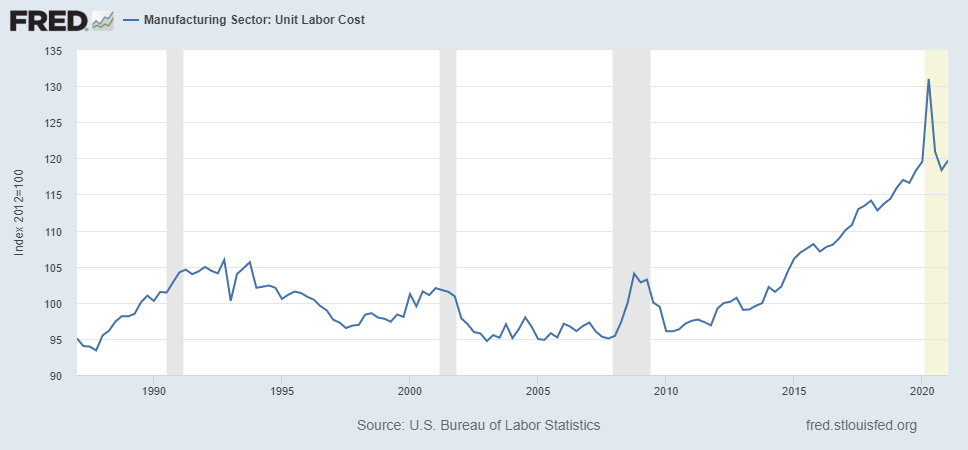
The rising cost of rework is a growing concern for manufacturers worldwide. With baby boomers and seasoned skilled workers retiring—and a shortage of younger talent to replace them—the traditional factory model is becoming obsolete. Automation is stepping in, but it often demands hefty capital and struggles to adapt to high‑mix or batch‑varying facilities, driving both labor and rework expenses upward.
Industrial processes such as painting and powder coating are especially affected. Workers are increasingly reluctant to perform in harsh environments, and coaters find it harder to maintain the high quality they need. As demand rises, many refuse orders or limit shifts because they cannot guarantee defect‑free work, turning potential profits into losses.
Mass manufacturers have already reduced many defects, yet every operation can lower rework costs with a few strategic moves: flexible automation that adjusts to short‑term demands, autonomous robots that enhance value‑added processes, and systems that enforce consistency long‑term, giving manufacturers the freedom to scale.
Flexible Automation Systems
Flexible manufacturing systems (FMS) and flexible automation are the next generation of production tools that empower manufacturers—from sheet metal and aerospace to consumer electronics and automotive—to reconfigure workflows on the fly instead of relying on rigid, fixed equipment.
Typical FMS components include autonomous mobile robots, integrated machining cells, container‑based control systems, buffer storage, and autonomous value‑added robots. These solutions add slack and flexibility, freeing the workforce to focus on first‑time quality.
By eliminating some root causes of defects—such as rushed production or insufficient resources—flexible systems reduce the need for rework. Even if overall productivity might lag slightly, the reduced downtime and increased worker autonomy translate into fewer mistakes and lower rework.
Autonomous Robots
While autonomous mobile robots are common for material handling, they don't inherently reduce rework. What matters is autonomous robots that perform value‑added tasks—painting, spraying, coating, welding, machining—thereby directly improving quality.
Autonomy means a system that, once parameterized, can operate with minimal supervision. It delivers reliable, consistent output based on straightforward instruction sets, bypassing complex programming, jigs, and fixturing.
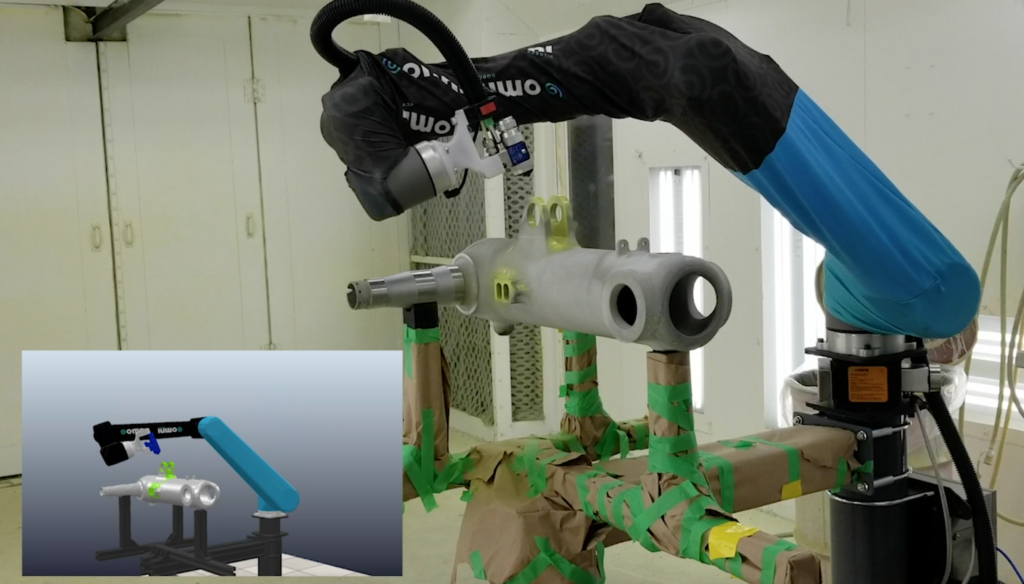
For instance, Omnirobotic’s Shape‑to‑Motion™ technology uses a SEE‑PLAN‑EXECUTE framework that leverages 3‑D perception to recognize parts, AI to plan the optimal motion, and then controls existing industrial robots from ABB, FANUC, and UR. This effectively roboticizes operations without traditional part‑mix or programming constraints.
Maximizing Consistency
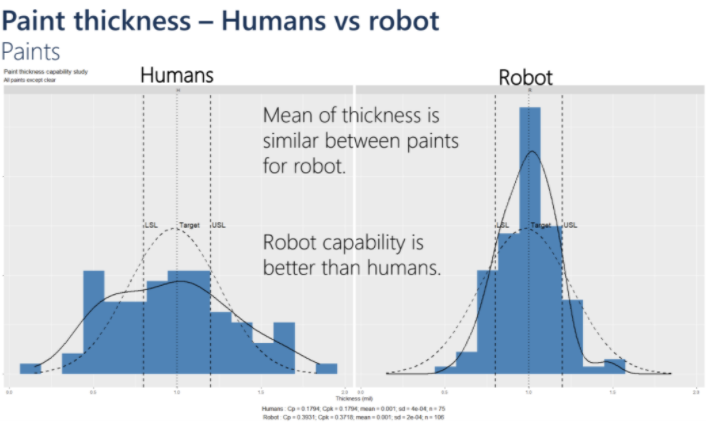
The core advantage of this technology is its ability to use existing industrial robots without bespoke programming or fixture work. A recent study compared autonomous robots to skilled workers across various parts and paint colors; the robot consistently outperformed humans, achieving tighter tolerances without additional programming.
A 1‑mil tolerance target, once considered restrictive, was previously hard to maintain, with variations of 0.5 mil causing significant rejections. By deploying robots, an aerospace manufacturer reduced its rework rate from 40‑50 % to nearly zero within weeks, demonstrating the transformative impact of consistent automation.
Eliminate Rework With Autonomous Manufacturing
Robots excel at following instructions precisely—an ability humans rarely match due to creativity and inconsistency. While some tasks still require human input, modern flexible automation can eliminate the uncertainty that drives rework costs.
Autonomous manufacturing systems free up operators and managers to focus on oversight, design, and process optimization, rather than repetitive tasks, unlocking new growth potential.
Omnirobotic provides Autonomous Robotics Technology for Spray Processes, allowing industrial robots to see parts, plan their own motion program and execute critical industrial coating and finishing processes. See what kind of payback you can get from it here, or learn more about how you can benefit from autonomous manufacturing systems.
Industrial robot
- How Paint Robots Cut Rework, Boost Consistency, and Save Costs
- 6 Proven Strategies to Cut 3D Printing Costs
- Assembly Robots 101: Transforming Manufacturing with Precision Automation
- Reduce Energy Use in Manufacturing: Proven Strategies for Cost Savings and Sustainability
- Cut Laser Cutting Costs: Proven Strategies for Precision Manufacturing
- Cutting Scrap Costs: Proven Strategies for Manufacturing Efficiency
- Robotics Revolutionizing Manufacturing: AI-Powered Machines Reshape Production
- Cutting 3D Printing Costs: Proven Strategies from Design to Post-Processing
- Why Used Manufacturing Robots Deliver Cost Savings and Reliability
- Proving the ROI of a Robotic System: A Guide to Justifying the Investment