



Common Parts Library (CPL): Streamlining Component Supply for Startups
The line between commercial hardware design and hobby electronics has blurred in recent years. With open‑source hardware, affordable CAD tools, and an expansive online knowledge base, the work once reserved for corporate labs can now be tackled from a home workshop. This shift has sparked a renaissance of hardware startups, but it has also highlighted persistent supply‑chain challenges.
By day I work for a manufacturing firm; on weekends I design and build small electronic devices—most of them microcontroller‑based, often featuring custom Arduino‑compatible hardware. These projects are rooted in existing open‑source designs, so the engineering and assembly phases are usually straightforward. What truly hampers progress is the volatile availability of components.
Passive parts are easy to model in CAD, but keeping them in stock is a different story. A part that is available on Monday may be out of stock by Wednesday, and high‑pin‑count microcontrollers can fluctuate between distributors, turning the first‑build phase into a game of musical chairs.
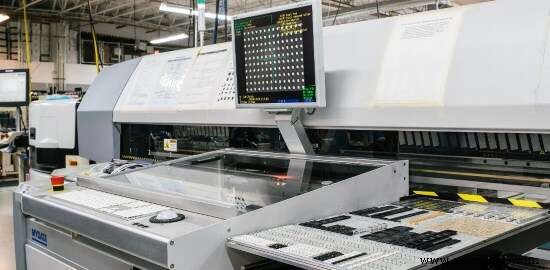
Supply chain issues can cause build delays (Source: Screaming Circuits)
Large design teams have dedicated procurement specialists to ensure component availability, but hobbyists and startups lack that support. The Common Parts Library (CPL) initiative aims to close this gap by curating a vetted list of parts that are consistently in stock and easy to source.
Octopart—an industry‑leading parts‑search engine now owned by Altium—powers the CPL. Its single‑click search pulls real‑time inventory data from dozens of distributors, so if a QFN MCU disappears from one vendor and reappears elsewhere, Octopart will locate it instantly.
Beyond search, Octopart’s CPL offers a pre‑approved catalogue that engineers can reference before CAD, and that manufacturers can use after CAD. The underlying principle is simple: pick a part from the CPL, and you can expect it to be available and replaceable.
For example, I recently built a small robot board featuring a Microchip MCU, a dual 1‑amp motor driver, and several 0603 LEDs—red, green, and yellow. Although these LEDs are common, they have gone out of stock in the months since my first build. If I send the board to a manufacturer, they would halt production and require me to source replacement parts—a costly and time‑consuming process that scales with every board design.
Manufacturers can’t automatically substitute components because design tolerances matter. A 5 mA LED swapped for a 20 mA version could alter battery life or exceed the MCU’s current budget, while a 20 mA LED replacing a 5 mA one could degrade visual performance.
“Startups are getting frustrated over the same problems—they don’t understand parts availability and end up scrapping boards because they can’t find components,” said Sam Wurzel of Octopart. “BOMs get sent to manufacturers that aren’t usable because the parts aren’t available in the supply chain.”
Established companies mitigate this risk by maintaining a list of approved substitutions. Engineers identify a handful of interchangeable parts; purchasing agents can then buy any part on that list without further approval.
Octopart’s CPL seeks to automate this approach at scale. By mining purchasing data, Octopart identifies the most frequently used parts and compiles two curated lists—one for production, one for prototypes. Each CPL entry includes at least two equivalent parts from different manufacturers, increasing the likelihood of availability. While not a guarantee, it represents a substantial improvement over the status quo.
Given the sheer volume of components, the CPL begins with parts common in connected devices and will expand to community‑verified content. Wurzel notes, “CPL is open; we’re working to decentralize its curation through community collaboration.”
At Screaming Circuits, supply‑chain bottlenecks are the most common cause of build delays. The persistence of this issue is a symptom of the growing hardware‑startup ecosystem.
I’ll be watching the CPL’s evolution closely. In the meantime, I’ve identified CPL part numbers that solve the LED shortage I mentioned. To explore the library, visit octopart.com/common-parts-library.
---
Embedded
- Why Custom-Molded Parts Are Essential for High-Performance Machinery
- The Three Core Components of a Ball Bearing
- Understanding the Key Components of a Bolt: A Comprehensive Guide
- Bosch Drives Industry‑Wide Standards with Software Contributions to the CVII
- DARVA – The Event Assistant: From Felt to Live Animation
- In‑House Production: The Fuse 1 Builds Its Own Parts
- Customer Part of the Month: Showcase Your 3D‑Printed Innovation
- The Complete Guide to Machined Parts: Advantages, Applications, and Cost-Effective Solutions
- Why Metrology Is Critical for Manufacturing Excellence
- Discover 6 Key Advantages of CNC‑Turned Parts for Precision Manufacturing