



USB‑C: The Unified Power Connector That Cuts E‑Waste and Simplifies Life
The consumer electronics sector is plagued by massive e‑waste. According to the latest Global E‑waste Monitor report, roughly 1 million tonnes of power adapters are produced annually, bundled with everything from laptops and tablets to smart speakers and power tools.
While most of these adapters can handle 85 V to 264 V AC worldwide and deliver under 100 W, manufacturers rarely design them to be interchangeable. Instead, a bewildering array of cosmetically similar but functionally incompatible barrel connectors has emerged (see Figure 1).
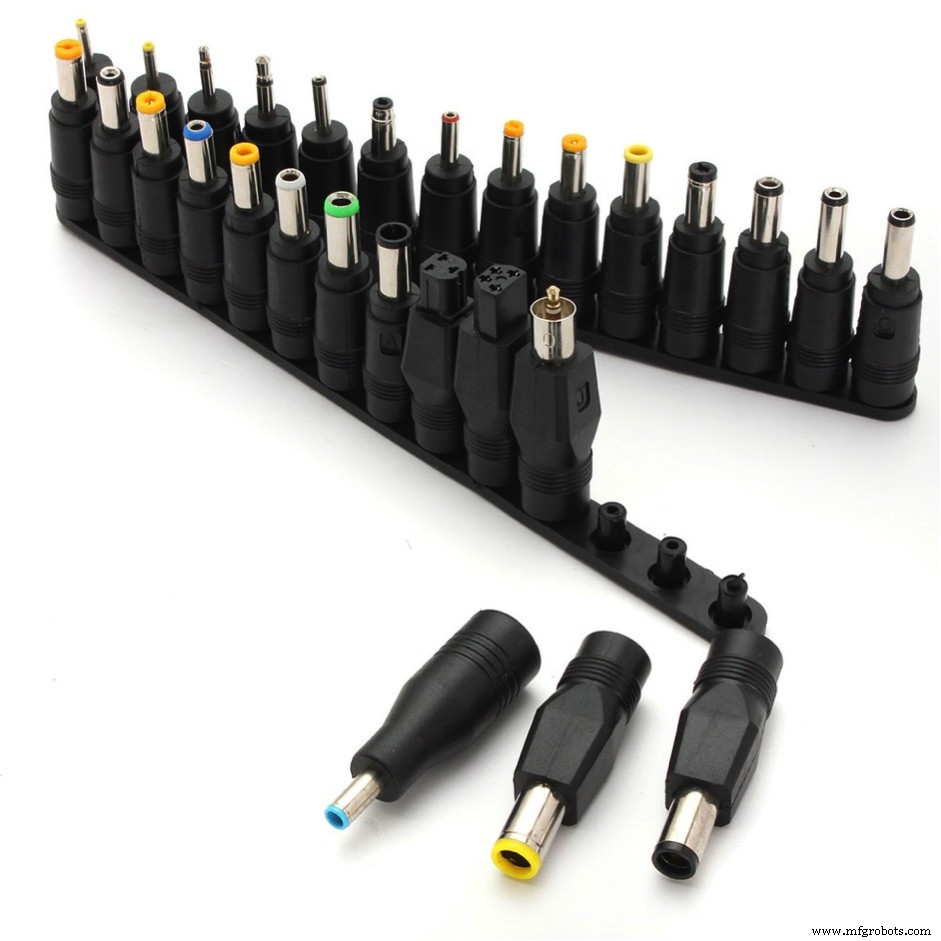
Figure 1: The wide variety of barrel connectors used in power adapters and battery chargers. (Source: Cypress)
This fragmentation confuses consumers and forces them to painstakingly verify compatibility when a charger is lost or damaged. Every time a device is replaced, the old charger is often discarded, adding to the planet’s growing pile of electronic waste.
A single, universal power connector would transform the user experience and reduce the cost and complexity of producing and shipping a unique adapter with every product.
Fortunately, the solution already exists: the USB Type‑C connector, paired with the USB Power Delivery (PD) protocol. USB‑PD can safely deliver up to 100 W (20 V × 5 A) to battery‑powered devices.
Why USB‑C is Consumer‑Friendly
USB‑C’s reversible, direction‑agnostic design eliminates the need to learn new orientations. The USB Implementers Forum (USB‑IF) sets rigorous testing standards that guarantee interoperability for any product carrying the USB logo. Consumers therefore know that a USB‑C charger will work with any USB‑C‑equipped device.
USB‑C chargers are already abundant: over 500 third‑party adapters, power banks, and chargers are available from multiple manufacturers worldwide.
By adopting USB‑C as the standard power connector, manufacturers can slash e‑waste, cut production and shipping costs, and simplify the consumer’s life. Many OEMs—including HP, Dell, Apple, Lenovo, Acer, Asus, Huawei, and Samsung—already ship laptops and phones with USB‑C power interfaces, and the trend is poised to reach 100% adoption soon.
Fast‑Track USB‑C Power‑Sink Design
The USB‑PD protocol enables a device to discover a charger’s supported power profiles and request the appropriate one. A proof‑of‑concept USB‑PD 3.0 power input can be built in minutes, and a production design requires only a handful of components—no firmware development needed.
The Cypress CY4533 EZ‑PD™ Barrel Connector Replacement (BCR) Kit demonstrates this approach. It’s a compact, credit‑card‑sized board that incorporates a USB‑C receptacle, the EZ‑PD BCR chip, and a minimal set of passive components for voltage and current selection.
click for larger image
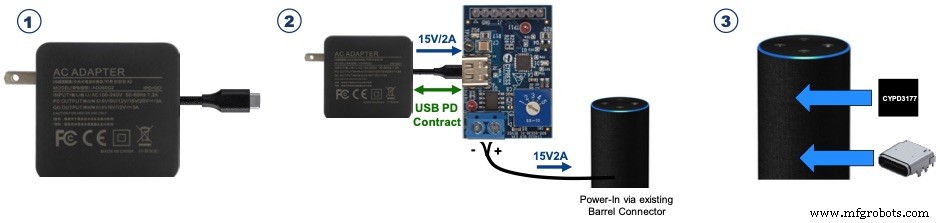
Figure 2: Prototyping a USB‑C power input for a smart speaker using the EZ‑PD BCR Kit. (Source: Cypress)
To prototype, a developer selects a USB‑C charger that supports the required profile (e.g., 15 V × 2 A for a smart speaker). The EZ‑PD chip negotiates the power profile, powers the device, and protects against over‑voltage, under‑voltage, short‑circuit, and ESD up to 15 kV—all without software changes.
Once validated, the prototype can be transitioned to a production layout that uses fewer than ten external components. Figure 3 illustrates a typical schematic based on the CYPD3177 controller.
click for larger image
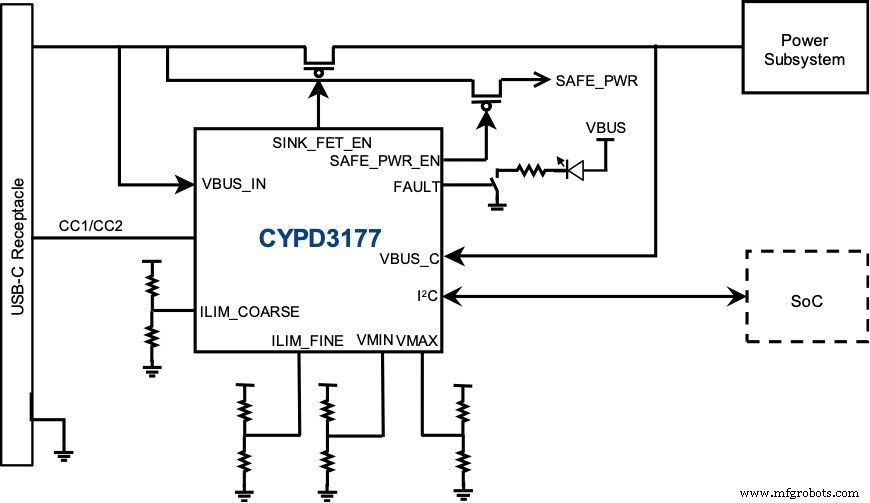
Figure 3: A compact application circuit for a USB‑C barrel connector replacement using the CYPD3177 controller. (Source: Cypress)
Key components include:
- The USB‑C receptacle—a low‑cost, high‑volume part whose price will continue to fall.
- The USB controller, which may optionally communicate with the host via I2C.
- Resistor dividers that set the desired voltage and current levels (values are listed in the controller’s datasheet).
The overall footprint is comparable to the barrel connector it replaces.
Environmental & Commercial Benefits
Replacing myriad barrel connectors with a single USB‑C charger yields:
- Significant e‑waste reduction.
- Lower material use for single‑use chargers.
- Fewer SKUs for OEMs, cutting inventory and logistics costs.
- One charger that powers all the consumer’s devices.
- Easier replacement of faulty or misplaced chargers.
Further Reading
- Global E‑waste Monitor report
- USB Implementers Forum (USB‑IF)
- Cypress CY4533 EZ‑PD BCR Evaluation Kit
For related embedded‑systems insights, explore:
- USB‑C’s growing role in wearables and mobile products
- Designing interoperable battery chargers
- Debugging USB‑C and USB‑PD system designs
Embedded
- Mastering USB‑C: Design Challenges and Practical Solutions for High‑Speed Data and Power
- Mastering Low‑Power Modes on Arm Cortex‑M: Practical Tips & Energy Savings
- Integrating USB Power Delivery into Your Design – A Practical Guide
- How a Well-Designed PM Program Cuts Downtime in Industrial Plants
- Minimizing Cyber Risk for Government & Defense Contractors: Proven Strategies
- Maximize Excavator Efficiency: Choosing the Right Work Mode to Boost Productivity and Cut Costs
- Maximum Cutting Thickness of Waterjet Machines: What You Need to Know
- Boost IT Performance: Leveraging AIOps & Observability to Reduce Downtime & Enhance User Satisfaction
- 19 Proven Strategies to Slash Logistics Costs – Expert Insights for Cutting Transportation and Carrying Expenses
- Everything You Need to Know About USB‑C: Features, Pinouts & Power Delivery