



Optimizing Performance and Security in IoT Wearables: The Role of Advanced NOR Flash
Modern IoT wearables—ranging from health trackers to smart fitness gear—rely on reliable, non‑volatile memory to store firmware, sensor logs, and user data. While traditional embedded solutions have depended on external Flash, the relentless push toward smaller, cheaper SoCs has made on‑chip Flash integration increasingly difficult. This disconnect threatens the tight form‑factor, cost, and power budgets that define wearable design.
Memory Size
Current and future wearables demand higher density storage as applications grow more complex and data logging needs expand. New cell architectures, such as MirrorBit, enable two bits per cell, pushing capacities to 4 Gb. This translates to a 20‑30 % reduction in die size compared to classic floating‑gate NOR Flash, opening the door to slimmer SiP solutions or wafer‑level chip‑scale packaging (WLCSP).
To access larger memory arrays quickly, high‑speed interfaces are essential. For example, Cypress’s Semper NOR Flash offers a Quad SPI protocol at 102 MB/s and an xSPI interface at 400 MB/s, meeting the demands of high‑performance IoT and instant‑ON applications that require Execute‑in‑Place (XiP) from flash.
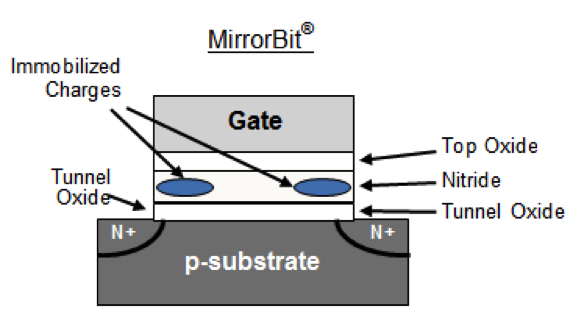
Figure 1. MirrorBit and similar technologies are advancing memory density. (Source: Cypress)
Execute‑in‑Place (XiP)
Wearables increasingly run diverse software stacks that must boot quickly, log data, and execute firmware without draining limited RAM. Traditional "Store and Download" (SnD) architectures copy code from flash into internal RAM at power‑up, constraining performance upgrades such as faster OTA updates, richer displays, and advanced sensor fusion.
XiP eliminates the need to preload entire programs into RAM. Instead, the processor fetches instructions directly from flash, freeing internal memory for higher‑level tasks and enabling seamless performance improvements without a BOM change.
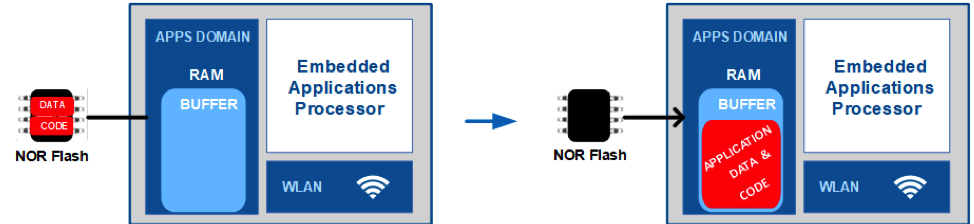
Figure 2. Store and Download (SnD) use case. (Source: Cypress)
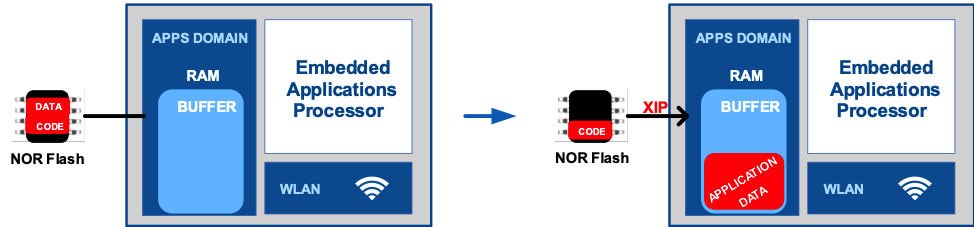
Figure 3. Execute in Place (XiP) use case. (Source: Cypress)
Endurance & Reliability
All flash media degrade after many program/erase cycles, which can compromise long‑term data integrity. Advanced architectures such as EnduraFlex partition flash into dedicated zones that can be independently tuned for either high endurance or long retention. A high‑endurance zone may support up to 2.56 million P/E cycles versus the 100,000 cycles typical of legacy NOR, while retention can be stretched to 25 years.
Safety & Security
Wearables often handle sensitive health or financial data, demanding robust protection against corruption and intrusion. Modern NOR Flash solutions embed an Arm Cortex‑M0 processor that executes safety and security algorithms on‑chip, reducing latency and enhancing reliability.
Beyond traditional Advanced Sector Protection and OTP regions, these memories support end‑to‑end security frameworks: cloud‑to‑flash encryption, secure firmware‑over‑the‑air (FOTA) updates, and write‑protect mechanisms that safeguard firmware integrity throughout its lifecycle.
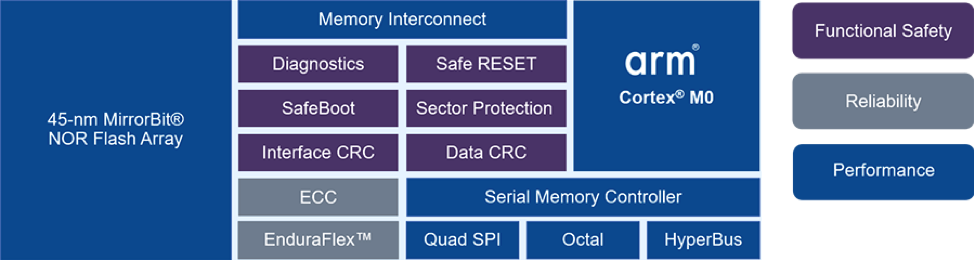
Figure 4. Current NOR Flash for wearables integrates capacity, safety, and security features. (Source: Cypress)
Power Efficiency & Environmental Robustness
Wearables operate primarily on battery power, so flash devices must minimize standby consumption. Modern NOR Flash achieves standby currents of ~6.5 µA and deep‑power‑down currents near 1 µA, ensuring negligible drain when idle.
For industrial wearables exposed to extreme conditions, memory variants are available that withstand temperatures from –55 °C to +125 °C, guaranteeing reliability across diverse operating environments.
Conclusion
The convergence of higher density, XiP capability, partitioned endurance, embedded security processors, and ultra‑low power operation is redefining what’s possible in IoT wearables. By integrating these advanced NOR Flash solutions, designers can deliver slimmer, cheaper, and safer devices that meet tomorrow’s performance expectations.
Embedded
- How IoT Is Mitigating Security Risks in the Oil & Gas Industry
- FusionHD: Intelligent Flash Memory for Next‑Gen IoT
- Firmware Security: Safeguarding Against Memory Corruption & Injection Attacks
- Maxim Integrated Showcases Advanced Wearable Health, IoT, and Security Solutions at Embedded World
- Arrow, Infineon, and Arkessa Forge Global Alliance to Secure IoT Connectivity
- Rutronik Becomes Exclusive European Distributor of AP Memory IoT RAM Under Global Agreement
- STM32H7 MCUs: 280 MHz Cortex‑M7, Advanced Connectivity, & Robust Security
- Can Security and Privacy Hinder the IoT Revolution?
- Protecting Flash Memory in IoT & Edge Devices: Best Practices & Security Trends
- Industrial IoT Security: Overcoming Challenges and Implementing Robust Solutions