



Why Companies Are Building Custom Voice Agents to Secure Data and Drive Automation
Automation & Voice: The Next Frontier
In a world that demands instant answers and rapid action, automation is no longer optional—it’s essential. Yet many businesses and consumers remain hesitant, citing legacy systems, usability concerns, and, most critically, data ownership and security. Voice technology offers a solution that satisfies the need for speed while keeping data local and secure.
Automation Underlies the Shift to Voice
As the Internet of Things (IoT) and artificial intelligence (AI) converge, the volume of connected devices—and the data they generate—explodes. Voice‑enabled interfaces become the natural next step, allowing users to interact with their environment without touching a screen. Leading companies now look beyond mainstream assistants such as Alexa, Google Voice, or Cortana, and are investing in custom voice platforms that keep data in-house.
The Rising Demand for Voice Control
Voice is emerging as the next dominant human‑computer interface. Unlike touchscreens, speaking feels more intuitive and can be used in hands‑free scenarios—from cooking to navigating a cruise ship’s cabin. Natural language processing (NLP) has matured enough that voice conversations feel almost human, while the underlying speech‑to‑text systems deliver the precision required for complex tasks.
Key Components of a Custom Voice Agent
Building a robust, secure voice agent requires three core technologies:
- Far‑field algorithms – These capture clear speech from a distance, suppressing ambient noise. At Harman Embedded Audio, we deploy four patented Sonique algorithms: noise suppression, acoustic noise cancellation, sound separation, beam‑forming, and voice activity detection.
- Keyword spotting (KWS) – Lightweight deep‑neural models listen for wake words like “Hey Zoe.” Tuning KWS for low false‑accept and false‑reject rates is critical in noisy environments.
- Automatic Speech Recognition (ASR) & NLU – Our E‑NOVA engine translates voice to text, maps it to intent, and generates spoken responses. It supports multiple languages, on‑premise deployment, and speaker identification.
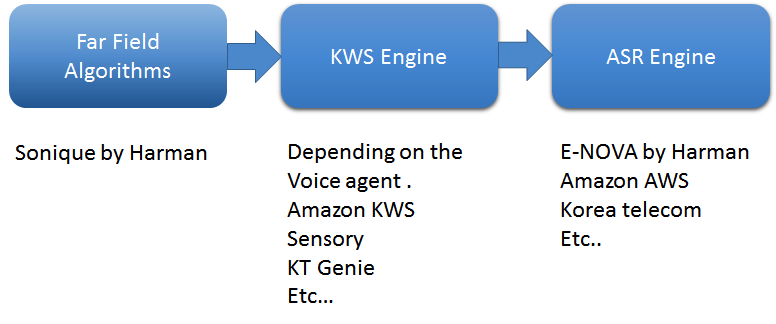 Figure 1: Basic processing pipeline in voice agents. (Source: Harman Embedded Audio)
Adapting to Real‑World Environments
Every application presents unique acoustic challenges. In a busy kitchen, the system must filter out boiling pots, appliances, and conversations. On a cruise ship, engine rumble and wind create a far more hostile noise floor. By fine‑tuning algorithms, positioning microphones strategically, and using high‑signal‑to‑noise ratio speakers, we deliver the cleanest possible audio to the ASR engine, ensuring accurate responses.
Our custom assistant for MSC Cruises demonstrates this process:
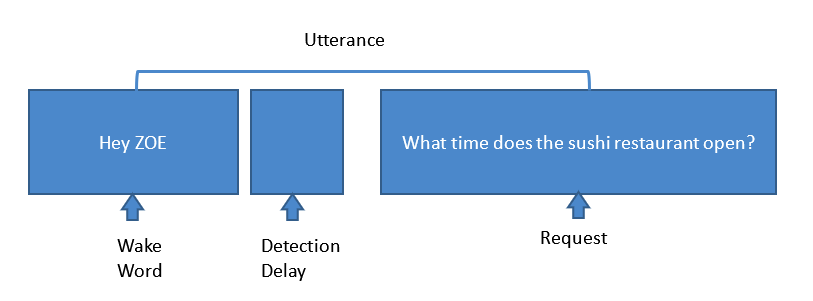 Figure 2: Steps involved in typical voice assistant request. (Source: Harman Embedded Audio)
Measuring Success: False‑Reject Rates
Wake‑word reliability is quantified by the False‑Reject Rate (FRR). Achieving industry‑grade FRR requires training with diverse data and integrating top‑tier algorithms. Rigorous laboratory testing under varied acoustic conditions confirms that the system meets or exceeds standards.
Benefits of a Proprietary Voice Platform
Custom voice agents deliver:
- Enhanced user experience through natural, hands‑free interaction.
- Full control over data—store it locally, protect it, and use it to improve services.
- Cross‑platform compatibility, enabling consistent behavior on smart speakers, laptops, and smartphones.
- Continuous learning that adapts to user preferences and usage patterns.
By investing in a unique voice agent, companies can unlock the full potential of automation while safeguarding their most valuable asset: data.
Embedded
- Mass Production vs. Custom Production: Key Differences Explained
- Re‑Platforming in the Cloud: What It Is & How It Drives Efficient Migration
- Edge AI: Accelerating On-Device Intelligence and Transforming Consumer and Enterprise Markets
- Understanding the Fourier Transform: Fundamentals, Applications, and Signal Decomposition
- Harnessing Data in the Internet of Reliability: Strategies for Effective Management
- Understanding Maintainability: The Key to Reliable Asset Management
- Unlocking Value: The Key Advantages of Custom Sheet Metal Fabrication
- Understanding Periodic Maintenance: Core Principles and Benefits
- How the Motoman SK16M Robot Achieves Precise, Reliable Movement
- How the Fanuc M6iB/6S Drives Precision and Efficiency