



Selecting the Optimal Predictive Maintenance Sensors for Reliable Asset Health
Condition‑based monitoring (CbM) tracks equipment health with sensors, while predictive maintenance (PdM) combines CbM, machine learning, and analytics to forecast failures. Choosing the right sensors is critical to detect, diagnose, and predict faults before downtime.
Industrial motors are engineered for 20‑year continuous operation in plants and power stations, yet many fall short of their expected life 1. Causes include under‑use, inadequate maintenance, or the absence of a PdM system. A well‑implemented PdM program schedules repairs proactively, preventing unplanned outages and extending asset longevity.
A robust PdM strategy employs multiple techniques and sensors to catch faults early with high confidence—there is no universal “one‑sensor‑fits‑all.” This article explains why sensors are indispensable in PdM, highlighting their strengths and limitations.
System Fault Timeline
Figure 1 illustrates a motor’s lifecycle—from installation through failure—alongside the recommended sensor at each stage. After the warranty lapses, maintenance shifts from frequent inspections to scheduled checks.
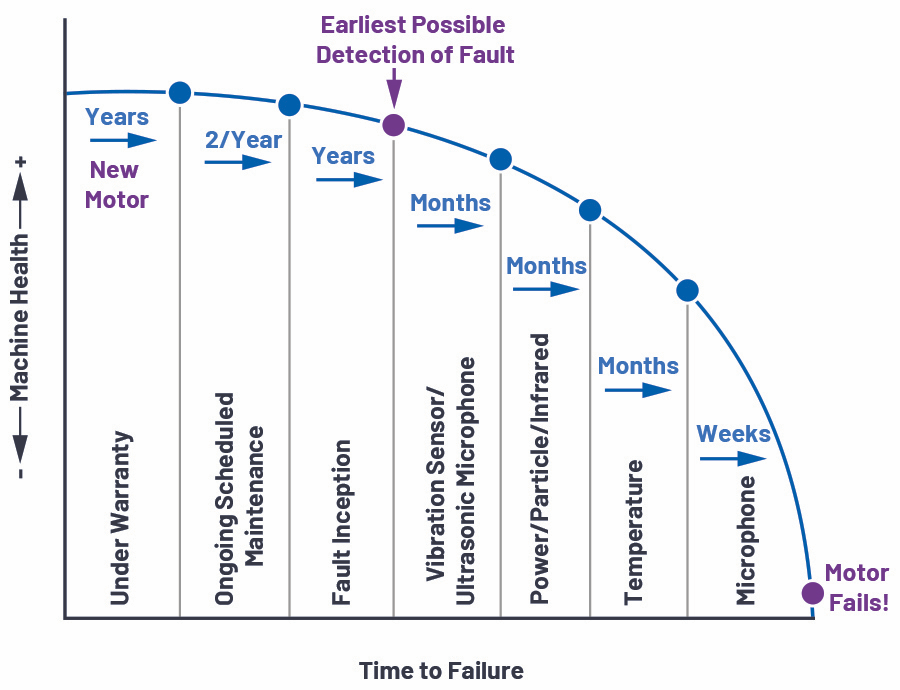
Figure 1: Machine health vs. time. (Source: Analog Devices)
Unplanned downtime often occurs when a fault develops between scheduled checks. The key is a sensor that can flag issues early—this article focuses on vibration and acoustic solutions, with vibration analysis typically serving as the PdM starting point 2.
Predictive Maintenance Sensors
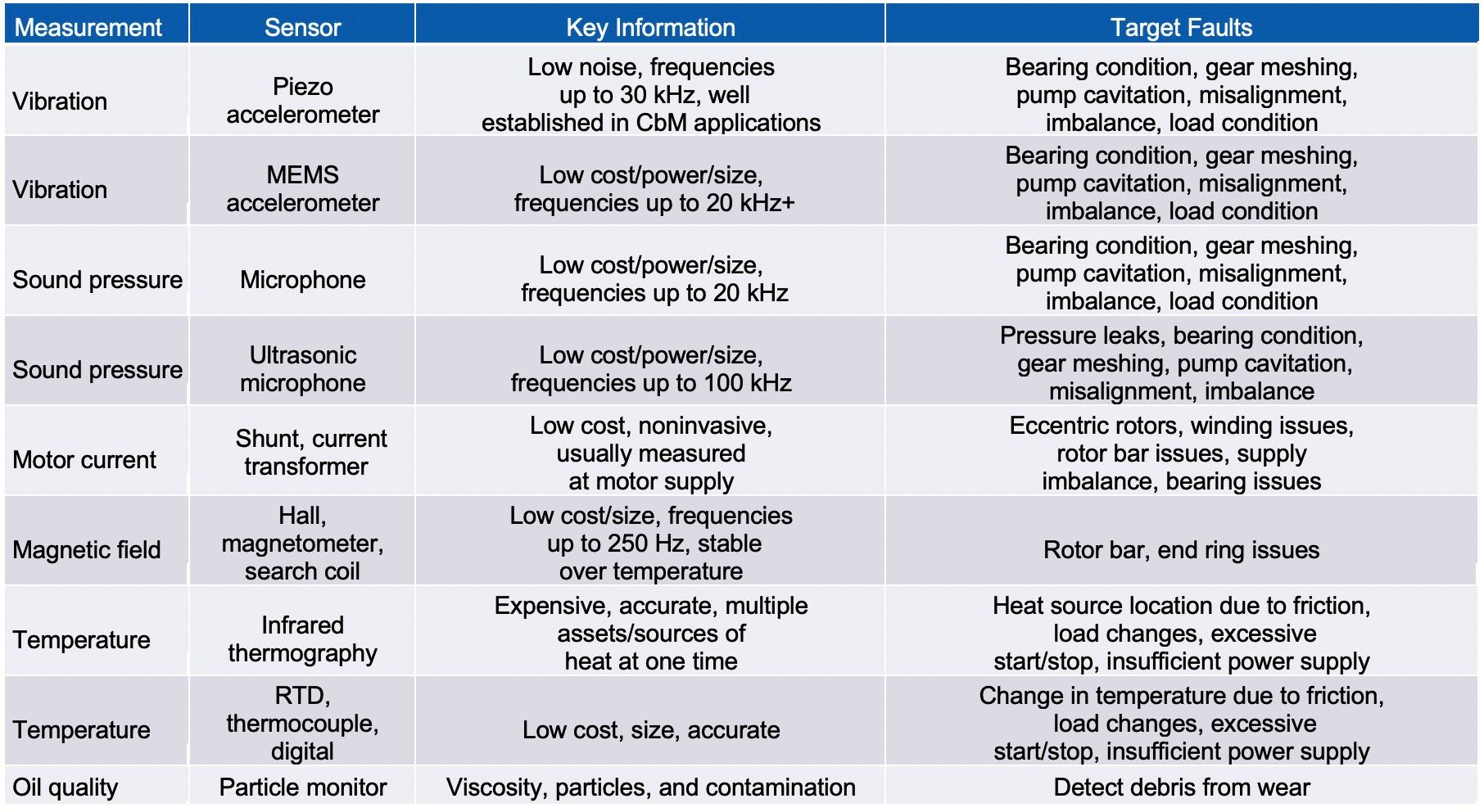
Some sensors detect specific faults, like bearing damage, earlier than others. Accelerometers and microphones are the most widely used for early fault detection. Table 1 lists sensor specs and the faults they can reveal. PdM systems normally deploy a subset of these sensors, so understanding each fault type and the best sensor to capture it is essential.
Table 1. Popular Sensors Used for CbM (Source: Analog Devices) click for larger image
Sensor and System Fault Considerations
Over 90% of industrial rotating machinery relies on rolling‑element bearings 3. Figure 2 shows the distribution of motor component failures, underscoring the importance of bearing monitoring. A vibration sensor must offer low noise and wide bandwidth to detect, diagnose, and predict potential faults.
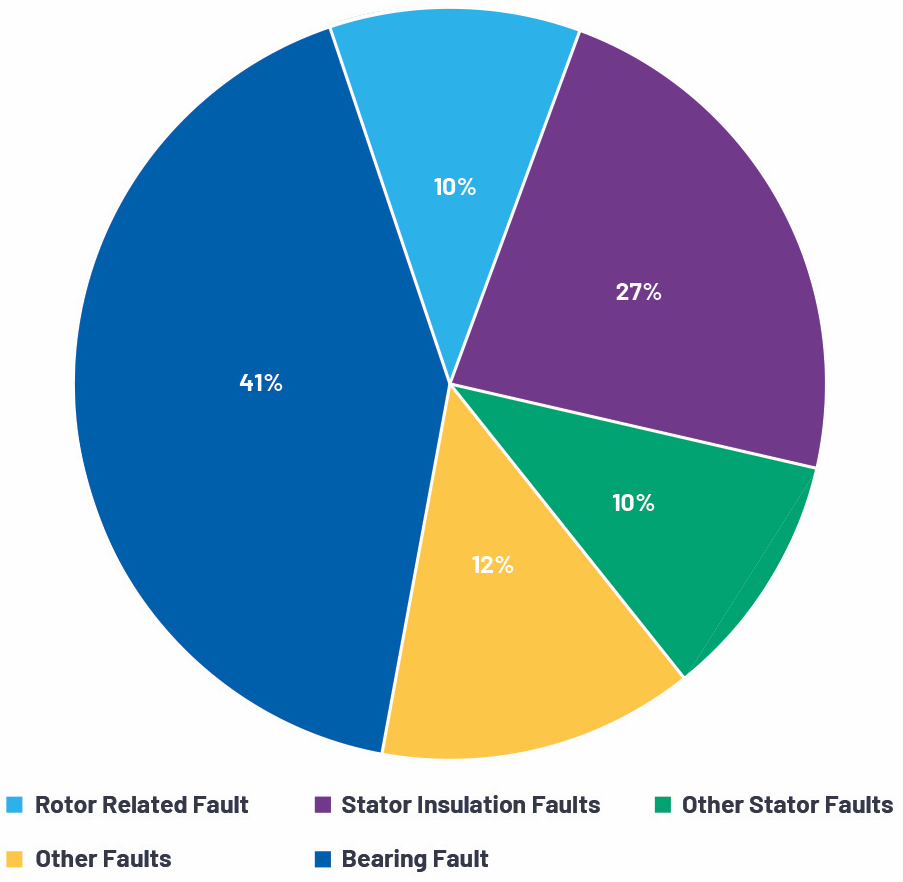
Figure 2. Percent of occurrences of failed motor components.4 (Source: Analog Devices)
Table 2 details common faults in rotating machines and the vibration sensor requirements for early detection. High‑performance sensors are pivotal for reliable operation.
Table 2. Brief Overview of Machine Fault and Vibration Sensor Considerations (Source: Analog Devices) click for larger image
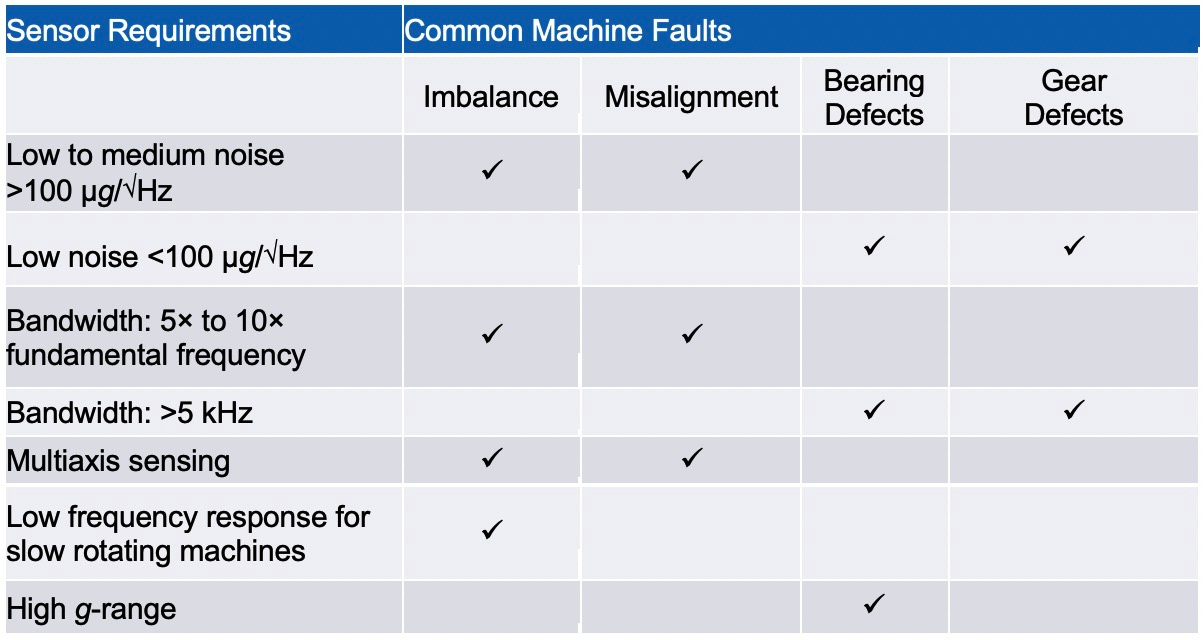
Vibration energy (peak, peak‑to‑peak, rms) reveals imbalance or misalignment 5. Early‑stage faults such as bearing or gear defects often require a low‑noise (<100 µg/√Hz) and wide‑bandwidth (>5 kHz) sensor paired with advanced signal processing.
Vibration, Sonic, and Ultrasonic Sensors for PdM
MEMS microphones embed a MEMS element on a PCB, typically housed in metal with a port for sound pressure. They are cost‑effective, compact, and ideal for battery‑powered monitoring of bearing health, gear meshing, pump cavitation, misalignment, and imbalance. However, in noisy or harsh environments, performance can degrade due to ambient noise, humidity, or mechanical shock.
While many MEMS datasheets list benign applications (mobile, laptop, gaming), they also note sensitivity to shock—some claim up to 10,000 g survivability 7. Clarity on suitability for extreme environments remains limited.
MEMS ultrasonic microphones analyze sounds in the 20–100 kHz range, where ambient noise is minimal. Higher frequencies yield shorter wavelengths (0.3–1.6 cm) and more directive energy, aiding precise fault localization in bearings or housings.
Accelerometers dominate vibration sensing for large rotating equipment (turbines, pumps, motors, gearboxes). Tables 3 and 4 compare high‑performance MEMS vibration/acoustic sensors with the industry gold‑standard piezo accelerometers.
The CbM market is projected to grow significantly over the next five years, with wireless deployments driving much of that expansion 6. Piezo accelerometers, though highly capable, are bulkier and consume more power, making MEMS accelerometers and microphones attractive for battery‑powered PdM systems.
All sensor types offer adequate bandwidth and low noise, but MEMS accelerometers uniquely deliver a DC‑to‑high‑frequency response, beneficial for low‑speed imbalance detection and tilt sensing. They also feature self‑test functions, ensuring functional integrity—a critical safety advantage.
Hermetic sealing is possible for MEMS accelerometers (ceramic) and piezo accelerometers (mechanical), enabling use in dirty or harsh environments. Table 4 highlights mechanical and environmental performance differences, guiding sensor‑to‑asset matching.
Table 3. Predictive Maintenance Sensor Performance Specifications (Source: Analog Devices) click for larger image
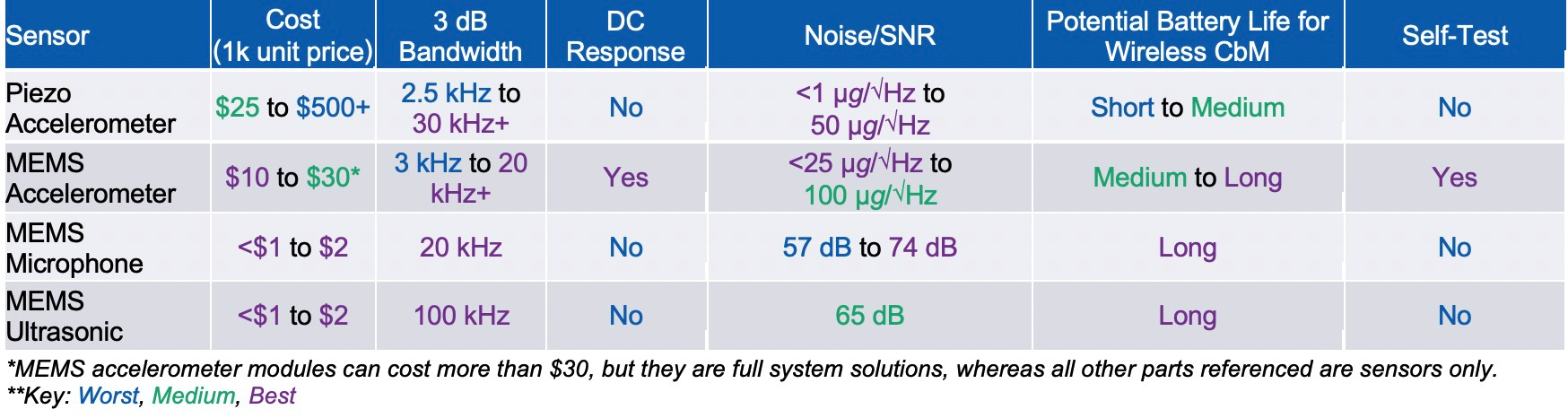
Table 4. Predictive Maintenance Sensor Mechanical Specifications (Source: Analog Devices) click for larger image
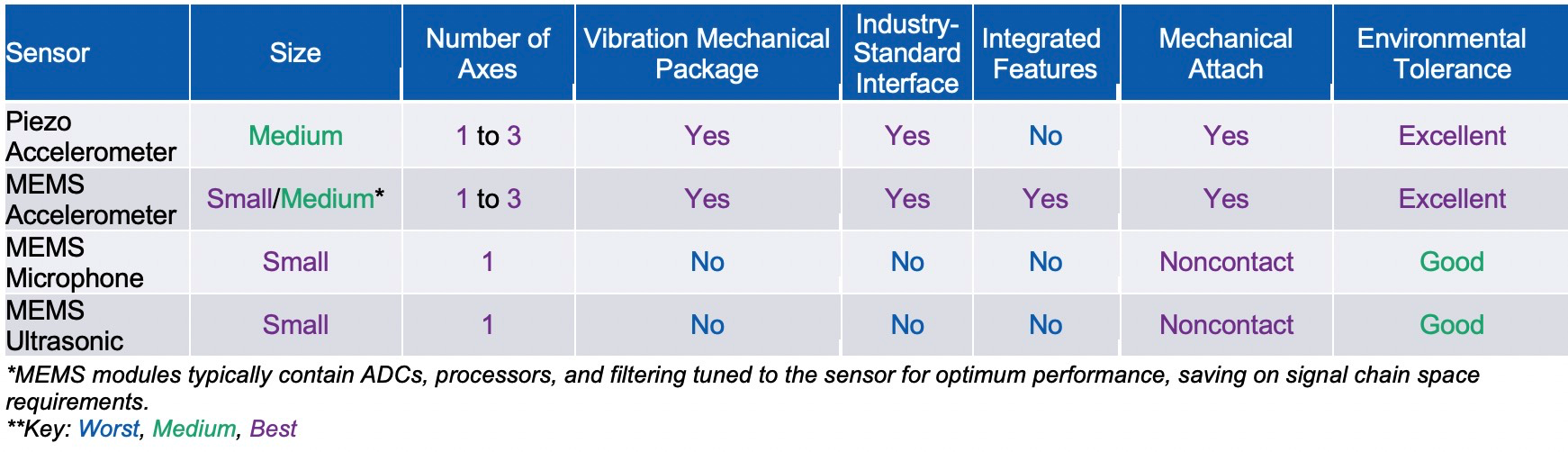
Three‑axis vibration data provides richer diagnostics, improving fault detection beyond single‑axis setups—a clear benefit of both piezo and MEMS accelerometers.
MEMS microphones can suffer up to –8 dB distortion in high‑humidity environments 7. In such conditions, electret condenser microphones (ECMs) may perform better. Other environmental factors—wind, pressure, EM fields, shock—also impact acoustic sensors 8.
In benign settings, MEMS microphones deliver excellent PdM performance. However, mounting them in harsh, vibratory, dusty, or humid environments poses challenges; they require a port for acoustic access, which can expose internal electronics to contaminants.
Recent advances in capacitive MEMS accelerometer technology now enable small, low‑cost, wireless CbM solutions for lower‑priority assets, offering deeper insights into facility operations and uptime. These MEMS sensors approach piezo performance for wired systems, with low noise, wide bandwidth, and industry‑standard IEPE interfaces.
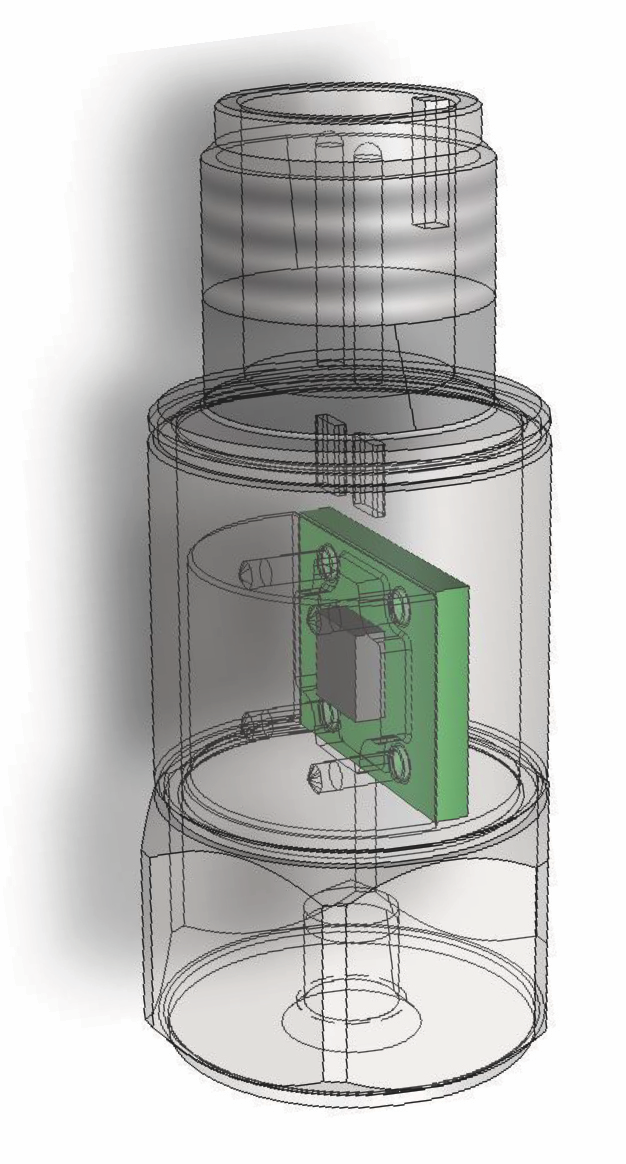
Figure 3. MEMS accelerometer, IEPE reference, PCB design allowing retrofit of the ADXL100x family of CbM accelerometers in IEPE mechanical modules. Note: Analog Devices does not produce IEPE mechanical modules. (Source: Analog Devices)
Dedicated PdM modules, such as Analog Devices’ ADcmXL3021, integrate three single‑axis MEMS accelerometers, ADCs, processors, memory, and algorithms into a mechanical package with a resonance >50 kHz. This enables on‑node FFTs, alarm triggers, and statistical outputs essential for machine‑learning‑based failure prediction.
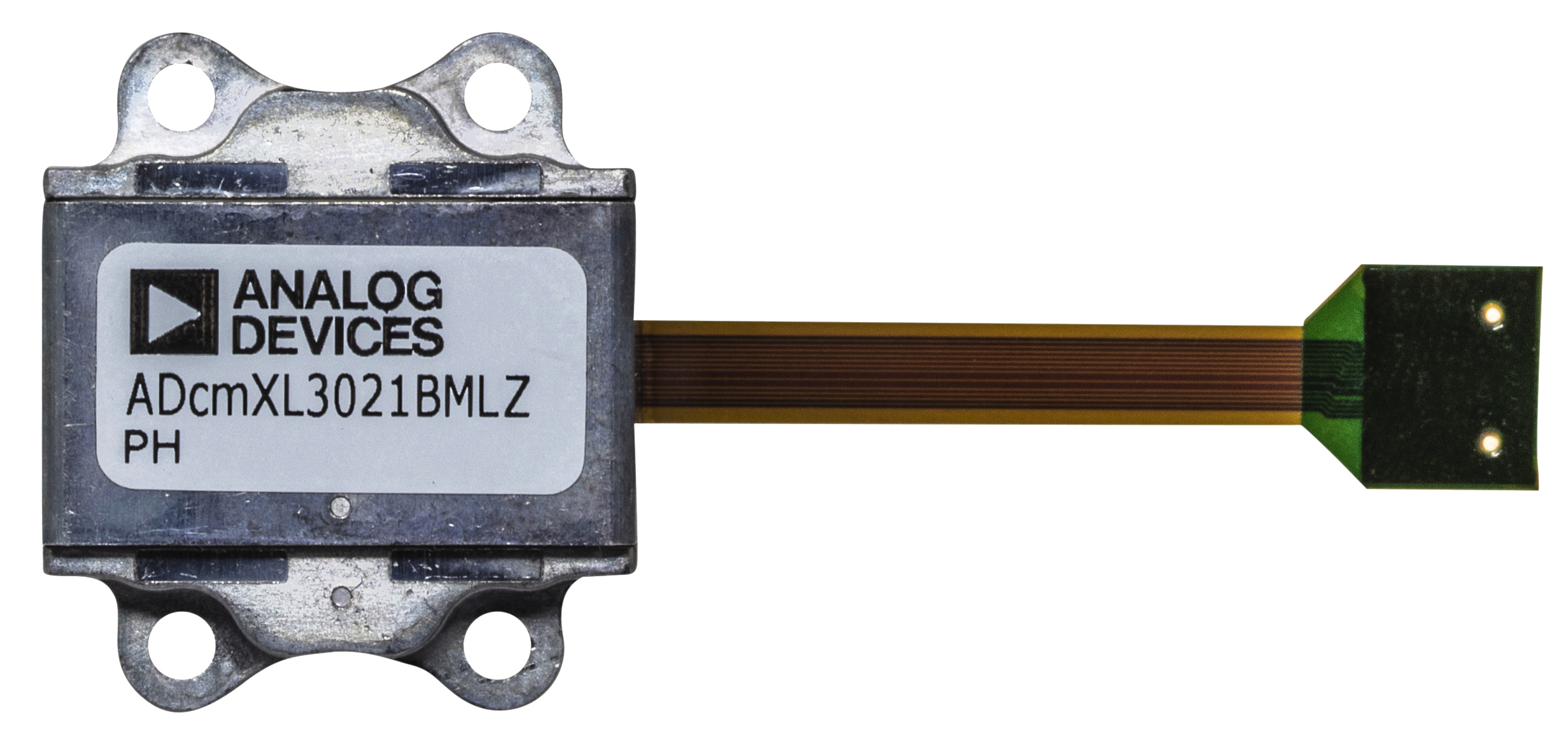
Figure 4. Three‑axis MEMS CbM module with integrated ADC, processor, FFT, and statistics, as well as a mechanical package with resonant frequency >50 kHz. (Source: Analog Devices)
Choosing the right vibration sensor hinges on matching sensor capabilities to the asset’s likely failure modes. MEMS microphones are not yet proven to reliably detect all vibration‑based faults in the harshest environments, whereas accelerometers have a decades‑long record of reliability. MEMS ultrasonic microphones show promise for early bearing fault detection and could complement accelerometers for a hybrid PdM solution.
While no single sensor fits all scenarios, accelerometers remain a proven, evolving choice. Analog Devices offers a broad portfolio of MEMS accelerometers—ranging from low‑power, low‑noise, high‑stability units to intelligent edge‑node modules—to meet diverse application needs.
References
1 Leslie Langnau. “Sensors Help You Get Maximum Use from Your Motors.” Machine Design, September 2000.
2 Bram Corne, Bram Vervisch, Colin Debruyne, Jos Knockaert, and Jan Desmet. “Comparing MCSA with Vibration Analysis in Order to Detect Bearing Faults—A Case Study.” 2015 IEEE International Electric Machines and Drives Conference (IEMDC), IEEE, May 2015.
3 Brian P. Graney and Ken Starry. “Rolling Element Bearing Analysis.” Materials Evaluation, Vol. 70, No. 1, The American Society for Nondestructive Testing, Inc., January 2012.
4 Pratyay Konar, R. Bandyopadhyay, and Paramita Chattopadhyay. “Bearing Fault Detection of Induction Motor Using Wavelet and Neural Networks.” Proceedings of the 4th Indian International Conference on Artificial Intelligence, IICAI 2009, Tumkur, Karnataka, India, December 2009.
5 Pete Sopcik and Dara O’Sullivan. “How Sensor Performance Enables Condition-Based Monitoring Solutions,” Analog Dialogue, Vol. 53, June 2019.
6 Motor Monitoring Market by Offering (Hardware, Software), Monitoring Process (Online, Portable), Deployment, Industry (Oil and Gas, Power Generation, Metals and Mining, Water and Wastewater, Automotive), and Region—Global Forecast to 2023. Research and Markets, February 2019.
7 Pradeep Lall, Amrit Abrol, and David Locker. “Effects of Sustained Exposure to Temperature and Humidity on the Reliability and Performance of MEMS Microphone.” ASME 2017 International Technical Conference and Exhibition on Packaging and Integration of Electronic and Photonic Microsystems, September 2017.
8 Marcel Janda, Ondrej Vitek, and Vitezslav Hajek. Induction Motors: Modelling and Control. InTech, November 2012.
9 Muhammad Ali Shah, Ibrar Ali Shah, Duck‑Gyu Lee, and Shin Hur. “Design Approaches of MEMS Microphones for Enhanced Performance.” Journal of Sensors, Vol. 1, March 2019.
Embedded
- Unlocking Real-Time Value with Predictive Maintenance
- Your Comprehensive Predictive Maintenance Checklist: Boost Efficiency, Cut Downtime & Drive ROI
- How Predictive Maintenance Drives Efficiency and Cuts Downtime
- Optimizing Maintenance: Cost‑Effective Predictive Strategies for Manufacturing Leaders
- From Scheduled to Predictive Maintenance: A Step‑by‑Step Transformation Roadmap
- The Future of Predictive Maintenance: Trends, Challenges, and Opportunities
- Mastering Predictive Maintenance at Scale: Proven Strategies for Success
- Optimizing Cash Flow Through Strategic Maintenance Programs
- Predictive Maintenance Evolution: From Reactive Failures to Proactive Success
- Overcoming the 3 Biggest Obstacles to Successful Predictive Maintenance