



Choosing Ultra‑Wideband for Accurate Social‑Distancing Wearables
Social distancing remains a cornerstone of COVID‑19 mitigation, and accurate, low‑latency distance measurement is essential for any wearable that aims to alert users when the recommended 6‑foot (2‑meter) buffer is breached.
Altran partnered with semiconductor leader Renesas to create an intelligent wristband platform that leverages ultra‑wideband (UWB) technology. This article details the first phase of that collaboration—evaluating wireless protocols to meet strict accuracy, power, size and user‑experience requirements.
A small device with a large list of requirements
Our goal was to design a compact social‑distancing platform that could be built around Renesas’ ICs. A low‑volume wristband prototype demonstrated core functions—monitoring, alerts and usability (Figure 1).
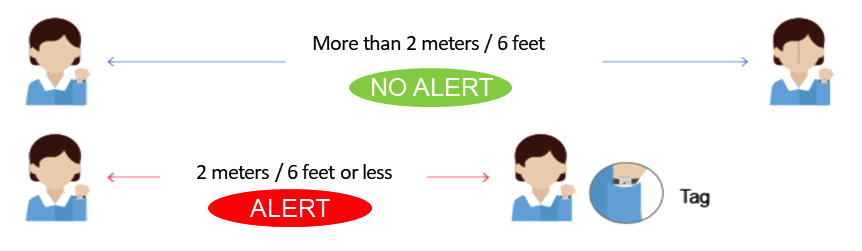
Figure 1. Wristband prototype that alerts the wearer when another device is within a user‑specified safe distance. (Source: Altran)
A wearable form factor dictated the need for a wireless solution that met the following criteria:
- Accurate distance measurement – Essential for reliable alerts and to eliminate false positives.
- Robustness to environment – Must perform indoors and outdoors, in line‑of‑sight (LOS) and non‑LOS (NLOS) conditions, and in dynamic settings with moving objects.
- Low latency – Alerts must be delivered quickly enough for the wearer to react.
- Compactness – The wireless stack must fit within a lightweight wristband.
- Power efficiency – Battery life must remain acceptable while performing continuous proximity sensing.
- Scalability – The system should handle multiple simultaneous targets in crowds.
All wireless technologies use a combination of signal capture (time‑based, angular, or received signal strength) and positioning techniques (triangulation or trilateration) to estimate distance or location (Figure 2).
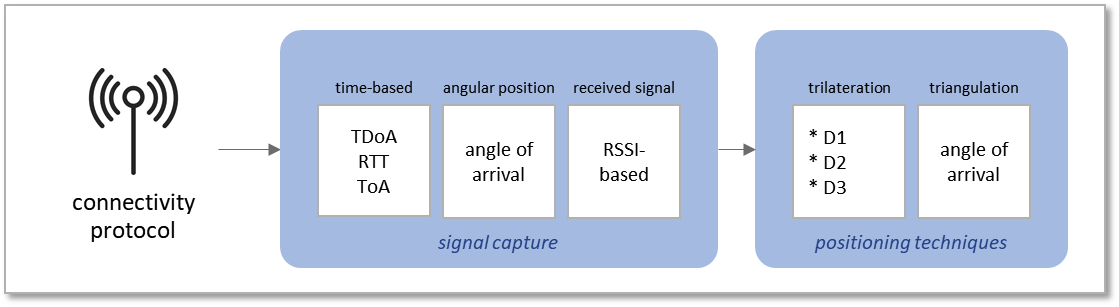
Figure 2: Typical distance/location measurement technique. (Source: Altran)
Evaluating wireless technologies
We examined Wi‑Fi, cellular, Bluetooth Low Energy (BLE) and ultra‑wideband (UWB). Published accuracy data (Figure 3) eliminated many protocols for our use case, but each still offered noteworthy advantages.
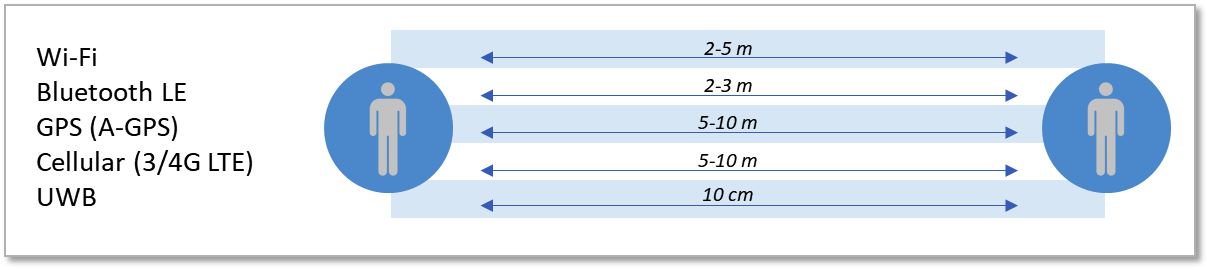
Figure 3. Distance measurement accuracy of typical wireless technologies. (Source: Altran, using published references [1])
Wi‑Fi
Wi‑Fi’s ubiquity and recent round‑trip time (RTT) improvements make it attractive for indoor positioning. However, even with RTT, typical RSSI‑based accuracy only reaches 1–3 m 75–85 % of the time and degrades in NLOS or highly reflective environments. Wi‑Fi also requires a network of access points, limiting seamless indoor‑to‑outdoor transitions and adding infrastructure complexity.
BLE
BLE offers low power consumption and easy deployment via existing smart devices. Its higher sample rate improves distance estimation compared to Wi‑Fi, but fast fading, interference, and human obstacles still limit accuracy to about 2 m in practice. BLE alone could not satisfy the sub‑meter precision required for social distancing alerts.
Cellular
Outdoor cellular positioning (A‑GPS, E‑CID, OTDOA) delivers 5–10 m accuracy with current 3G/4G networks—insufficient for our target. 5G’s mmWave, device‑to‑device and ultra‑dense networking promises sub‑meter accuracy, yet global coverage and indoor applicability remain limited at present.
UWB
UWB operates across 3.1–10.6 GHz, delivering centimeter‑level distance accuracy through high‑time‑domain resolution and immunity to multipath. Its short‑burst impulse signals provide sub‑millisecond latency, and the wide bandwidth mitigates narrow‑band interference. Importantly, UWB’s high penetration allows reliable NLOS performance, and the higher operating frequency enables smaller antennas—critical for a wristband.
Renesas supplied a low‑rate pulse (LRP) UWB chipset that consumes 10–20 mA in transmit mode versus 100–120 mA for high‑rate solutions. Leveraging IEEE 802.15.4z, the LRP supports secure, round‑trip time‑of‑flight ranging while remaining ultra‑low power. In phase 1, we achieved 20–30 cm accuracy in LOS/NLOS environments, with further tuning expected to reach the 10 cm goal.
Combining BLE and UWB allowed us to harness UWB’s precision when a target is detected, while BLE handled low‑power proximity detection and data offloading to the mobile app.
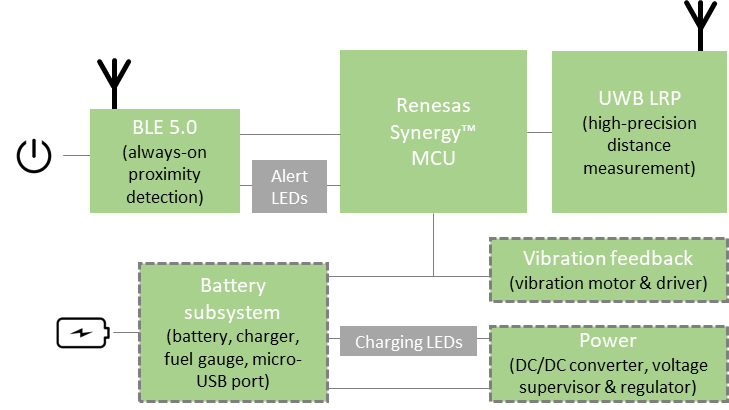
Figure 4: Final proof‑of‑concept platform combining BLE and UWB LRP for optimal power and accuracy. (Source: Altran)
A clear choice for a social distancing wristband
Altran and Renesas demonstrated that a UWB‑based platform delivers the accuracy, latency and power efficiency required for reliable social‑distancing wearables. The architecture scales beyond a wristband to any IoT form factor that demands precise indoor and outdoor positioning, making it suitable for contact tracing, asset tracking and beyond.
References
[1] Wireless protocol distance accuracy data:
- Wi‑Fi
- BLE
- GNSS
- Cellular
- UWB
[2] Simulation results
Embedded
- Designing Accurate RTLS Systems for Real-World Success
- Smart Technology Solutions for Social Distancing in Retail
- Analog Devices Showcases AI, Industrial Networking, and Power Solutions at Embedded World 2019
- TDK Unveils Cutting‑Edge Embedded Tech Innovations at Embedded World 2019
- BlueNRG‑Tile Reference Design Enables Real‑Time Proximity Detection for Contact Tracing
- How Social Distancing Shapes Global Logistics: Impacts & Strategies
- AI-Driven Social Distancing: Revolutionizing Digital Business Transformation
- Are Manufacturers Ready for XR? A Guide to VR, AR, and MR.
- Three Essential Rules to Ensure Analyzer Accuracy
- The Critical Role of Surface Lay in Machining Performance