



Three Essential Rules to Ensure Analyzer Accuracy
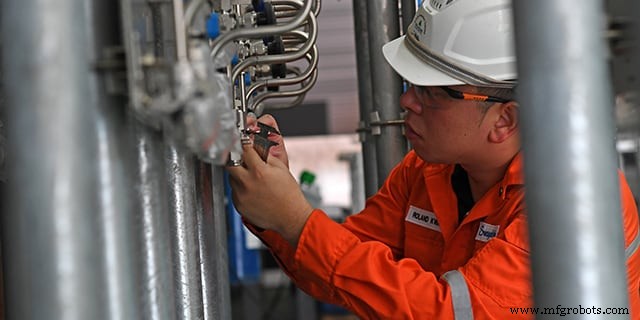
3 Rules for Analyzer Accuracy
Stacey Phillips, Field Engineering Manager (Americas)
In most applications, operators trust analyzer results to indicate whether their product is meeting specifications. But when analyzer results are not accurately reflecting an end product’s characteristics, it’s likely that a sampling system design or performance issue has compromised the process sample. In fact, about 80% of analyzer problems are due to sampling system performance issues.
Swagelok field engineers help customers diagnose sampling system inaccuracies or off-spec products in different industries around the world. Based on this experience, here are three rules system operators should always be following.
#1. Optimize System Compatibility
Accurate analyzer results depend on a sampling system that has been designed for compatibility with your system fluid. For example, gases and liquids have different needs, and your sampling system should be designed to accommodate them. Some variables that can have a big impact on your results include:
- Temperature. Chemical compositions are sensitive to temperature, and thus temperature deviation can impact results. For example, a hot vaporizer could boil an incoming liquid sample. Gas samples, on the other hand, drop in temperature very quickly, and operators must take the proper measures to maintain representative temperatures. Insulation and tube heating elements can be incorporated to combat this issue.
- Pressure. Pressure also influences analyzer accuracy. Pressure drops naturally as a sample travels through the system, and if proper measures aren’t taken, issues can arise. Pressure drop in a liquid sample may release a dissolved gas, thus causing the liquid to bubble or foam. Selecting the right valves can help ensure proper pressures are maintained.
- Flow. The slower your sample flow, the more viscous drag is placed on the interior wall of your tubing, causing solids to form. A faster flow within the sampling system—before fluid necessarily slows down to travel through the analyzer—is recommended for good sample mixing, cleaner sample lines, and faster response time.
#2. Keep Your Samples Timely
Operators should minimize the time between when the sample is drawn from the process line and the analyzer delivers its result. Delays can increase the likelihood a sample’s characteristics may change, misrepresenting your actual process conditions. Minimizing time delay should be a priority.
Ideally, time delay should not exceed one minute. Some of the factors that can cause further delays include:
- Pressure. Gas pressure in a transport line should be reduced at the tapping point as much as possible to allow a less-dense gas sample to travel faster to the analyzer.
- Probes. Probes can serve the dual purpose of drawing samples quickly and helping to maintain sample representativeness. However, size matters; unnecessarily large sample probes for the application can lead to greater delay.
- Line sizing. Accurate line sizing is important—like probes, oversized lines can increase delay. The farther the sample must move and the larger the internal volume of the transport lines, the longer the time delay.
- Dead legs. Dead legs or unpurged volume allows molecules to diffuse into the sample causing a slow analyzer response and potential contamination of your system.
- Analyzer delays. Sometimes delay occurs within the analyzer itself. For example, if an analyzer requires manual operation, the operator must be ready to initiate analysis when a sample is incoming.
Sometimes, sampling system operators may not realize significant delay is occurring because time delay is cumulative and small delays can add up. For example, it may take 49 seconds for the sample to reach the sample conditioning system from the sample tap under normal conditions. If an issue within the sampling conditioning system creates cumulative delay, however, the target delay of no more than one minute between the sample being pulled and the analyzer delivering its result could soon be exceeded. This could mean the sample analyzed is no longer be representative of overall process fluid.
#3. Maintain Your Sample Composition
Even if you’ve successfully followed the first two rules, there are some additional challenges that can interfere with the integrity of your sample’s composition and can therefore spoil your analyzer results. A few of these include:
- Unexpected fractionation. Fractionation or partial phase changes can dramatically alter analyzer results. If a sample has fractionated, the analyzer cannot determine the original composition, leading to nonrepresentative readings. Maintaining proper temperature and pressure (as noted in Rule #1) can prevent fractionation.
- Adsorption. When sample fluid touches a surface, a few molecules stick. Loss of molecules due to adsorption can spoil your sample. Pick the proper materials for filter elements, regulator diaphragms, tube walls, or gas cylinders when designing or maintaining your system to avoid this issue.
- Contamination. Filter selection is important for contamination prevention. Most operators understand the importance of system filters, but we often find that the wrong type of filter has been deployed. Some filters may not be suited to the process fluid and can miss particulates and lead to dirty samples. Other types of filters can severely restrict flow, which may either dramatically increase time delay or starve the analyzer of process fluid. Dead legs can cause cross-contamination of samples by containing old samples that can mix with new. When selecting and switching multiple samples, a proper stream selection valve with double block and bleed valve arrangement must be used to avoid cross-contamination of samples in case a stream selection valve leaks over its seat.
Following these three rules can help operators ensure representative samples and accurate analyzer readings. Unsure where to begin troubleshooting your sampling system issues? Swagelok® sampling system evaluation and advisory services can help identify these and other areas for improvement in your system, backed with actionable insights and prioritized recommendations for improvement to help you deliver quality products for your customers.
Interested in learning more? Contact us today.
Industrial Technology
- Mastering Limit Rules: A Practical Guide to Calculus Fundamentals
- Essential Derivative Rules: A Quick Reference
- Fundamental Antiderivative Rules: Constants, Sums, and Differences
- Essential Boolean Simplification Rules for Logic Circuit Design
- Designing Accurate RTLS Systems for Real-World Success
- 5 Proven Rules to Strengthen Operations & Maintenance Partnerships
- Mastering UID Compliance: 3 Essential Rules Every DoD Supplier Must Follow
- Top 8 Accuracy Challenges in Process Analyzers and How to Overcome Them
- 5 Essential Considerations for Optimizing Your Analyzer Shelter
- Ensuring Sampling System Accuracy: Expert Do's and Don'ts