



Smart Oil Management: How an Online Fluid Property Analyzer Cuts Oil Use and Boosts Asset Reliability
Conservative oil drain intervals protect the performance and health of engines, transmissions, hydraulic fluid systems, gear boxes and other lubricated equipment. Yet the global rise in oil demand and price squeezes maintenance budgets and erodes vehicle and equipment owners’ operating profits. Extending drain intervals based on real‑time fluid condition allows smarter use of the limited oil supply, reducing consumption while safeguarding machinery.
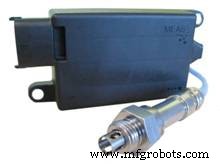
Fluid Property Analyzer (FPA)
Online Multi‑Parameter Sensor Detects Oil Contaminants and Degradation
Measurement Specialties has engineered an on‑line sensor that simultaneously measures viscosity, density, dielectric constant and temperature. The FPA2400BST identifies contaminant levels and degradation profiles, and even evaluates fuel quality to optimize engine performance. Changes in these physical properties reveal contamination or aging, enabling condition‑based drain intervals that protect assets and lower maintenance costs.
Like a laboratory that relies on multiple analytical tests, the FPA uses several physical properties to assess fluid condition. Contaminants—such as soot, water, ethylene glycol coolant, or fuel—alter viscosity, density, and dielectric constant in distinctive ways, allowing the sensor to flag them in real time.
Multi‑parameter measurements are essential for reliable monitoring. Single‑parameter sensors (e.g., conductivity or acoustic viscosity) lack the resolving power to distinguish oil age from contaminant loading.
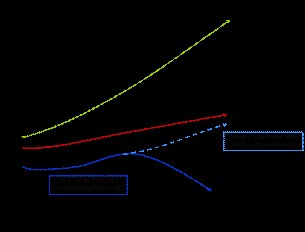
For example, diesel fuel leaking into engine oil reduces viscosity but leaves dielectric constant and density unchanged. The FPA detects this drop in viscosity while showing no shift in the other parameters, signaling fuel contamination early.
Conversely, a coolant leak from a head gasket increases the oil’s electrical properties and density without significantly affecting viscosity until a catastrophic event occurs. The FPA captures the abnormal dielectric constant and density rise, enabling prompt corrective action before sludging or engine failure.
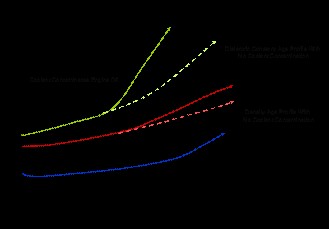
These scenarios illustrate why a multi‑parameter sensor is indispensable for accurately detecting oil contaminants and degradation in engines, transmissions, gearboxes, and hydraulic systems. The FPA distinguishes contaminants from normal aging, supporting true condition‑based oil drain intervals.
Robust Sensing Technology for Hostile Environments
The FPA employs a patented tuning‑fork mechanical resonator that directly measures viscosity, density, and dielectric constant. Factory‑calibrated with NIST‑traceable standards, it operates independently of laboratory correlations. The sensor is compatible with high‑pressure, high‑flow conduits or fluid reservoirs. Its accuracy remains stable across static or dynamic flows and pressure changes. The device has been validated in pressures >5,000 psi, temperatures –60 °C to 150 °C, and vibrations up to 46 Grms, delivering reliable performance over thousands of operating hours in hydraulic, gear, and engine applications.
Laboratory‑Grade Accuracy in an Online Sensor
Viscosity, density, and dielectric constant readings from the FPA match those obtained by standard laboratory instruments. This parity gives owners confidence to use the absolute values for oil age, contaminant loading, or to feed sophisticated asset‑reliability algorithms that enable active process monitoring and diagnostics.
Conclusion
The FPA2400BST, built on patented tuning‑fork technology, has delivered reliable, real‑time fluid monitoring for nearly a decade across diverse applications—engine oil, fuel, transmission fluid, hydraulic and gear oils, refrigerants, and solvents. Its multi‑parameter capability refines fluid‑characterization algorithms and supports aftermarket installations in reservoirs, process lines, and pressurized conduits for HVAC/R, compressors, industrial equipment, and turbines. Connectivity options include RS232/485, USB, CAN 2.0B/A, and analog interfaces, while a user‑friendly GUI on standard PCs simplifies setup. Remote installations benefit from onboard data logging.
About the authors:
Mark Uhrich, Director of Business Development, and Lisa Bernasconi, Product Marketing Engineer at Measurement Specialties Inc. Measurement Specialties designs and manufactures sensors for fluid properties, pressure/force, position, vibration, temperature, and humidity. For more information, visit www.meas-spec.com, email fluid.sales@meas-spec.com, or call 757‑766‑1500 or +33 (0)561 194 543.
Equipment Maintenance and Repair
- Standardized Fan Upgrade Solution Enhances Reliability & Longevity
- Smart Oil Management: How an Online Fluid Property Analyzer Cuts Oil Use and Boosts Asset Reliability
- Solvay’s Cladding Solution Cuts Blowouts and Saves $200k Annually
- Benchmarking Lubrication Performance to Boost Reliability and Cut Costs
- Real‑Time Oil Quality Monitoring with SenGenuity ViSmart Viscosity Sensor for Power Generation Equipment
- Premium Grease Lubricants for Superior Hydraulic Performance
- Six Proven Methods to Accurately Measure Fluid Viscosity
- Oil & Gas Safety Checklist: Secure Your Industrial Fluid Systems
- Why Oil Analysis Is Essential for Commercial Trucking Success
- How Fluid Analysis Boosts Equipment Reliability and Reduces Downtime