



Standardized Fan Upgrade Solution Enhances Reliability & Longevity
Industrial fans and blowers are pivotal to many production lines. To meet escalating performance demands and reduce operating costs, bearing reliability is paramount. Leveraging expertise in bearings, housings, lubrication, seals and service, SKF delivers a standardized upgrade that elevates fan efficiency and reliability.
Failure of fan bearings is costly; a single breakdown can halt production and trigger thousands of dollars in losses. Extending bearing service life is therefore a top priority for manufacturers seeking uninterrupted operation.
Historically, each fan upgrade was tailored to a specific application. SKF engineers have now created a turnkey solution that standardises the process, optimises bearings and housings, and introduces a circulating oil lubrication system to lower operating temperatures.
Demanding Conditions
Industrial fans often run at the edge of their limits: high rotational speeds, hot gas evacuation (100–600 °C / 212–1,112 °F) and thermal expansion. Heat transfers to the bearings through radiation and conduction along the shaft, raising temperatures and accelerating bearing wear.
High temperatures degrade base oil, shortening its life and raising friction. Over one‑third of premature bearing failures stem from lubrication problems.
Temperature‑Reducing Components
A comprehensive solution has been engineered by combining knowledge of bearings, housings, lubrication, seals and service.
Each upgrade starts with a functional analysis to pinpoint current issues and devise the optimal upgrade path. SKF manages the entire process—from assessment to installation—ensuring seamless integration and performance.
The upgrade package includes a circulating oil lubrication system, a self‑aligning bearing arrangement, specially designed housings and a condition‑monitoring system that flags potential failures early. Full value is realized only when all components are installed together.
Automated Lubrication System
Preventive maintenance hinges on effective lubrication. For high‑temperature fans, a circulating oil system is essential; grease or oil‑bath methods cannot cope. SKF’s standard circulating oil unit (see Figure 1) delivers cool, clean oil to each bearing and removes heat efficiently.
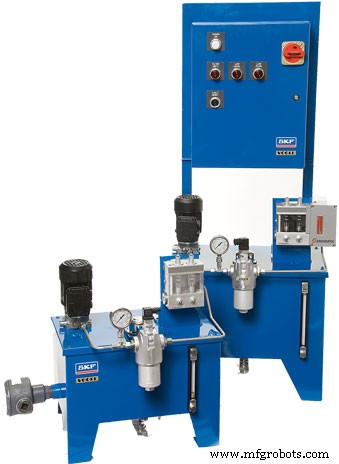
Figure 1. Circulating Oil Unit
Key components—large tank, heater, high‑capacity filter, pressure sensors and bypass valves—work together to maintain optimal viscosity, temperature and oil cleanliness (see Figure 2).
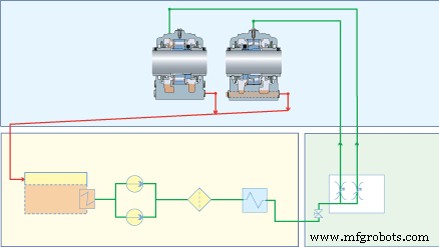
Figure 2. Working Principle of Circulating Oil Units
Optimising oil volume minimizes back‑circulation, reduces energy use, cuts oil consumption and lessens environmental impact. Optional cooler, alarm control unit and standby pump expand flexibility. For larger fans, the Flowline family offers a complete oil circulation solution.
Oil Viscosity
The lubricant’s film thickness depends on operating temperature and oil viscosity. A suitable oil has a viscosity ratio (k) between 1 and 4 at the bearing’s operating temperature, corresponding to ISO VG 68–220 at 40 °C. A k below 1 risks metal‑to‑metal contact; above 5 increases friction and temperature.
Self‑Aligning Bearing Systems
Fan bearings must tolerate shaft misalignment, deflection and thermal expansion. Conventional self‑aligning systems use two spherical roller bearings, but the axial‑free bearing generates friction, vibration and heat.
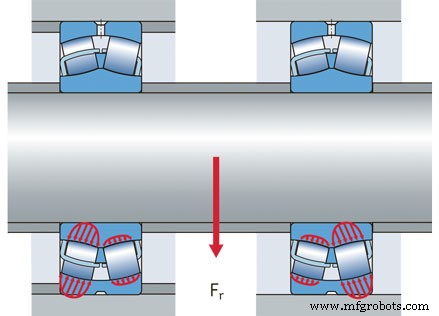
Figure 3. Conventional self‑aligning bearing system
SKF’s hybrid system pairs a spherical roller bearing (locating) with a CARB toroidal roller bearing (non‑locating). The CARB’s inner ring moves independently, eliminating axial loads and friction. This reduces operating temperatures, vibration, noise and extends relubrication intervals.
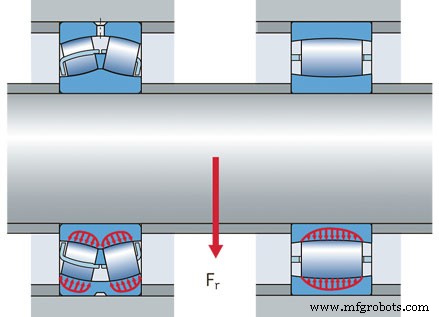
Figure 4. SKF self‑aligning bearing system with CARB bearing
Both bearings belong to SKF Explorer, a high‑performance class that further enhances service life.
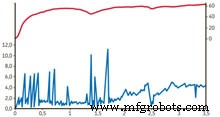
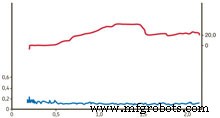
Figure 5. Comparison of bearing systems in a large fan: Conventional vs. SKF self‑aligning
Bearing Housing
SKF’s standard housings—SONL plummer blocks and SAF pillow blocks—are engineered for high speed and temperature. SONL housings feature deep reservoirs for effective heat removal and reliable seals. SAF blocks provide large drain holes and optimized cooling, especially when paired with a LER contact oil seal.
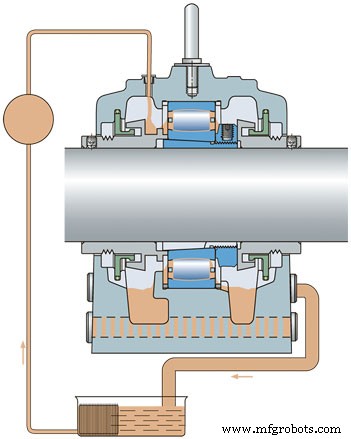
Figure 6. SONL housing with CARB bearing for circulating oil lubrication
Using these housings with the SKF self‑aligning system dramatically cuts bearing temperatures.
Conclusion
High‑temperature fan bearings operate at their limits. SKF’s integrated expertise delivers a complete upgrade that boosts reliability, extends bearing and lubricant life, and reduces maintenance—benefiting business performance and sustainability.
Summary
Fans drive many industries; their reliability is critical as productivity demands rise. SKF’s standardized upgrade—leveraging bearings, housings, lubrication, seals and service—offers improved operation, longer bearing life, extended lubricant life and lower maintenance costs.
About the authors:
Hans Lindh is the business leader for industrial fans, Industrial Division, at SKF in Sweden. Emma de Laval is a technical communication specialist at SKF Group, Sweden. For more information, visit www.skf.com. Also, check out Evolution, SKF’s business and technology magazine, at https://evolution.skf.com.
Equipment Maintenance and Repair
- Cervoz T405 M.2 NVMe SSD – PCIe Gen3x4, 5× Faster Than SATA III for Edge & High‑Performance Storage
- Launching a Successful Lubrication Program: Expert Guidance for Reliability
- Benchmarking Lubrication Performance to Boost Reliability and Cut Costs
- Elevate Your Bottom Line with World‑Class Industrial Lubrication
- Grease vs. Oil: Selecting the Optimal Lubricant for Linear Bearings
- How to Spot Quality in Second‑Hand Industrial Electronics
- Three Proven Oil Mist Collectors for Cleaner, Safer Industrial Metalworking
- Top 4 Oil Rig Safety Tips to Protect Workers and Prevent Accidents
- Avnet Silica Launches MiniPOC Kit: Accelerating Industrial IoT Edge‑to‑Cloud Proof‑of‑Concepts
- Choosing the Right Industrial Fan: Axial vs Centrifugal for Ventilation Systems