



Real‑Time Oil Quality Monitoring with SenGenuity ViSmart Viscosity Sensor for Power Generation Equipment
Field crews across the mobile and fixed‑asset sectors increasingly require on‑demand oil quality assessments. Traditional laboratory analysis—shipping samples, waiting for results, and then acting—creates costly delays and hinders timely decision‑making.
Embedded, portable viscosity sensors give mechanics the flexibility to evaluate oil condition instantly, enabling a true condition‑based maintenance program that protects every asset—from generators to heavy equipment.
Viscosity is a fast, reliable indicator of oil health and overall asset readiness. SenGenuity’s ViSmart acoustic‑wave sensor delivers instant, on‑line viscosity and temperature data with no moving parts, an ultra‑wide operating range, and plug‑and‑play connectivity that integrates seamlessly into handheld tools or OEM systems.
For nearly a decade, ViSmart has powered oil‑condition monitoring in machine‑tool, rotating‑equipment, and process‑control environments, delivering measurable ROI. Now it’s being evaluated in mobile and fixed‑asset markets where real‑time oil assessment is critical.
Unlike conventional mechanical or electromechanical viscometers, ViSmart’s acoustic‑wave (AW) design is a solid‑state device that can be fully immersed in oil, delivering continuous viscosity data for embedded or spot‑check applications.
The sensor’s immunity to shock, vibration, and flow makes it ideal for harsh conditions. It accurately measures 0–500 cP over a temperature range of –15 °C to 125 °C and is unaffected by oil particulates.
Mechanical viscometers, often limited to laboratory settings, struggle to integrate into real‑time control systems and provide only intermittent snapshot data that can be skewed by temperature, shear rate, and other variables.
Oil contaminants—water, solvents, fuel—quickly degrade viscosity, leading to corrosion, pitting, and seal swelling that compromise diesel engines, trucks, construction equipment, military vehicles, and generators. Relying on snapshot data can miss early signs of degradation.
Real‑time viscosity monitoring captures oil aging, contaminant ingress, and the loss of lubrication properties, enabling pre‑emptive action before mechanical failure.
This case study highlights the ViSmart threaded‑bolt sensor’s performance in power‑generation equipment.
Product Technology
SenGenuity’s ViSmart combines a wide dynamic range (air to thousands of cP) in a single sensor, as illustrated in Figure 1.
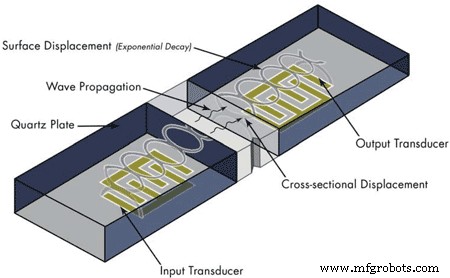
Figure 1. Acoustic‑waveguide sensor with electrical transducers on one surface and fluid contact on the other.
The ViSmart is a commercially available, robust, and cost‑effective surface acoustic wave (SAW) viscometer. It’s designed for in‑line, real‑time monitoring and scalable process‑control applications, as shown in Figure 2.
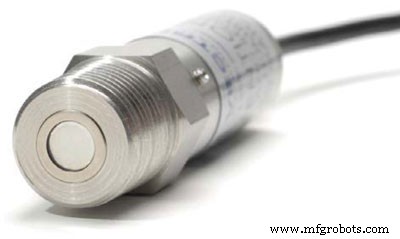
Figure 2. SenGenuity Solid‑state Low‑shear Bolt Viscosity Sensor
With no moving parts aside from atomic‑scale surface vibration, the sensor’s high‑frequency operation (millions of vibrations per second) eliminates flow‑dependency and immune to environmental vibration. High‑temperature electronics extend the sensor’s operating range.
Acoustic sensors measure acoustic impedance −(ωρη)−±2, where ω is the radian frequency, ρ the density, and η the intrinsic viscosity. The quartz crystal resonator’s vibration depth d = (2η/ωρ)−±2 determines the fluid’s coupling to the surface.
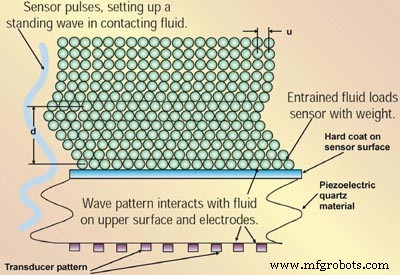
Figure 3. Cross‑section of the sensor: transducers on the lower surface, liquid molecules on the upper surface.
The acoustic viscosity (AV) unit—ρη (g/cm³ × cP)—captures power loss from the quartz resonator into the fluid. The resonator supports a standing wave through its thickness, interacting with electrodes sealed from the liquid on one side and with the fluid on the other.
Only a thin, micrometer‑scale layer of fluid moves with the vibrating surface, while a proprietary scratch‑proof hard coat protects the sensor in extreme environments, making ViSmart ideal for oil‑condition and fuel‑quality monitoring across mobile and fixed assets.
Customer Application and Data
A telecom and data‑center operator in a developing country relies on remote, off‑grid power generators. Frequent site visits are impractical, and the units are vulnerable to weather, vandalism, and theft.
By integrating ViSmart sensors into a remote‑monitoring solution, the operator gains secure, reliable real‑time data on oil and fuel quality.
Primary goals:
- Verify oil quality over time and refine oil‑change intervals (currently 150–200 h).
- Detect non‑specified oil introduction.
Secondary goal:
- Identify fuel‑line contamination (water or kerosene).
Viscosity readings—augmented by temperature data—serve as the key metric. The test setup used a 22 kVA, 18 kW, 220 V/60 Hz generator. Figure 4 shows viscosity vs. temperature for new vs. 150‑hour used 15W40 oil, revealing negligible shift and validating extended oil life.
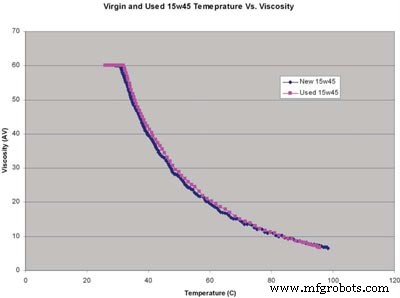
Figure 4. Viscosity‑temperature data for new and used 15W40 oil.
Additional tests compared various oil grades at 40 °C. Figures 5a and 5b demonstrate clear differentiation between oil types and confirm ViSmart’s ability to flag incorrect oil usage.
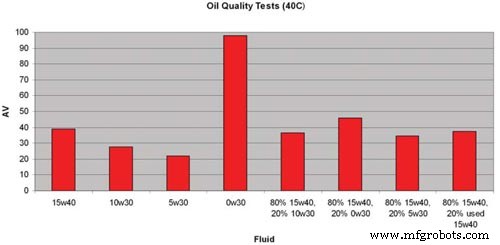
Figure 5a. Viscosity values for various oil states at 40 °C.
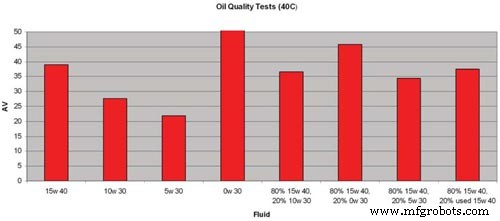
Figure 5b. Detailed viscosity values for various oil states at 40 °C.
At 100 °C, differentiation remains evident (Figure 6). Multi‑temperature data allows precise determination of oil condition relative to operational parameters.
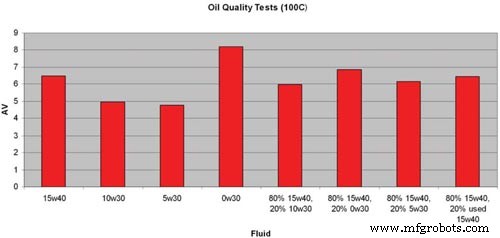
Figure 6. Viscosity values for various oil states at 100 °C.
Fuel contamination (water, kerosene) was also measured at 25 °C and 40 °C. Figure 7 confirms ViSmart’s sensitivity to fuel‑quality variations, ensuring generator fuel remains within performance thresholds.
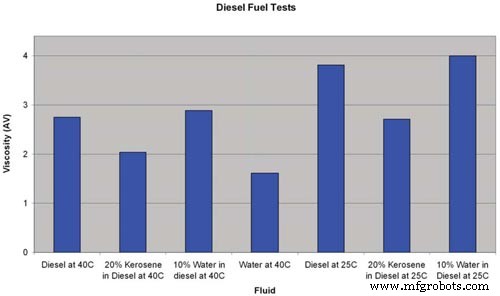
Figure 7. Viscosity values for various fuel quality states at 25 °C and 40 °C.
Combining remote‑monitoring logic with viscosity and temperature alarms guarantees generator reliability, prevents downtime, and informs maintenance decisions.
Benefits
ViSmart sensors are field‑ready: mechanics can test oil or fuel in minutes, or operators can embed the sensor for continuous monitoring. The solution complements laboratory analysis by providing real‑time data, slashing logistic costs and eliminating the need for frequent lab samples.
Because the sensor is vibration‑proof, shock‑resistant, and requires no calibration, maintenance costs are minimal. It’s already deployed in 24/7 commercial applications with real‑time data transfer for instant decision‑making.
Continuous viscosity monitoring empowers personnel to extend equipment life, optimize maintenance schedules, and maintain the integrity of oil‑condition data streams collected in the lab.
Equipment Maintenance and Repair
- Measuring Power Quality: Understanding Harmonics and Their Impact on AC Systems
- Efficient 230 VAC Power‑Outage Sensor for Raspberry Pi – Low‑Cost, Compact, and Safe
- Surge Protection: A Key to Maximizing Equipment Reliability
- PPL Power Stations Deploy Emerson Smart Wireless for Real‑Time Equipment Monitoring
- Diagnosing Power Quality Issues in HVAC Systems: A Practical Guide
- Reevaluating OEE: Are Speed, Quality, and Uptime Truly Equally Weighted?
- Arduino-Based Indoor Air Quality & Comfort Sensor Kit
- Understanding Flicker: Impact on Power Quality and How Variable Speed Drives Help
- Advanced Carbon‑Based NO₂ Sensor Enhances Indoor Air Quality Monitoring
- How Fluid Analysis Boosts Equipment Reliability and Reduces Downtime