



Diagnosing Power Quality Issues in HVAC Systems: A Practical Guide
A variable frequency drive (VFD) that refuses to adjust the discharge‑air fan speed, a motor that overheats and fails prematurely, or a programmable controller that trips when powered from standby – these are all warning signs of underlying power quality problems.
Modern HVAC controls—solid‑state relays, sensors, transducers, VFDs, and electronic actuator drives—are highly sensitive to the quality of the voltage and current supplied. When the power supply deviates from its specified parameters, the electronics can malfunction even if the hardware itself is sound.
Finding the Root Cause
Technicians often attribute unexplained failures to faulty electronics, but the real culprit may lie in the power source. Typical symptoms include:
- VFDs that cannot vary fan speed.
- Unexpected motor overheating or premature bearing wear.
- Circuit breakers tripping without measurable current spikes.
- High‑temperature alarms triggered by inadequate cooling.
Identifying the true cause requires a systematic approach: verify supply voltage, frequency, and harmonic content before blaming the device.
Common Triggers of VFD Issues
Two real‑world examples illustrate how poor power quality can masquerade as VFD failure:
- During a power transfer to a standby source, a fan‑supply VFD tripped, raising a high‑temperature alarm. Analysis of voltage and current logs revealed the transfer switch cycle was too long for the VFD’s ride‑through capability.
- A VAV terminal VFD tripped when switched to standby generator power. The generator’s voltage fluctuations exceeded the VFD’s tolerance. The solution was to bypass the VFD on standby, allowing the fan to run at a fixed speed.
Understanding Harmonics
Electronic drives convert AC to DC, generating harmonic currents that can overload motors and distort upstream waveforms. Harmonics occur at integer multiples of the 60 Hz fundamental (e.g., 180 Hz, 300 Hz, etc.).
Measure harmonic levels and total harmonic distortion (THD) with a power‑quality analyzer. At the point of common coupling (PCC), voltage THD should not exceed 5 %. If it does, consult the VFD manufacturer; solutions may include a line reactor or isolation transformer.
Motor Reliability with VFDs
VFD‑driven motors are prone to overheating, insulation breakdown, and bearing wear—especially when running at low speeds. The pulse‑width modulated voltage and current can damage insulation and accelerate bearing failure.
Use inverter‑duty‑rated motors specifically designed for VFD operation to mitigate these risks.
Voltage Unbalance in Three‑Phase Motors
Even without a VFD, a phase voltage unbalance of just 1 % can increase motor current unbalance six to ten times, leading to overheating. To check for unbalance, measure phase‑to‑phase voltages (A‑B, A‑C, B‑C), average them, and ensure each phase differs by no more than 1 % from the mean. A 5 % unbalance typically destroys the motor.
General Guidelines for Power Quality
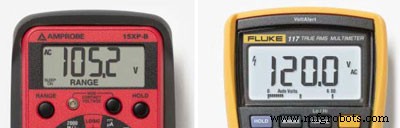
All HVAC equipment has specified supply parameters. For instance, a 208‑V device requires 187 V to 229 V (±10 %) at the rated frequency. Low voltage shortens motor life and can prevent electronic controls from operating correctly.
Use a true‑RMS meter, not an average‑responding meter, to measure voltage and current in systems with harmonic content. Accurate readings are essential for diagnosing power‑quality problems.
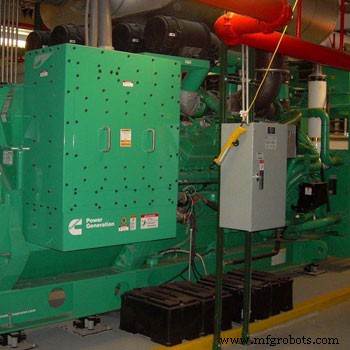
Standby generators often fail to meet the required voltage and frequency stability. Verify all incoming supply specifications for every power source the HVAC system may use. If necessary, work with system engineers to implement solutions such as voltage regulators or harmonic mitigation devices.
Conclusion
Routine checks—fuses, contactor voltage, and current ratings—are still vital. However, as HVAC systems incorporate more electronics and VFDs, power‑quality issues become increasingly common. Proper training, true‑RMS meters, and time‑logging analyzers are key tools for identifying and correcting these problems, ensuring reliable operation and extended equipment life.
For more detailed guidance, visit Fluke Corporation.
Equipment Maintenance and Repair
- First Impressions Matter: A Professional Guide to Equipment Troubleshooting
- Surge Protection: A Key to Maximizing Equipment Reliability
- PPL Power Stations Deploy Emerson Smart Wireless for Real‑Time Equipment Monitoring
- Real‑Time Oil Quality Monitoring with SenGenuity ViSmart Viscosity Sensor for Power Generation Equipment
- Using Vibration Analysis and Cross‑Channel Phase to Spot Equipment Issues
- How to Properly Maintain Your Power Washer for Peak Performance
- Professional VFD Maintenance & Troubleshooting: Expert Tips for Energy Savings & Reliability
- Expert Guide to Diagnosing and Repairing Kaiser LS402 High‑Voltage Power Supplies
- Spindle Troubleshooting Mastery: Accurate Diagnosis & Rapid Solutions
- Reliable Power & HVAC Rentals for Seamless Climate Control