



Measuring Power Quality: Understanding Harmonics and Their Impact on AC Systems
Historically, the term power quality was largely limited to power factor in large AC power systems. Today, the proliferation of nonlinear electronic loads—such as variable-frequency drives, power supplies, and LED lighting—introduces significant harmonic distortion, turning once‑clean sine‑wave voltages into a spectrum of high‑frequency components.
These harmonics can cause transformer overheating, excessive neutral currents in three‑phase systems, electromagnetic interference that disrupts sensitive equipment, and reduced motor efficiency. Identifying and quantifying this distortion is essential for reliable operation and regulatory compliance.
What Is Power Quality?
In electrical engineering, power quality refers to an AC system’s ability to deliver voltage and current that closely match a pure sinusoid at the fundamental frequency (60 Hz in North America). A device that reports on harmonic content is commonly called a power quality meter or a low‑frequency spectrum analyzer.
Practical Ways to Assess Power Quality
1. Dual‑Meter Comparison
A straightforward, equipment‑light method involves measuring the same circuit voltage with two calibrated meters: an averaging (electromechanical) meter and a true‑RMS digital meter. Averaging meters assume a sinusoidal input; if the waveform is distorted, their reading will diverge from the true‑RMS value. The larger the discrepancy, the poorer the power quality.
2. Visual Inspection with an Oscilloscope
Connecting a standard oscilloscope to the line and observing the waveform provides a qualitative check. A perfect sine wave appears smooth; any “kinks,” plateaus, or rapid transitions indicate harmonic distortion. 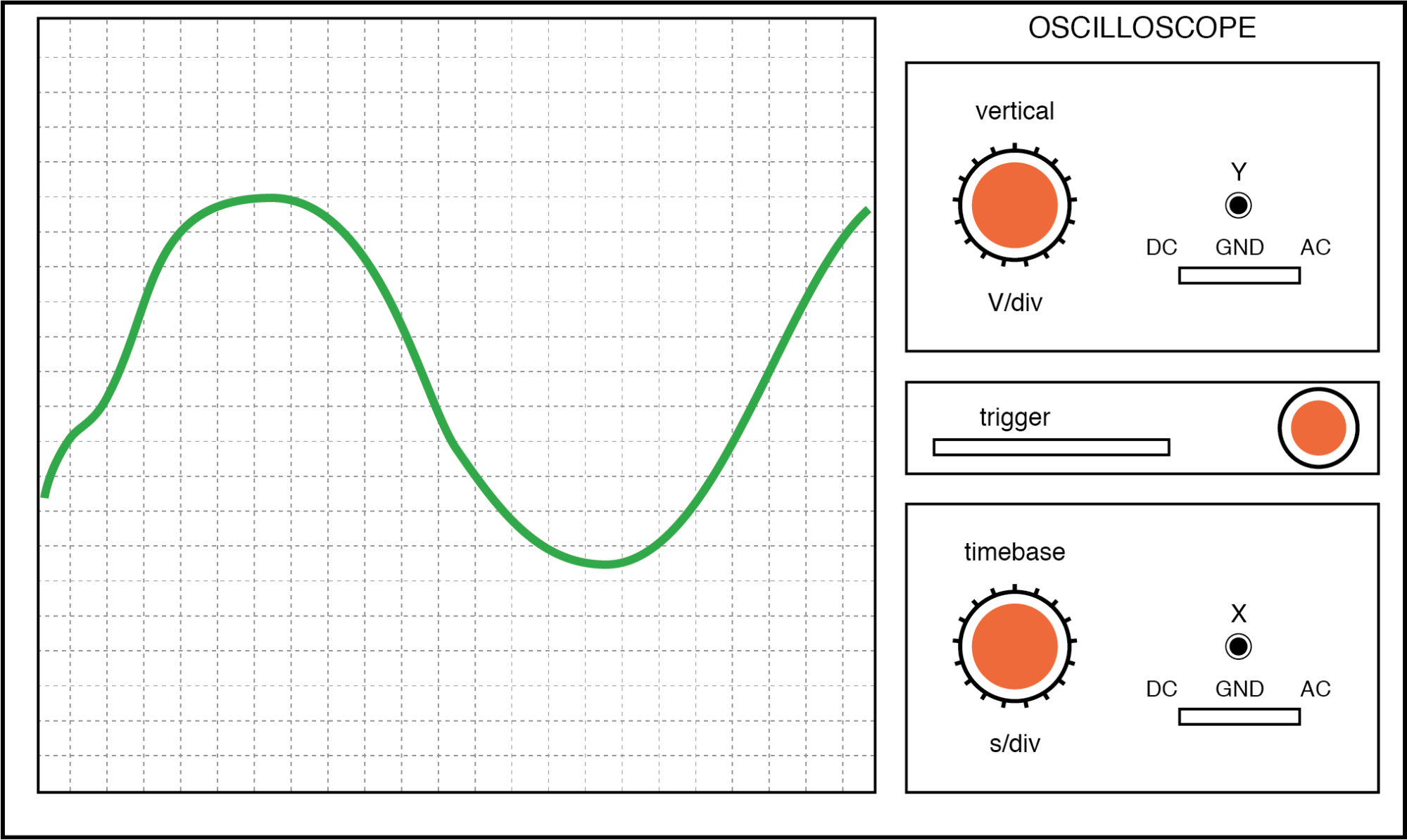
Illustration of a distorted sine wave with visible harmonic content.
3. Quantitative Analysis with a Power Quality Meter
For precise, numerical data, a dedicated power quality meter is indispensable. These instruments display the voltage (or current) spectrum as a histogram of harmonics, analogous to a prism separating white light into colors. Each bar on the horizontal axis corresponds to a harmonic multiple of the fundamental frequency: 1 → 60 Hz, 3 → 180 Hz, 5 → 300 Hz, and so on.
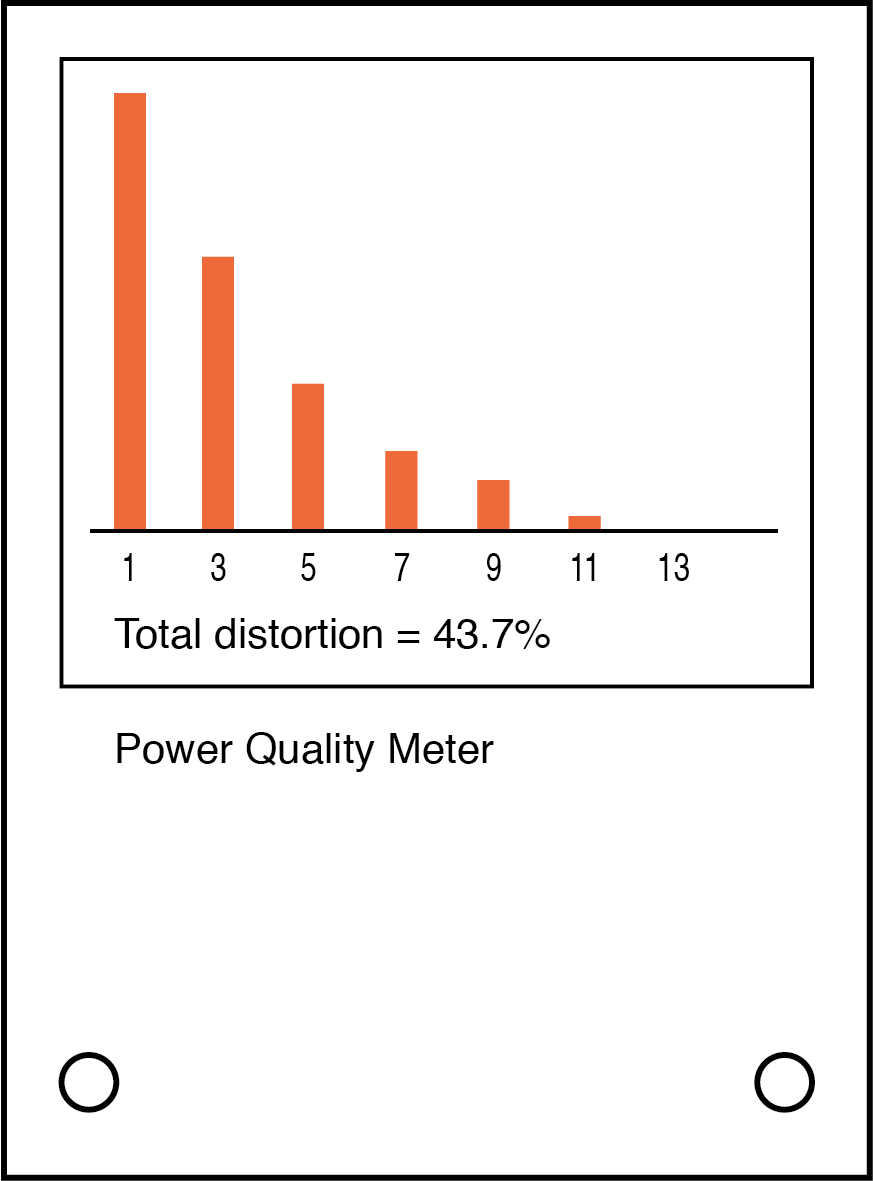
Typical power quality meter output: black bars represent harmonic amplitudes.
In a pristine 60 Hz sine wave, only the first harmonic bar would appear; all higher‑order bars would be absent. In three‑phase systems, even‑order harmonics largely cancel out, so the spectrum focuses on odd harmonics.
Why Accurate Measurement Matters
Quantifying harmonics allows engineers to:
- Verify compliance with standards such as IEEE 519.
- Design filtering solutions to mitigate distortion.
- Assess the impact on sensitive equipment and overall system reliability.
By employing the methods above, technicians can detect and address harmonic issues before they compromise performance or safety.
Industrial Technology
- Understanding AC Circuits: A Beginner's Guide
- Power Sources: AC and DC Explained
- Protective Relays: Safeguarding Industrial Power Systems
- Amplifiers: Harnessing Active Devices to Boost Power
- pH Measurement: Fundamentals, Electrodes, and Best Practices
- Accurate Power Measurement in AC Circuits: From Electrodynamometers to Hall‑Effect Sensors
- Bulldozer Technology: Design, Manufacturing, and Future Innovations
- Understanding Flicker: Impact on Power Quality and How Variable Speed Drives Help
- Wind Power: Converting Air Movement into Clean Electricity
- Mastering Quality Control: Strategies for Consistent Excellence