



Understanding Absolute Decibel Scales in Sound, Power, and Telecommunications
Decibels as an Absolute Unit of Power
Decibels are often used to express relative gain or loss, but they can also represent an absolute power level. In acoustics, 0 dB is defined as a sound‑pressure intensity of 1 picowatt per square meter—roughly the quietest sound a human ear can detect. A 40 dB sound is 10⁴ times louder than this threshold, while a 100 dB noise is 10¹⁰ times more intense.
Frequency‑Dependent Decibel Scales
The human ear does not respond equally to all frequencies, so weighted decibel scales were developed to account for perceptual sensitivity. Three commonly used weights—A, B, and C—filter the signal before measurement. The A‑weighting (dBA) most closely matches the ear’s response to mid‑range frequencies and is the standard for assessing potentially harmful noise levels.
Telecommunications Power Scale: dBm
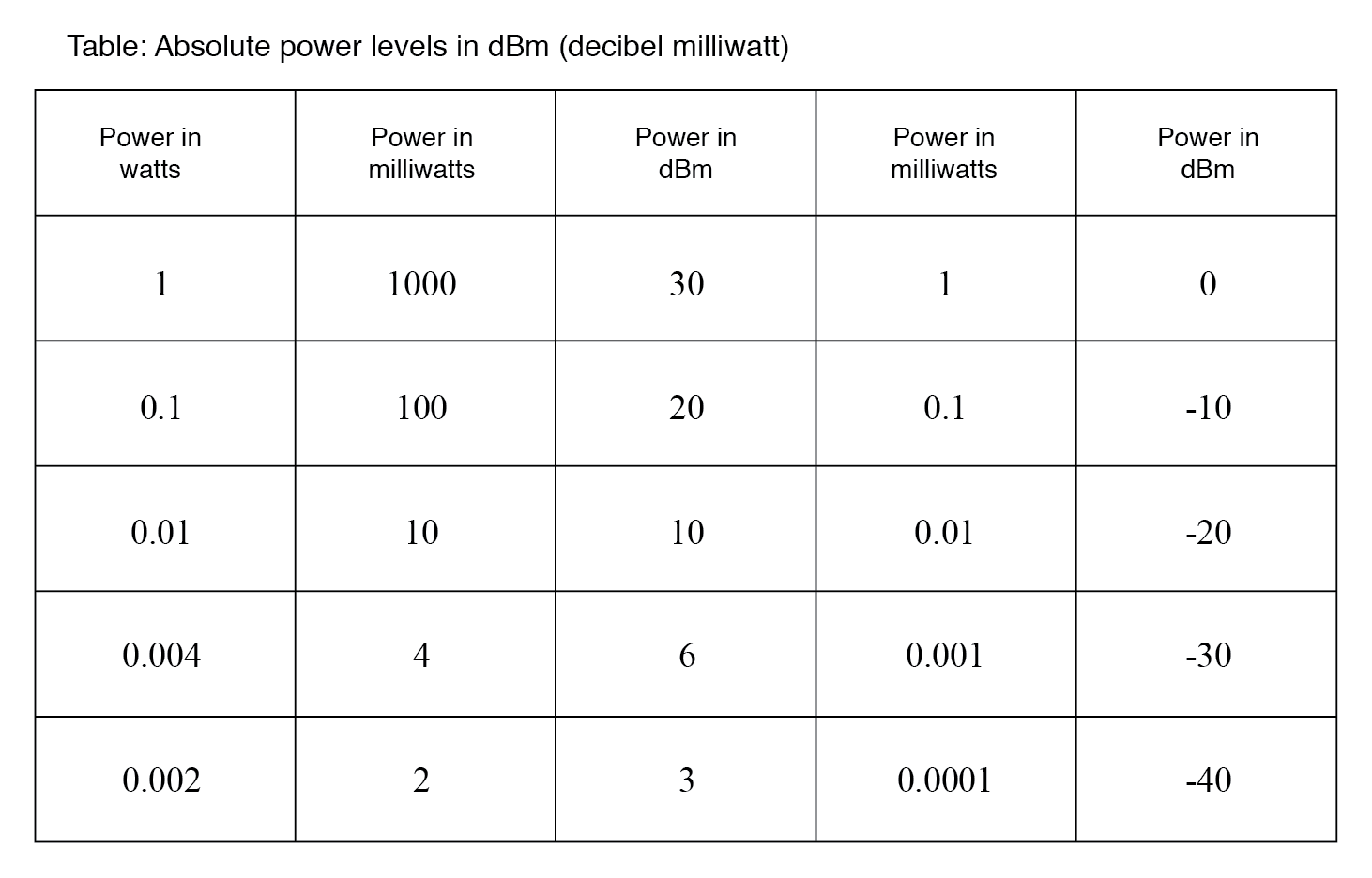
In radio and digital communications, power is frequently expressed on the dBm scale. Here, 0 dBm corresponds to 1 mW of electrical power dissipated in a 600 Ω load. The scale is logarithmic: 10 dBm = 10 mW, 20 dBm = 100 mW, and so on. Some AC voltmeters display a dBm range (sometimes labeled “DB”) to facilitate measurement of signal power across a 600 Ω load.
For low‑level radio‑frequency signals, a 50 Ω reference is standard. Signal generators output adjustable dBm levels, which are then attenuated to the desired level.
VU Scale in Audio Engineering
The VU (Volume Unit) meter is an adaptation of the dBm scale tailored for audio signal strength. It is calibrated to indicate steady sine‑wave tones and is widely used in studio and broadcast settings to prevent distortion. Because VU meters respond differently to transients and complex waveforms, their reading is best interpreted as “volume units” rather than true dBm values.
Other Absolute dB Scales
- dBW: Zero point at 1 W (0 dBW = 1 W). Used for high‑power radio transmitters.
- dBk: Zero point at 1 kW (0 dBk = 1 kW). Common in industrial power applications.
Key Takeaways
- Decibels can denote absolute power, not just relative change.
- 0 dB sound intensity = 1 pW/m²; 40 dB = 10⁴×, 100 dB = 10¹⁰×.
- dBA weighting aligns with human hearing sensitivity.
- dBm is the telecom standard: 0 dBm = 1 mW into 600 Ω.
- VU meters use volume units, not direct dBm.
- dBW and dBk provide higher‑range absolute references for large signals.
For further practice, see the Decibel Measurements Worksheet.
Industrial Technology
- Understanding AC Circuits: A Beginner's Guide
- Power Sources: AC and DC Explained
- Protective Relays: Safeguarding Industrial Power Systems
- Amplifiers: Harnessing Active Devices to Boost Power
- Understanding Bels and Decibels: From Power Gain to Voltage Conversion
- Rectifier Circuits: From Half‑Wave to Polyphase Full‑Wave Designs
- Calculating Power Dissipation in Resistive Circuits
- Accurate Power Measurement in AC Circuits: From Electrodynamometers to Hall‑Effect Sensors
- Measuring Power Quality: Understanding Harmonics and Their Impact on AC Systems
- Synchronous Condenser: Enhancing Power Factor and Grid Stability