



Designing for Sustainability: Start with the End in Mind
In today's competitive landscape, companies must operate more efficiently amid rising energy costs that threaten long‑term viability. Making decisions based on total cost of ownership is more critical than ever. As Stephen Covey advises, “begin with the end in mind.” By integrating life‑cycle asset management (LCAM) into design, firms can cut energy and waste costs while maximizing investment returns.
LCAM provides the framework for informed decisions from concept to decommissioning, evaluating each asset’s long‑term impact on the business. It balances rapid time‑to‑market with the lowest total cost of ownership, driving maximum returns. Implementing LCAM within a Front‑End‑Loading (FEL) engineering workflow ensures sustainability is embedded from the start.
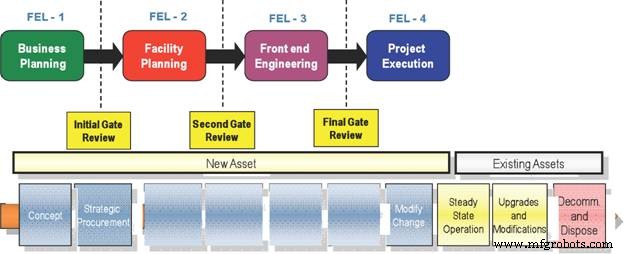
Capturing LCAM data—especially energy consumption—early in a capital project allows teams to evaluate cradle‑to‑grave life‑cycle costs (LCC) and reduce total ownership expenses. This proactive approach drives sustainable outcomes.
A Real‑World Example
While leading a workshop for a major pharmaceutical company, a participant highlighted a costly mistake: the company’s new visitor center failed to meet sustainability goals.
The new building was intended to showcase the company’s heritage and values, with sustainability as a core theme. An architectural firm proposed a glass‑facaded design and installed advanced HVAC systems sized for the space’s thermal envelope. The design calculations used the formula Ht = AU (Ti – To) to estimate annual heating load, where A is the interior area, U is the window heat‑loss coefficient, and Ti – To is the indoor‑outdoor temperature difference.
During construction, procurement focused on the lowest material cost, selecting glass that fell slightly outside the original specifications. The replacement glass had a higher U‑factor and lower condensation resistance, which ultimately caused condensation, moisture damage, and HVAC under‑performance.
After the building was completed, the site faced significant energy and maintenance issues. An investigation traced the problems back to the glass specification. The higher U‑factor increased the heating load, undersizing the HVAC system and raising operating costs.
Calculating Energy‑Based Life‑Cycle Costs
For a 5,000‑square‑foot visitor center with an original U‑factor of 0.35, the heating load is calculated as:
Ht = 5000 × 0.35 × (70 – 27) = 75,250 Btu/h
Using the industry rule of thumb—one ton (12,000 Btu) per 800 sq ft—the project requires a 6‑7 ton HVAC unit. With electricity priced at $19 per million Btu and 8,000 heating degree days, annual energy consumption is 14.4 billion Btu, costing approximately $275,000 per year.
Replacing the glass with a U‑factor of 0.54 (55 % higher) would raise annual energy costs by over $150,000—more than $1.5 million over a 10‑year HVAC life cycle.
How could this have been avoided? By following a clear LCAM process with toll‑gate reviews that evaluate life‑cycle cost at each transition. Key steps include:
- Define the project’s sustainability targets, such as total energy use and waste limits.
- Identify cost categories for life‑cycle analysis (e.g., cost per million Btu).
- Evaluate only design alternatives that meet sustainability criteria.
- Select the lowest total cost of ownership design for execution.
- Implement toll‑gate checks before each functional hand‑off, ensuring material choices do not inflate life‑cycle cost.
About the author: Bruce Wesner brings over 24 years of maintenance, engineering, and management experience as Managing Principal for Life Cycle Engineering (LCE). His background spans HVAC, heavy steel fabrication, tubular steel, high‑tolerance machining, pharmaceuticals, and building products. Bruce specializes in lean and reliability‑based improvements. Reach him at bwesner@LCE.com. For more information about Life Cycle Engineering, visit www.LCE.com or call 843‑744‑7110.
Equipment Maintenance and Repair
- Additive Manufacturing’s Next Chapter: Empowering Sustainable Choices
- The Emerging Role of IoT in the Energy Sector: Key Use Cases and Benefits
- Designing an Electronic Spirit Level for the Visually Impaired
- Custom Marine Switchboard Design for the Endeavour V Fishing Trawler
- How Industry 4.0 Drives Sustainable Manufacturing
- Stratasys Revives MakerBot: The Method Brings Industrial‑Grade Reliability
- Sustainability: The Next Priority for Wireless Technology
- Cybersecurity Simplified: Start with the End in Mind for Manufacturers
- Automated Garage Sliding Door Powered by Arduino Nano
- Elisabeth Brinton Explains How Microsoft’s Cloud for Sustainability Drives Manufacturing Efficiency